
Facing the Impossibility of Planning — Three Pathways to Make Tokyo Regenerative and the Chain of Inspiration 【Regenerative City Inspiration Talk Vol.1 — Part 2】
In the first part of this article, WIRED Japan editor Kotaro Okada introduced three principles for creating a regenerative city—Multi-Stakeholder, Plural Capital, and System Change—along with leading examples from around the world. From New York’s oyster restoration project to the Netherlands’ material passport initiative and the United Kingdom’s biodiversity net gain policy, a wide range of regenerative approaches are already being put into practice.
Yet what pathways exist for transforming a complex megacity like Tokyo into a regenerative city?
In this second half, we explore insights that emerged from the Q&A and group discussions with participants: how to confront the impossibility of planning, how to overcome cultural barriers, and how to articulate a narrative unique to Tokyo.
At the end of his talk, Okada posed several concrete questions to the audience—questions intended to guide the transformation of Tokyo into a regenerative city.
- What approaches could leverage ecosystem services and Nature-based Solutions (NbS) to restore the environment in Tokyo’s urban core?
- How can Tokyo cultivate and multiply “neighborhoods” like Nishiike Valley—places where local richness and community can flourish?
- How can the city overcome the polarization between large-scale urban developments and independent, community-based actors?
- As rising land prices and rents increasingly restrict central Tokyo to only highly profitable businesses, how can the city make room for more culturally diverse and creative ventures and tenants?
With these questions as a starting point, the session moved into a full-group Q&A and open discussion involving all participants.
The first question raised by participants went straight to the heart of the regenerative city concept:
“Cities never turn out the way they are planned. When we cannot see 30 or 50 years into the future, how should we confront the impossibility of planning?”
Building on the history of many failed smart-city initiatives, the question asked how a complex metropolis like Tokyo can realistically be regenerated.
Okada responded by noting that a top-down, totalitarian-style master plan—built from a clean slate—is impossible in Tokyo. Instead, he proposed three pathways for driving change:
In some cases, legal mandates like the United Kingdom’s Biodiversity Net Gain (BNG)—which requires developments such as housing or land projects to leave the natural environment in a better state than before—are necessary to push regenerative outcomes within construction and urban development.
In real estate development, it is essential to create models in which the more profit a project generates, the more it regenerates the surrounding community, nature, and culture. Examples include projects by Nikken Sekkei that improve the environmental performance of older buildings, and initiatives like Tokyo Tatemono’s commitment to a regenerative approach.
Beyond simply building systems that achieve a “regenerative state,” it is vital to design mechanisms that allow citizens to participate in those systems. Starting from sensory experiences—such as “this tastes delicious” or “this looks beautiful”—consumers can learn about the regenerative processes behind those experiences. Increasing such choices in daily life is what ultimately drives broader change.
At the same time, some participants remarked that they rarely have opportunities to talk about regeneration in their everyday lives. FFI’s Fukada pointed out that in Japanese society, topics such as environmental restoration or social contribution are often mocked as being “too idealistic” or “self-righteous,” creating a sense of embarrassment. Within companies as well, such discussions are frequently dismissed with comments like, “Forget that—did you finish tomorrow’s materials?” This cultural barrier, he noted, is a real challenge.
In response, Okada highlighted the potential role of external pressure as a catalyst for change. Referring to comments made by researcher Hirotaka Nakajima in an interview for WIRED’s “Regenerative City” issue, he explained that when global companies choose offices in Tokyo, they increasingly bring with them international standards—such as “we cannot lease a building unless it meets high environmental performance.” Such pressures could, in turn, elevate the performance of buildings across the city.
Fukada further noted that whereas the Netherlands has made exporting circular-economy expertise a national strategy, and Italy and Spain possess clear narratives around “food and well-being,” Tokyo must ask itself: What is the narrative of regeneration for this city?
One hint lies in the historical context underlying Tokyo Tatemono’s focus on food in the YNK area (Yaesu–Nihonbashi–Kyobashi). During the Edo period, the region was home to sustainable food hubs such as fish markets and radish markets—heritage that could become a unique identity for Tokyo’s own regenerative narrative.
In the latter half of the event, participants engaged in group discussions. Each person wrote down ideas for “How to make Tokyo a regenerative city” on sticky notes, and four groups were formed for collaborative dialogue.
A wide range of diverse and creative suggestions emerged.
Some participants emphasized the importance of endurance—ensuring that initiatives do not fade away as passing trends. Others proposed experiential tourism and educational programs that reveal the hidden maintenance systems that keep the city functioning. There were also concrete ideas such as providing free spaces for artists as a means of cultural regeneration.
More unusual perspectives also appeared, such as designing mechanisms that allow developers to intentionally “withstand development” in order to preserve creative spaces—an idea referred to as “anti-development resilience.” Others suggested that Tokyo’s identity may lie in its chaotic “multiplicity of purposes,” while another participant raised a sharp critique of anthropocentrism, asking, “Is biodiversity even possible in a city to begin with?”
Fukada expanded the discussion by pointing to examples like Berlin, where intentional non-development—leaving certain spaces untouched—has led to the emergence of new cultural value. Such non-action, he argued, can itself become a form of dynamic urban regeneration.
To conclude the discussion, Okada shared why WIRED Japan continues to focus on regeneration and what he envisions for the media’s role going forward.
“In my work at WIRED Japan, I always aim to create content that inspires creators.
Tokyo’s strength lies in its multiplicity of purposes and its layered, chaotic nature. Within that richness, I believe we will see countless new projects emerge that combine regeneration with other fields.
By introducing such efforts through our media, I hope we can spark a chain of new inspirations.”
As the lively discussion came to an end, the event shifted into a networking session—yet even there, conversations about Tokyo’s regenerative future could be heard in every corner of the room.
We hope that this ongoing event series at TOKYO LIVING LAB becomes the starting point of an expanding chain of inspiration, ultimately contributing to the creation of the world’s first regenerative city born from Tokyo.
(Text: Michi Sugahara)
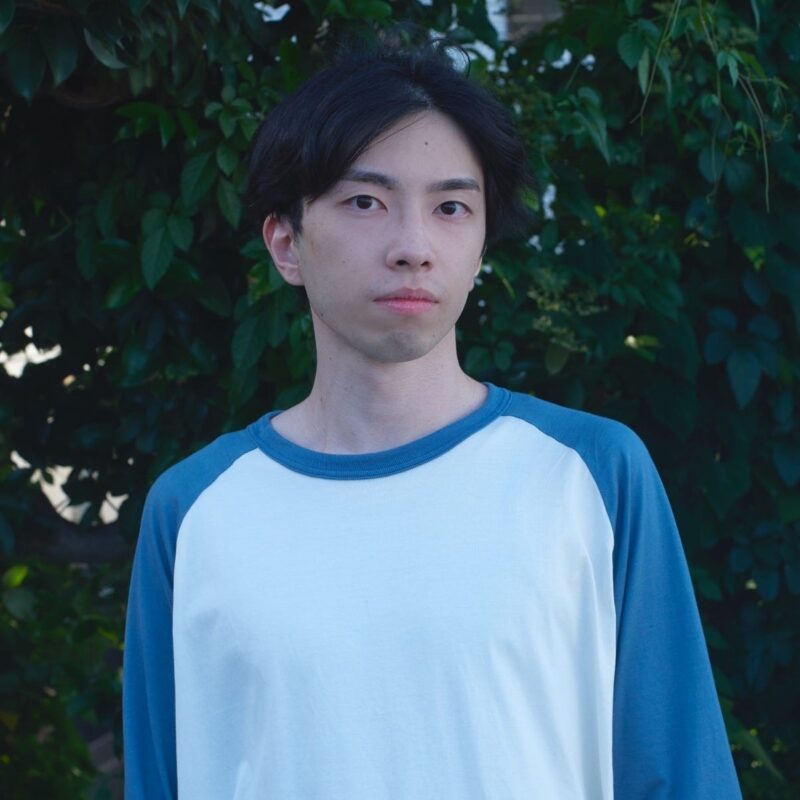
He is also the Representative Director of Desairo and the Representative Director of B-Side Incubator, both general incorporated associations. In addition, he is a partner at the creative collective PARTY.
Born in Tokyo in 1994, Okada studied service design at Keio University. He was selected for Forbes JAPAN “30 UNDER 30” in 2023.