
How Intermediary Organizations Shape Food Ecosystems — Lessons from Spain’s Basque Region on Co-Creative Urban Development 【Regenerative City Inspiration Talk Vol.4 — Part 1】
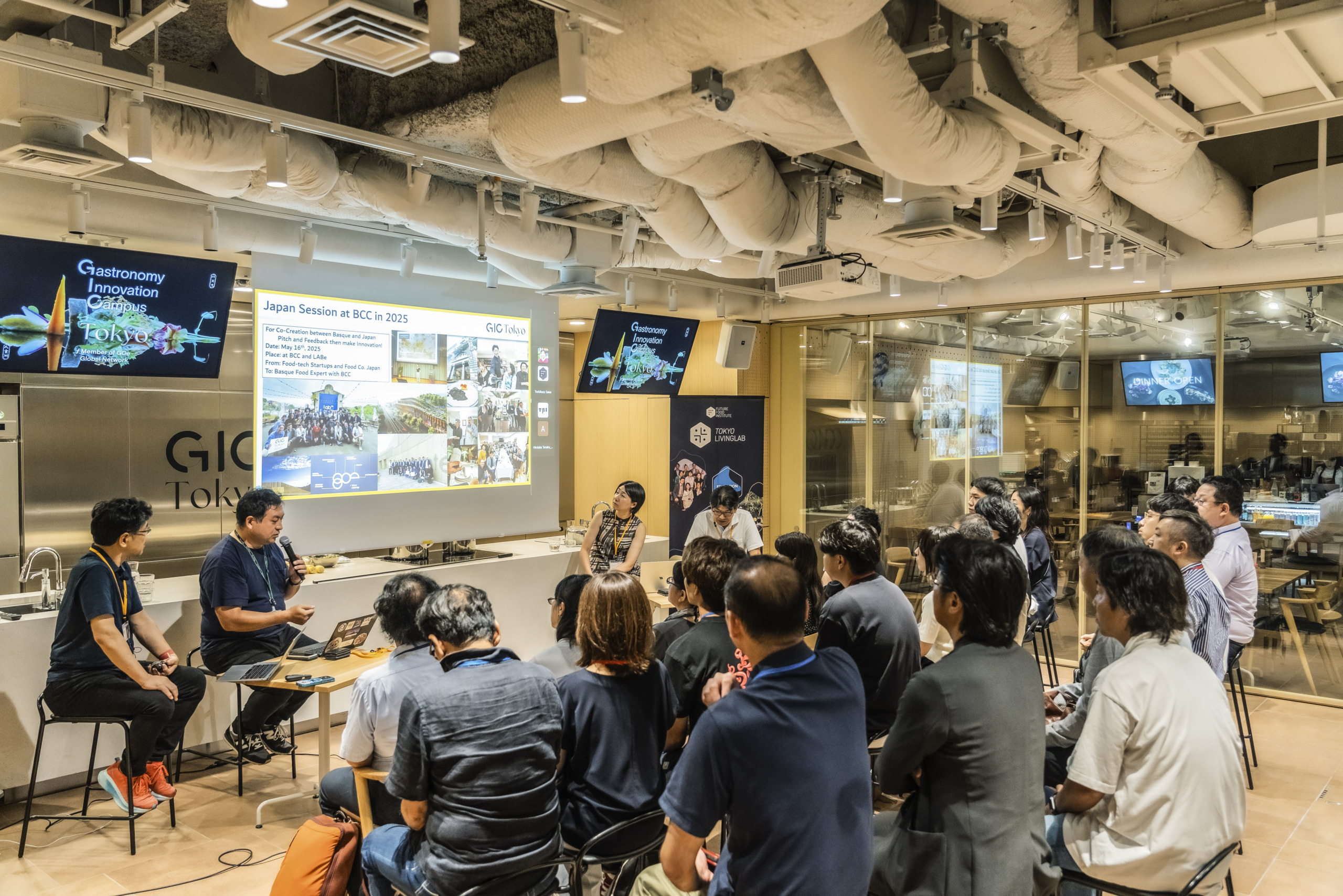
The fourth session of Regenerative City Inspiration Talk—a recurring event series exploring Tokyo’s future through a regenerative lens—was held on August 20 at Tokyo Living Lab in Yaesu.
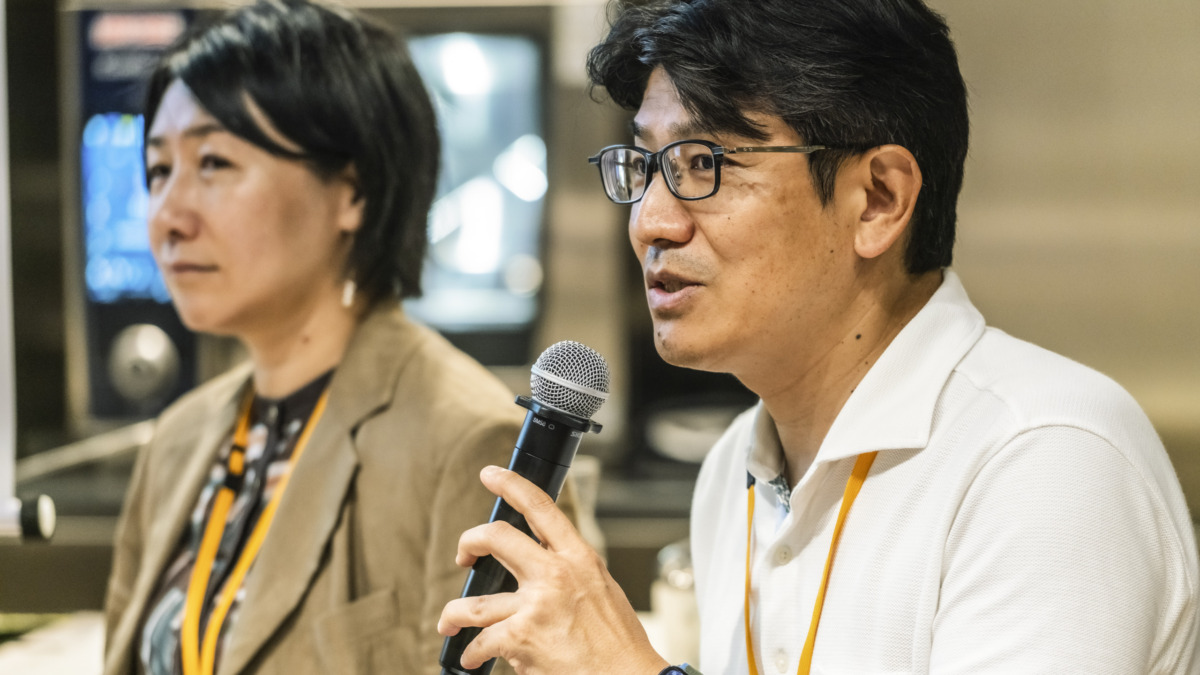
This edition focused on uncovering insights for community development through food, drawing inspiration from leading examples in Spain and Italy. The event welcomed three guest speakers: Hirotaka Tanaka and Akiko Okada from UnlocX, who have long led Japan’s food-tech sector in building food ecosystems, and Akihiro Sawada from Tokyo Tatemono, who promotes food innovation within the company. Unlike previous sessions, this talk took the form of a conversational panel discussion.
Guided by moderator Masanori Fukuda of the Future Food Institute, the dialogue illuminated the essential lessons Tokyo can learn from Europe’s dynamic, on-the-ground practices.
The talk session opened with Hirotaka Tanaka and Akiko Okada—co-authors of The FoodTech Revolution (Nikkei BP) and How FoodTech Will Change the Future of Food (PHP Publishing). Their company, UnlocX, was founded with the mission of “creating work that future generations—50 or even 100 years from now—will thank us for.”
Its origins trace back to the establishment of SKS JAPAN, the core community of Japan’s food-tech ecosystem, and to a turning point in 2018—an impactful experience at a conference in Italy.
Okada recalls, “It wasn’t just about business. What struck me was the perspective that the entire social system needs to change.”
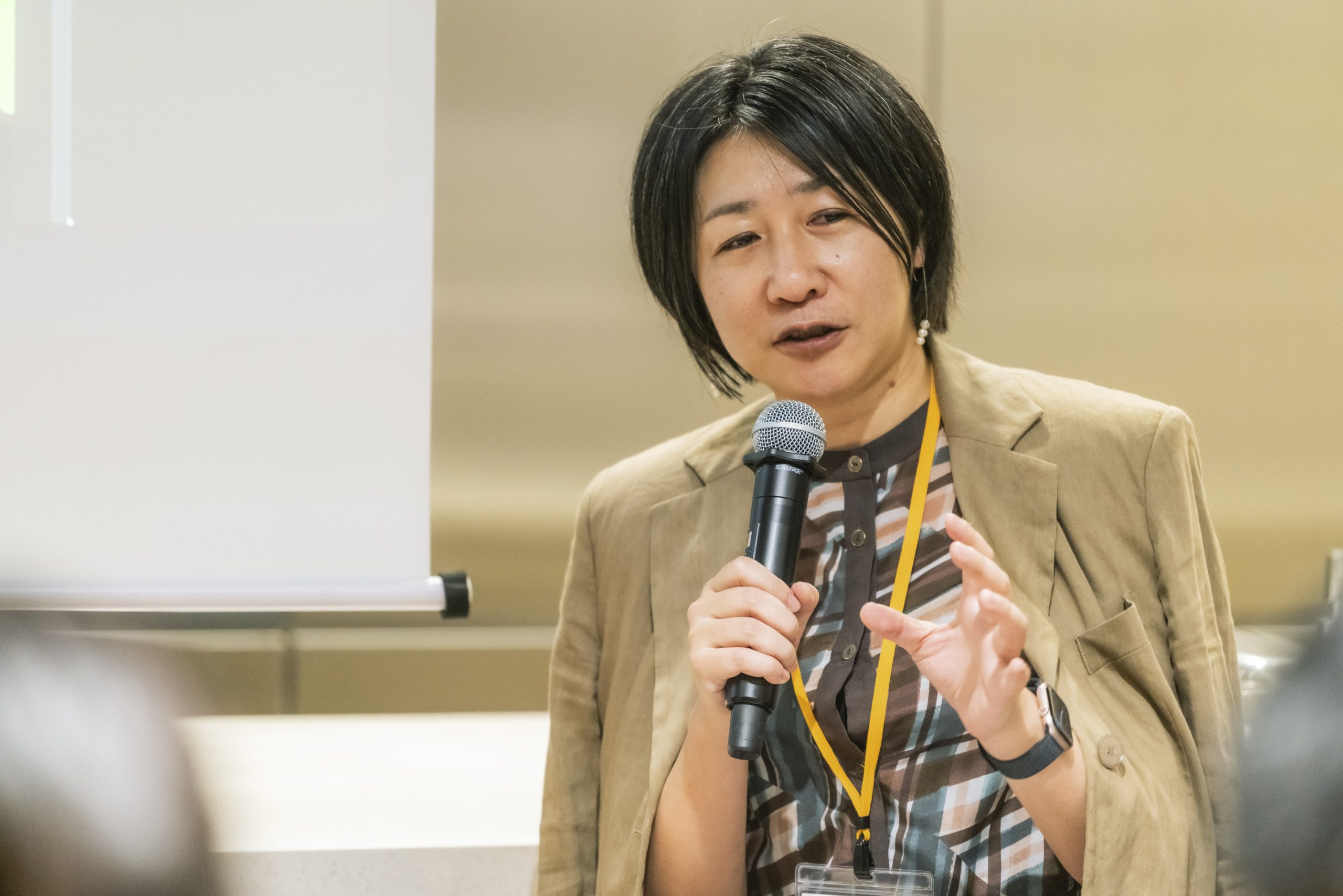
This encounter profoundly shaped the pair’s philosophy around ecosystem-building.
Another speaker, Akihiro Sawada, leads the Food & Innovation City Promotion Office in the Urban Development Promotion Department at Tokyo Tatemono. Drawing on the rich “food DNA” inherent in the YNK (Yaesu–Nihonbashi–Kyobashi) district, the company has been advancing urban development with regeneration at its core. During this exploration, they encountered the Basque Culinary Center (BCC), a pioneering food science university in Spain.
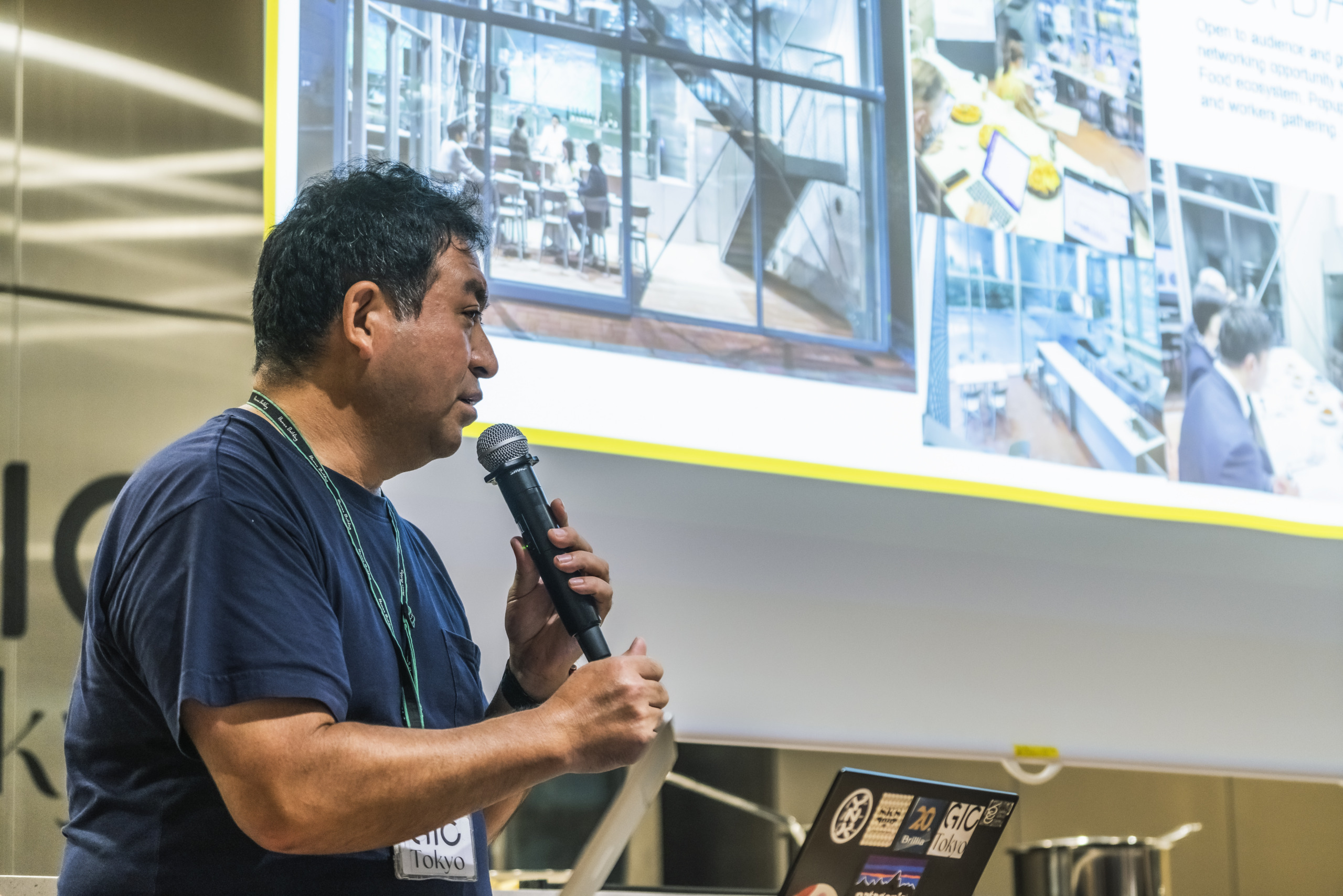
“BCC launched the Gastronomy Open Ecosystem (GOe), an open ecosystem that engages the entire city—and even the global community,” Sawada explains.
“And in 2024, Tokyo Tatemono opened Gastronomy Innovation Campus Tokyo (GIC Tokyo) here in Yaesu as the world’s first global hub of that initiative.”
To deepen this collaboration, Tokyo Tatemono also organizes an annual study program in San Sebastián for Japanese participants—not only to spark co-creative innovation, but to immerse them directly in the region’s culture. Many attendees at the event had joined this program.
This program is far more than a simple study tour. It allows participants to experience the deeper layers of Basque food culture, including meals prepared at a private, members-only cooking club known as a txoko, where local men gather to cook and share food.
Tanaka, who took part in the program, noted, “Across companies and affiliations, there was a natural sense of ‘let’s do this together.’”
After the presentations wrapped up, moderator Masanori Fukuda invited reflections from the audience.
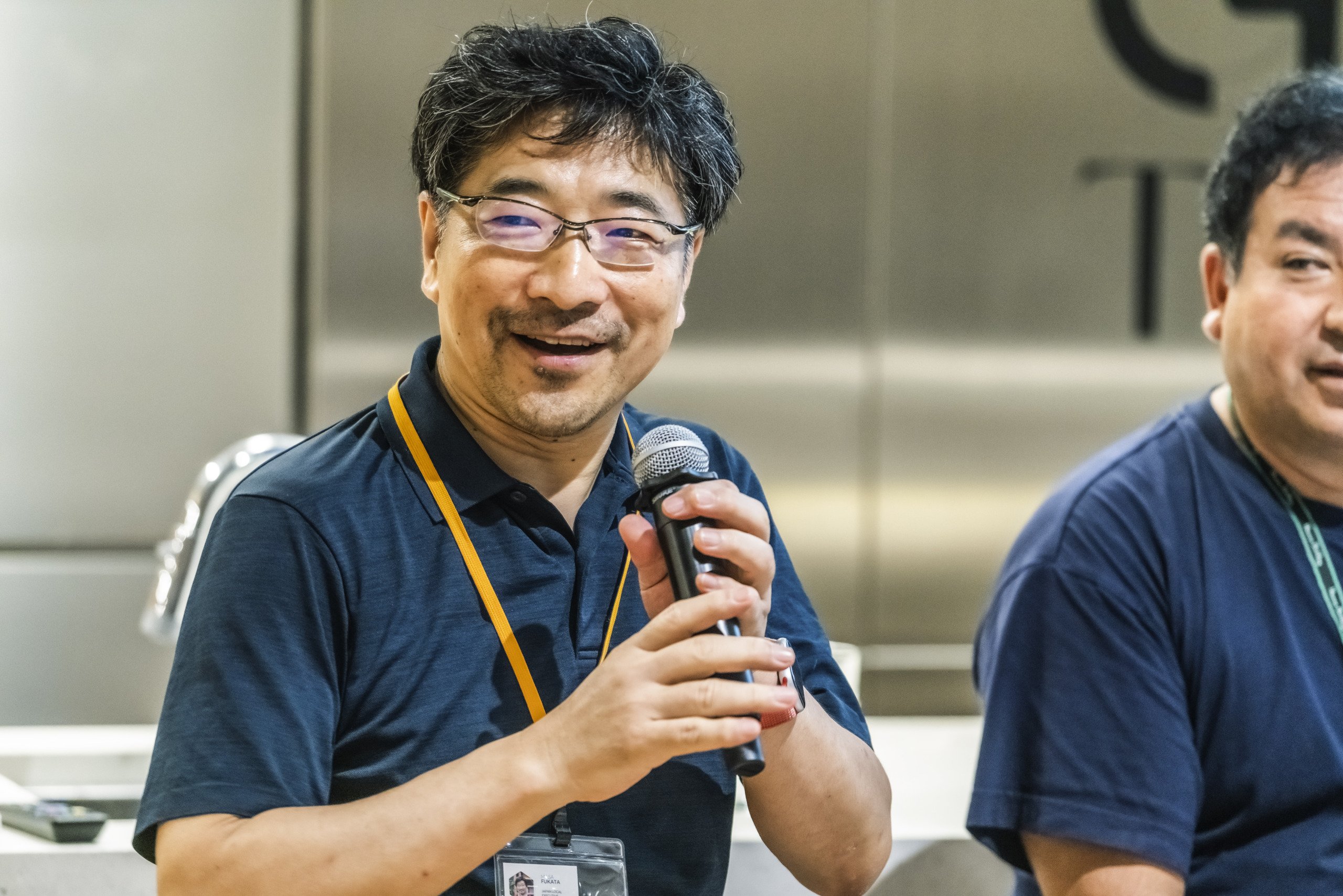
One participant shared, “The word ‘sustainable’ has always sounded a bit burdensome or obligatory to me. But learning more about ‘regeneration’ today, I realized it is an entirely new and positive concept.”
Okada responded:
“Every time a new buzzword appears, we try to figure out what it means in Japanese. But once you sit with it for a while, you often realize, ‘This sensibility actually existed in Japan all along.’”
The next session highlighted two key elements: a study program in the small Italian municipality of Pollica, and the remarkable initiatives emerging from Spain’s Basque region—now considered one of the world’s leading hubs for food-tech innovation.
Spain is said to rank fifth globally in the number of food-tech startups, with a steady stream of companies leveraging local ingredients and culinary traditions to develop new ventures. Playing a crucial role behind this growth is a network of intermediary organizations known as clusters, which coordinate and accelerate collaborative projects across companies.
In the Basque region, individual enterprises do not work alone from development to market launch; instead, the cluster organizations act as a unifying force that supports the entire process.
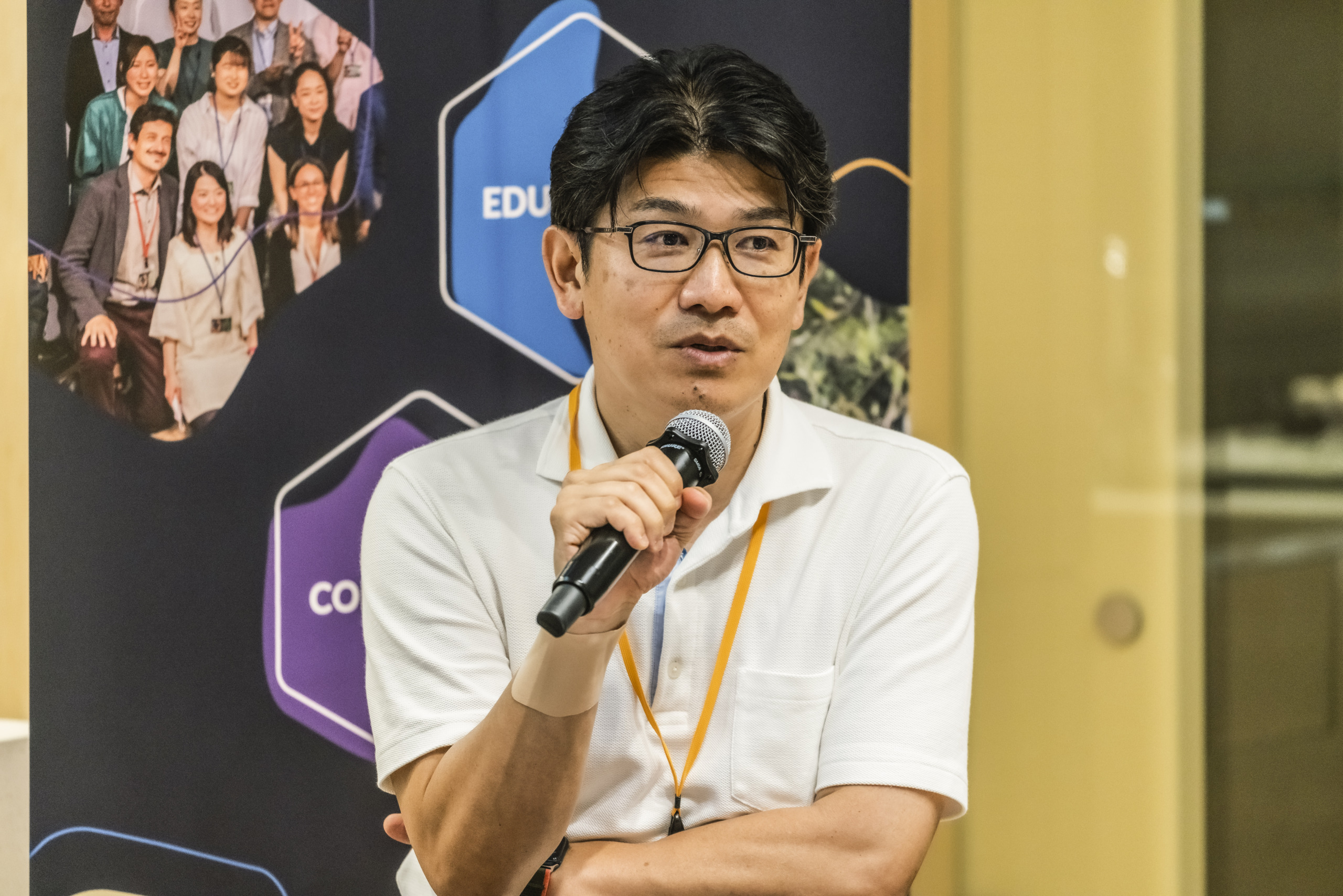
“Neither private companies nor government agencies can do this alone. What truly matters is a strong intermediary body—a structure that sits between the two, with a clear vision and strategy,” Tanaka explains.
One of the most significant examples underpinning Basque competitiveness is the Mondragón Cooperative Corporation, one of the largest worker cooperatives in the world. The group comprises 92 companies spanning industries far beyond food, generating approximately ¥1.5 trillion in revenue—70–80% of which comes from overseas markets. It is an extraordinary model in which an entire region, acting as a single collective, generates value on the global stage.
Tanaka explains the organization’s essence:
“Because it isn’t structured as a conventional corporation, its goal isn’t to maximize profits as cash returns.”
Instead, long-term continuity—preserving industries, traditions, and artisanal skills—is prioritized. When workforce reductions become necessary in one company, other companies within the group step in to absorb the employees, reflecting the cooperative’s community-based ethos.
However, this does not mean the system is lenient.
“Members uphold strict attitudes—being diligent, never lying. Their core keyword is competitive. While some activities may receive subsidies, they believe they have no future unless they themselves can create truly differentiated products and innovations that generate revenue. That’s why they insist on being competitive,” Tanaka emphasizes.
This philosophy extends directly into talent development. To support industrial revitalization, the cooperative established an educational institution that later became Mondragón University. Following its schools of engineering and business, the fourth academic division—dedicated to gastronomic sciences—was launched in 2011 as the Basque Culinary Center (BCC).
“In the MTA program at Mondragón University, students actually create their own classes. Instead of classrooms, they have offices; instead of teachers, they work with coaches. It’s fascinating,” Okada notes.
This uncompromisingly practical approach is rooted in a mission not merely to nurture startups, but to cultivate change leaders capable of transforming society.
“Today, many regions in Japan say they want to use Japanese food to expand into global markets. But what we lack is an organization that unites them—a true intermediary body,” Tanaka concludes.
BCC’s ambitions have expanded far beyond the confines of a university. Their next frontier is the city itself, symbolized by the creation of GOe (Gastronomy Open Ecosystem)—a next-generation platform for food-related education and business co-creation.
Sawada explains the intent behind this initiative:
“BCC was originally located in the mountains, but being embedded in the city allows it to play a different and far more impactful role. By implementing GOe within the urban fabric of San Sebastián, they can link their work with local jazz festivals, film festivals, and other cultural events. They truly view GOe as an urban device.”
In San Sebastián, home to the BCC, food and culture have always been deeply intertwined. The city’s long-running international film festival includes a prestigious culinary cinema category, Culinary Zinema. With GOe introduced into this cultural ecosystem, collaborations with festivals and events accelerate—creating a regenerative cycle where people enjoy food and culture, nurture them, and in turn generate economic value. It is, in many ways, the blueprint of a regenerative city.
Looking ahead, BCC plans to open a new campus in two years in Rioja, Spain’s renowned wine region. The campus, named eda, will aim to drive innovation in the beverage and wine industries.
“Major competing beer companies are coming together there to co-create new innovations. The fact that global players gather in response to this call for shared creation within an open ecosystem—this is precisely the strength of BCC, and by extension, of Spain,” Sawada notes.
Meanwhile, in the small Italian municipality of Pollica, which speakers visited as part of the study program, a very different approach from competitive strategy is being practiced.
Located two and a half hours by car from Naples, Pollica is a village of about 2,000 residents—at first glance, close to what Japan might call a “marginal settlement,” with limited infrastructure and conveniences. Yet the community has turned its inconveniences and centuries of history into strengths, building a unique culture where the joy of living is shared through food and tradition.
Old, decaying houses have been transformed into accommodations, attracting corporate training programs and student workshops. As people began gathering in the village, new forms of value—and new vitality—emerged.
“Honestly, as a tourist it’s incredibly inconvenient. But the fact that they turn that inconvenience into an asset is remarkable—and I felt that this might be the essence of regeneration,” Okada reflects.
Tanaka identifies three elements behind Pollica’s success:
Every region holds untapped resources—traditional farming methods, cultural practices, and other still-invisible forms of value.
External perspectives and specialized knowledge are essential to uncover and transform these assets into real value.
A mayor with strong commitment to change—often the most unpredictable yet crucial factor.
Here again, the presence of an intermediary organization is key. Groups like the Future Food Institute (FFI) help uncover “invisible local assets” and translate them into new forms of value. Pollica’s transformation began with the determined leadership of a previous mayor, whose vision continues to guide the community’s growth today.
Despite their differences in scale and strategy, Spain’s Mondragón Cooperative Corporation and Italy’s Pollica share two common threads: the power of intermediary organizations and the ability to turn unseen assets into value. In the Basque region, a competitive ecosystem drives global impact; in Pollica, a creative community transforms inconvenience into charm.
So—how can we apply these lessons to Tokyo?
In the second part, we explore the ideas that emerged through Q&A and group discussions, examining concrete ways to make the YNK area more regenerative, along with actions each individual can take.
(Text: Michi Sugahara / Photography: Shuji Goto)
After beginning his career at Panasonic, Hirotaka Tanaka spent eight years at McKinsey & Company, primarily serving clients in the high-tech and telecommunications sectors. His work focused on growth strategy development and execution, M&A, new business creation, and venture partnerships.
In 2017, he joined Sigmaxyz, where he launched SKS JAPAN, a global foodtech summit. Through his involvement in business development support and community building within the food sector, he founded UnlocX in October 2023 with the aim of creating a robust food ecosystem in Japan.
He is the co-author of The Foodtech Revolution (Nikkei BP, 2020) and The Future of Food Transformed by Foodtech (PHP Shinsho, 2024). His additional roles include Director of SPACE FOODSPHERE (General Incorporated Association), Outside Director of Base Food Inc., Outside Director of TechMagic Inc., and Representative Director of Next Prime Food (General Incorporated Association).
Okada focuses on building human-centered insights to bring food-tech innovation into society. Combining perspectives from business strategy, technology, humanities, and philosophy, she explores the fundamental question of what meaningful food innovation looks like for the future of humanity.
She previously worked at McKinsey & Company as a research specialist and later joined Sigmaxyz in 2017, where she co-founded the Global FoodTech Summit “SKS JAPAN.”
Today, she serves as Insight Specialist at UnlocX, leading insight development and thought leadership across the food innovation domain.
She is co-author of The FoodTech Revolution (Nikkei BP, 2020) and How FoodTech Will Transform the Future of Food (PHP Publishing, 2024).
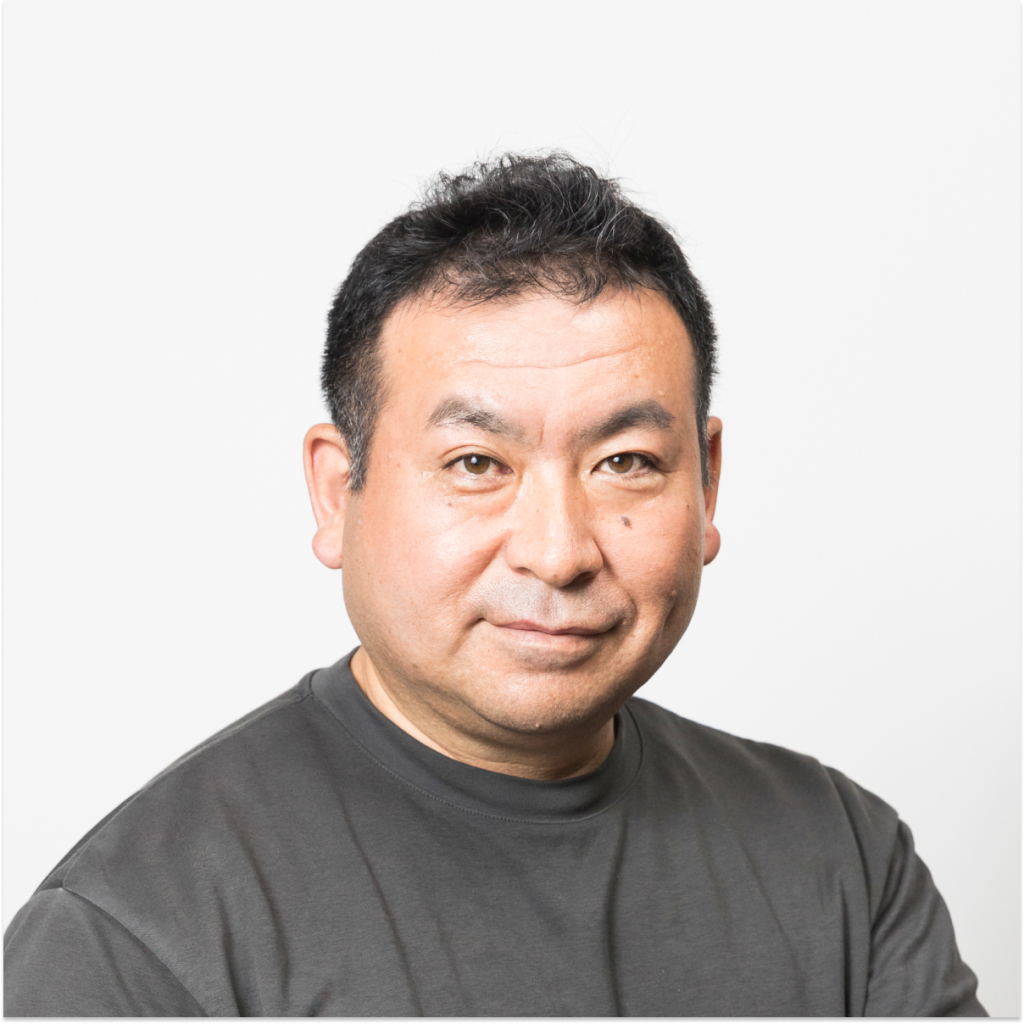
Born in Obihiro, Hokkaido, Sawada graduated from Keio University’s Faculty of Environment and Information Studies. After joining Tokyo Tatemono, he worked in residential development, served as a representative in the United States, and oversaw cross-border real estate transactions.
Since 2021, he has been leading initiatives to realize a regenerative society from Tokyo, supporting co-creation and innovation with food as a central axis.
In 2024, he opened the Gastronomy Innovation Campus Tokyo in Yaesu—the first international hub of the Basque Culinary Center’s Gastronomy Open Ecosystem (GOe).