
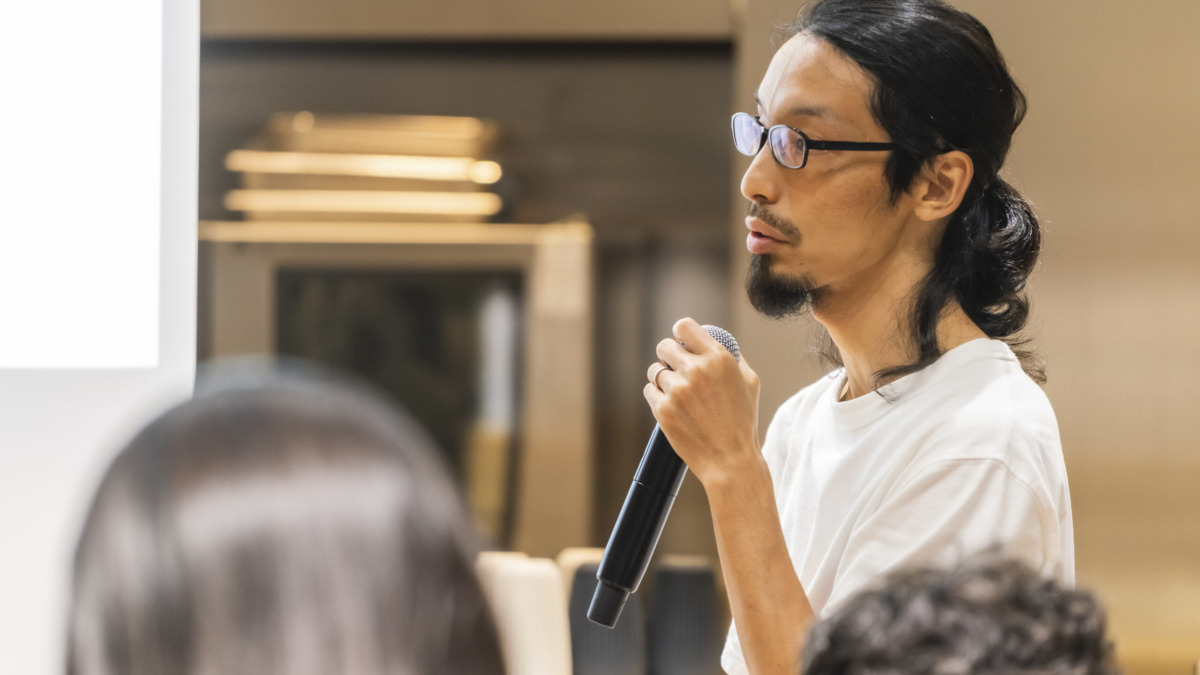
Four Insights for Envisioning and Practicing the Future of Regenerative Cities [Regenerative City Inspiration Talk Vol.2 – Part 2]
In the first half of this article, guided by insights from Yasuhiro Kobayashi, Representative Director of Regenerative Leadership Japan, we explored the emerging concept of regeneration—a paradigm that goes beyond sustainability—and examined a new form of leadership that shifts from “management and control” to “emergence.”
In this second half, we bring these ideas into the concrete context of cities. We reframe the city as a “living system,” examine the challenges and solutions discussed with participants for practicing regeneration in Japan, and introduce perspectives on urban regeneration that begin from the act of “nurturing.”
What insights does this way of thinking offer when considering the future of the cities we live in?
“Rather than seeing the city solely through its functions—such as food, energy, and infrastructure—we need to begin by reinterpreting it as an interconnected ecosystem,” Kobayashi explained. As a concrete example, he introduced DYCLE, a project in which daycare centers and local communities collect babies’ waste, compost it, return it to community gardens, and use it to grow crops that in turn nourish local children—creating a large, life-giving circular system.
“How do we reposition the act of living in a city—and being sustained by it—within these various cycles? That is the essential question of regenerative urban design.”
This requires a perspective that goes beyond partial optimization and instead considers the system as a whole. The book Regenerative Leadership emphasizes that creating a paradigm shift requires moving beyond surface-level fixes and addressing the deep structural divides of modern society. It argues that “co-creation and co-evolution” among diverse actors is crucial.
“In cities, we have companies, NPOs, government, and residents—and countless nonhuman living beings as well. When such diverse actors bring what they each hold and engage with one another, new value and new futures emerge—possibilities that no individual could have created alone. The question is how to design and cultivate spaces where this kind of emergence can occur.”
Kobayashi then presented four key insights for envisioning and advancing a regenerative future for cities.
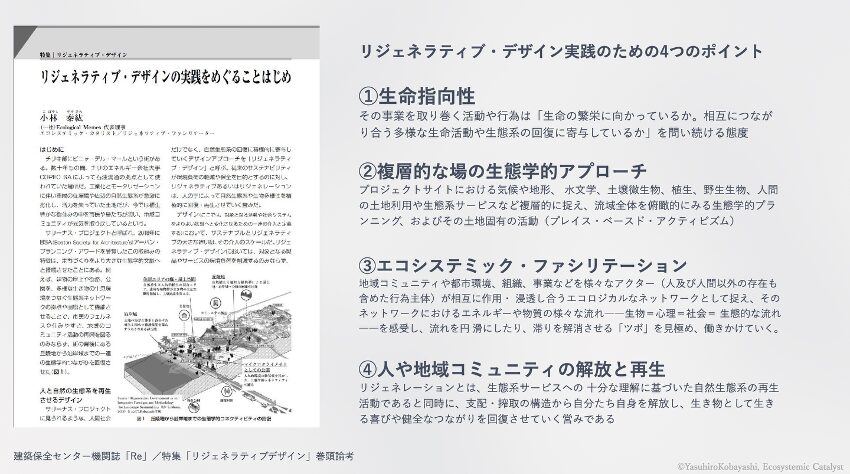
- Life Orientation — Continuously asking whether our actions contribute to the flourishing of all life
- Multi-layered Ecological Approach to Place — Understanding the layered contexts of a location, including its unique history, culture, and natural environment, and reframing humans as part of a larger ecosystem
- Ecosystemic Facilitation — Viewing the entire city as a single ecosystem and encouraging its overall circulation through small, strategic interventions
- Liberation and Regeneration of People and Communities — Designing the ecosystem itself so that the inherent vitality of individuals and local communities can be released and regenerated
“In an unpredictable era, we cannot envision the future through data analysis of the past alone. We need to listen to our own intentions—‘the kind of future we want to create’—and sense the history and potential of the place. Then, we must integrate those insights with analytical intelligence.”
After Kobayashi’s talk and the Q&A session, the event moved into an active group discussion facilitated by FFI. Participants split into four groups and explored two central questions:
- “Why have sustainability and regeneration struggled to gain momentum in Japan’s business sector?”
- “What can individuals and organizations do to accelerate that momentum?”
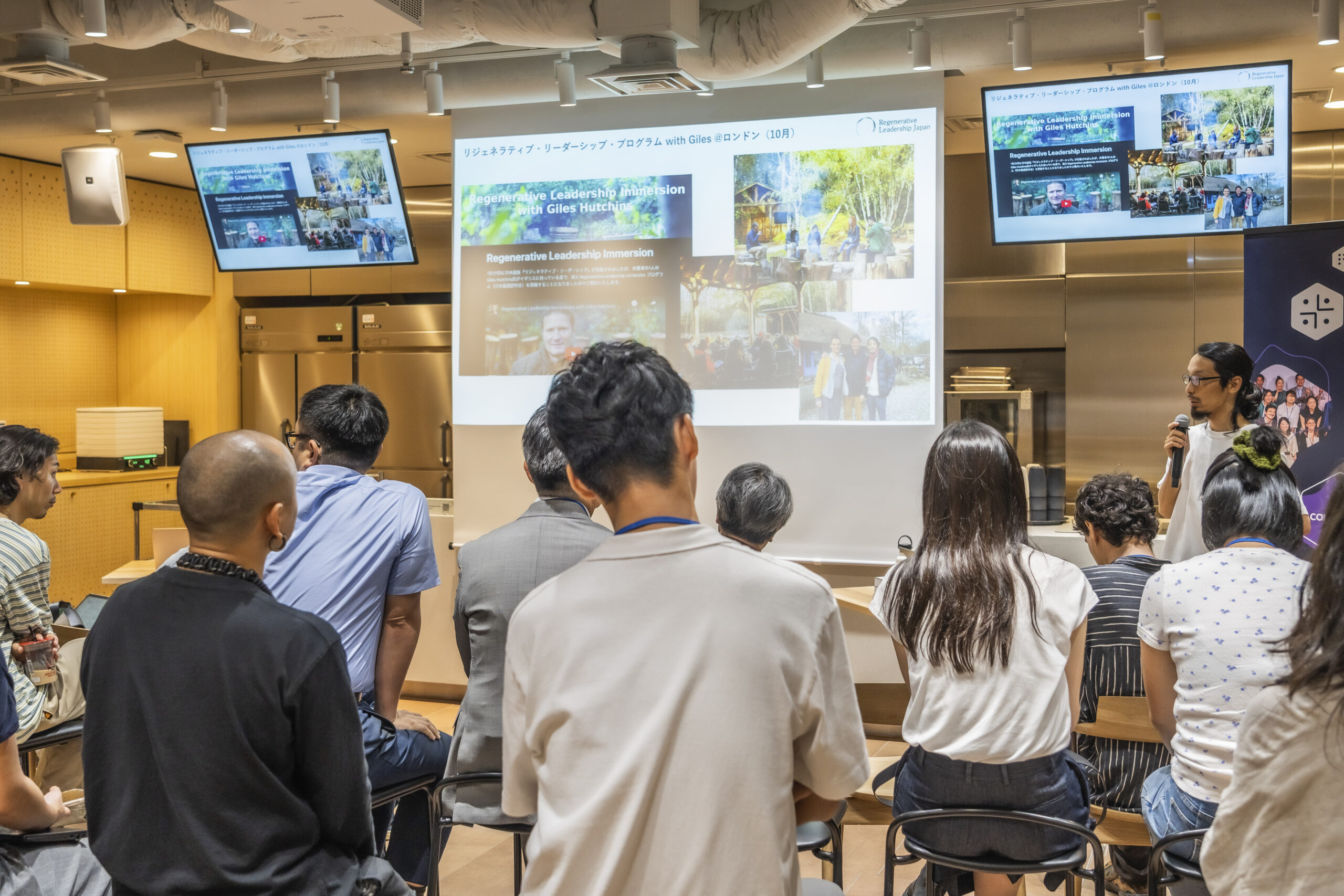
Reasons raised for the lack of traction included:unclear value and impact, the perception that these topics are abstract or overly buzzword-driven,the absence of clear champions,and even the thought-provoking idea that regenerative principles may align so closely with long-held Japanese sensibilities that they do not feel particularly new or visible.
In response to these reflections, participants proposed various solutions: establishing non-financial evaluation metrics for corporate engagement, advancing education, creating media content targeting affluent audiences, promoting nature-based experiences away from central Tokyo, and showcasing the enjoyment of regenerative practices to attract allies and build community.
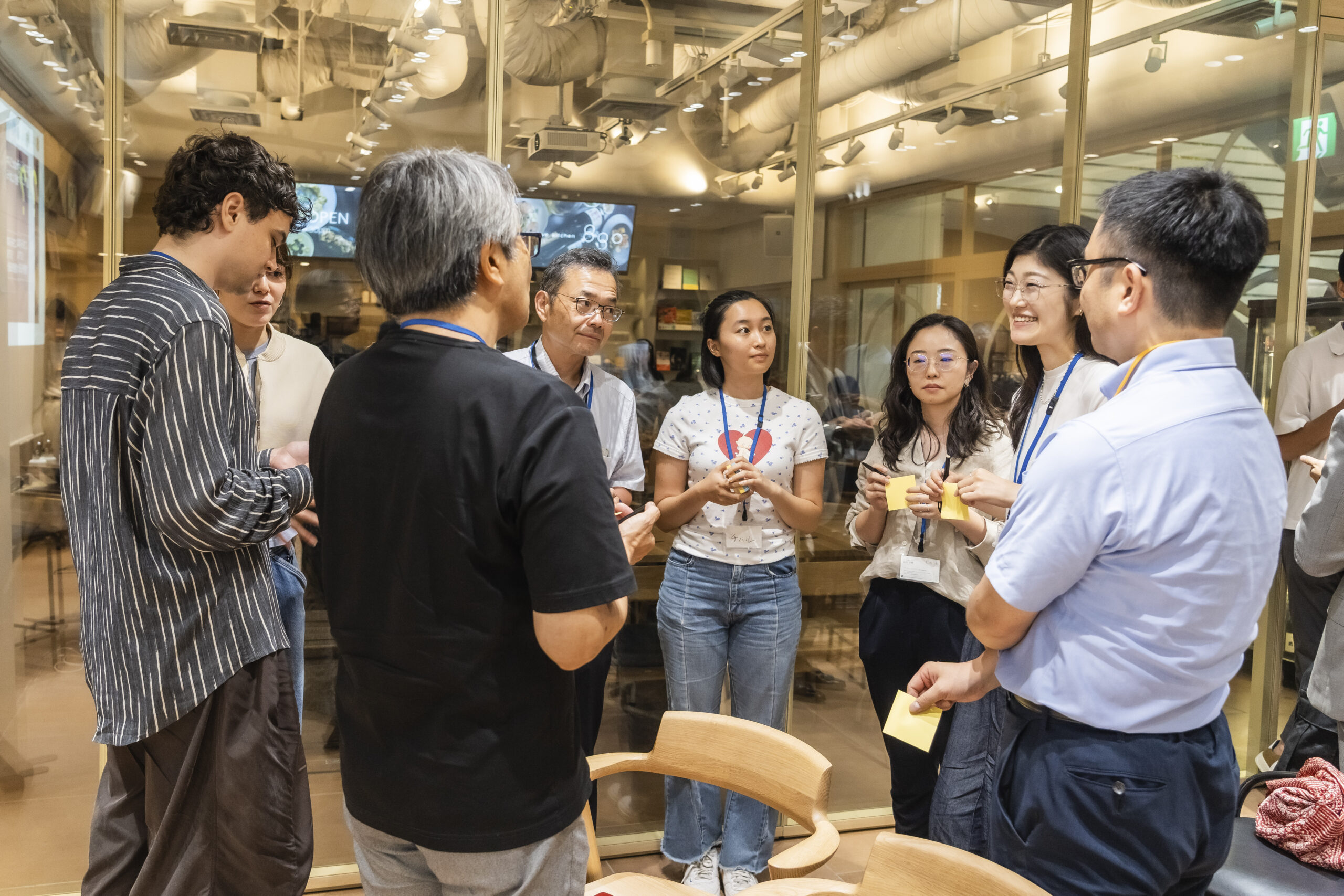
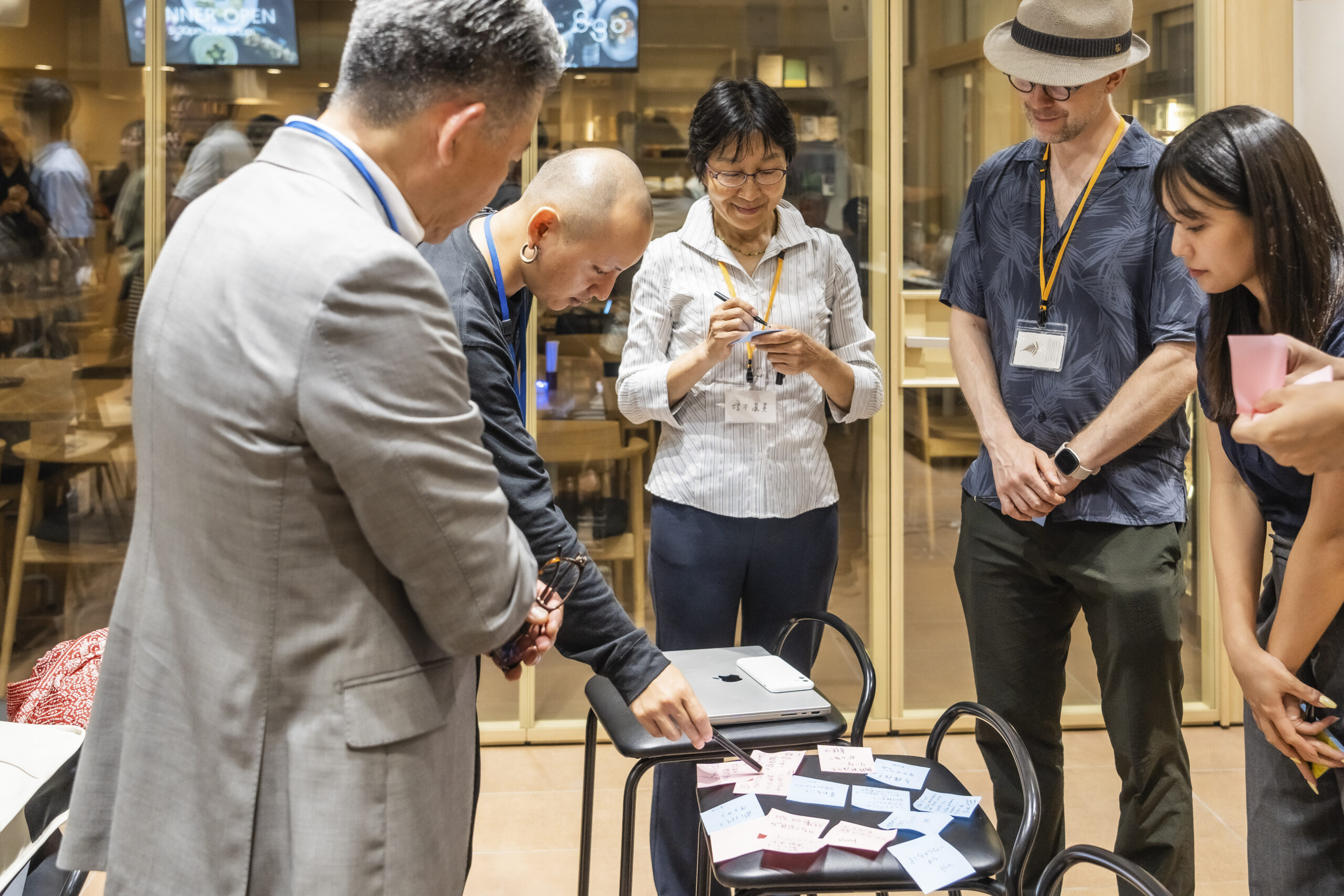
Listening to each group’s discussions, Kobayashi closed the session with the following remarks:
“Building a sense of companionship is incredibly important. When you try to pursue something new without precedent, it’s often misunderstood, isolating, and difficult. Everyone gathered here today clearly has some interest in this theme, but you may be surprised—there might be people around you who feel the same way, even if they don’t say it aloud. That’s why it’s essential to be courageous in expressing your interest, sharing your thoughts, and gathering people who resonate. Even small internal teams or communities can make a difference.”
He continued:
“Feelings such as beauty, joy, and delight also matter. If we are constantly confronting overwhelming problems or acting solely out of duty or obligation, it becomes exhausting. A regenerative approach does not begin with problem-solving—it starts with noticing the exciting possibilities of life’s vitality. So don’t overthink it. Cherish the beauty, joy, and sense of aliveness that already exist within you.”
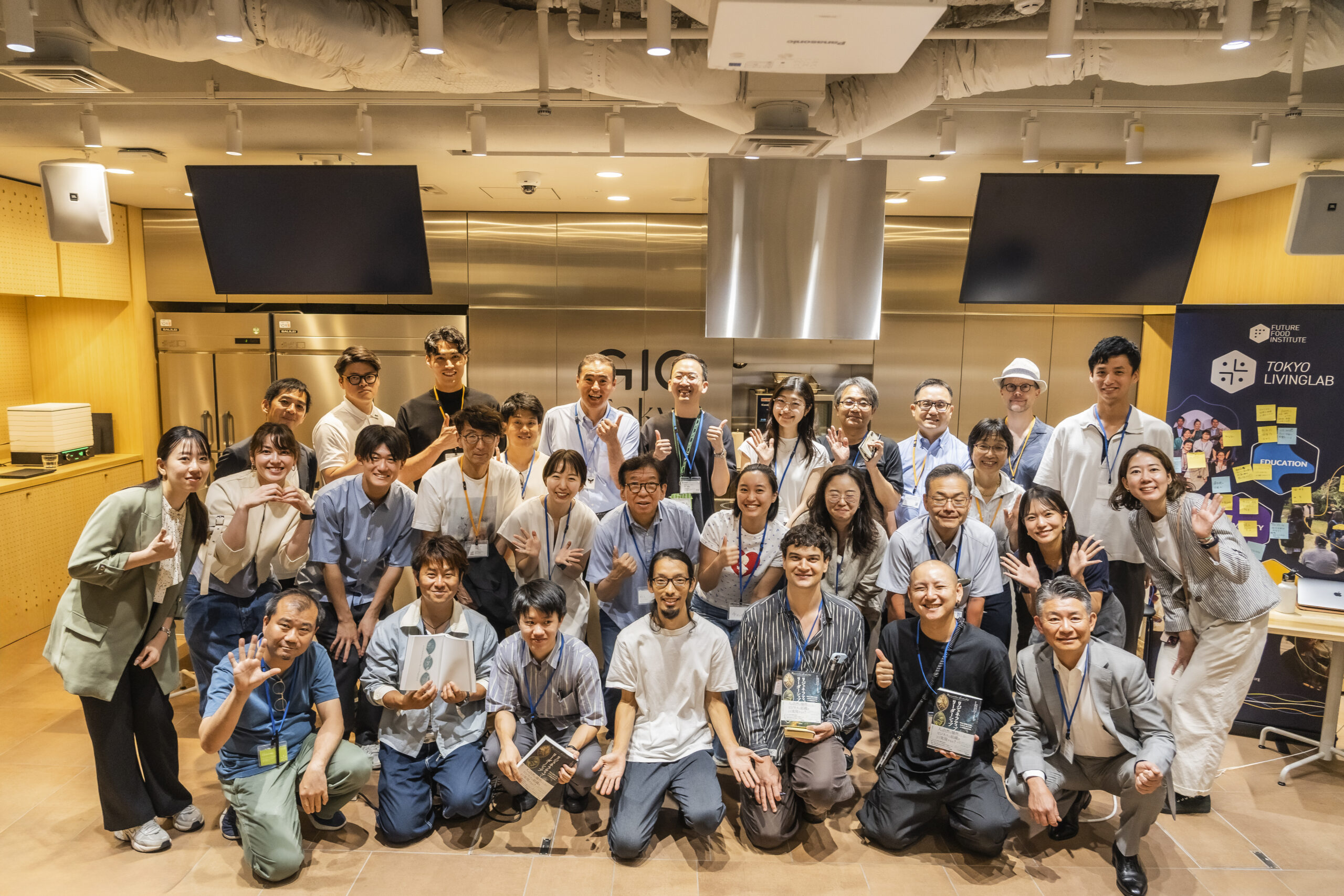
What emerged through this event was the possibility that the future of regenerative cities will not be created by blueprints drawn solely by experts or government, but will instead arise emergently from diverse actors engaging with a shared perspective of nurturing.
The three domains introduced by Kobayashi—“inner leadership,” “leadership with others,” and “leadership with life”—also serve as practical guideposts for anyone living in a city. Caring for one’s own mind and body, cultivating relationships with peers, and reexamining one’s connection with nature and local ecosystems. These small, accumulated shifts can gradually regenerate the entire city as a single living system.
The words voiced by participants—“beautiful” and “joyful”—highlight that beyond problem-solving, such feelings become the driving force that enables us to continue moving toward the future we truly desire. We hope that the dialogue sparked here at Tokyo Living Lab marks the beginning of a new story for regenerating Tokyo, one of the world’s largest megacities.
(Text: Michi Sugahara / Photos: Shuji Goto)
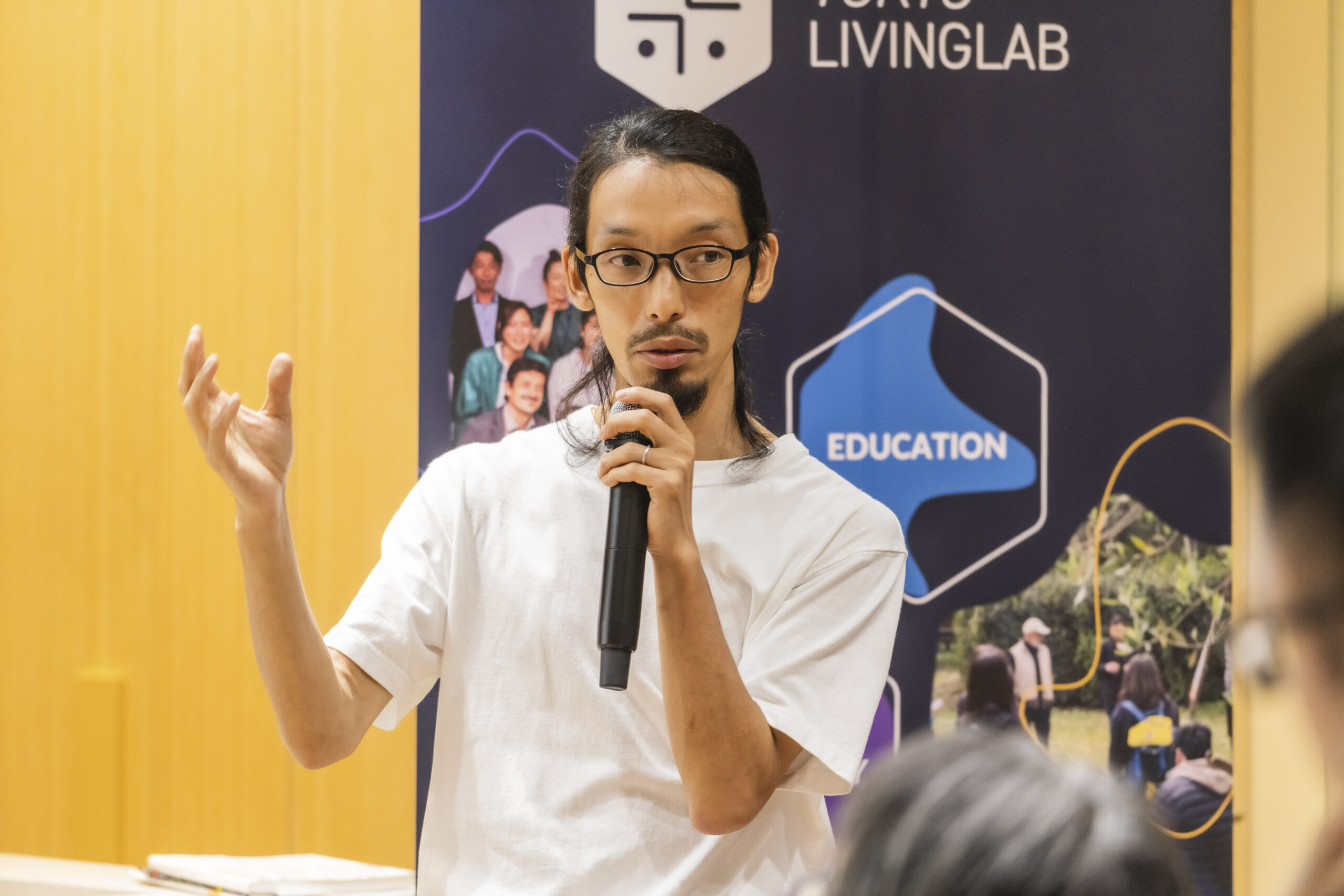
Representative Director / Founder, Ecological Memes
Ecosystemic Catalyst / Regenerative Facilitator
Owner, Kasukabe Farm (Regenerative Community Farm)
Kobayashi is the founder and representative of Ecological Memes, a collective exploring and practicing regeneration—reimagining the relationship between humans and nature and pursuing a future where people can thrive together with other forms of life and the Earth.
After traveling through 28 countries including India and Kenya, he worked in entrepreneurial support for social ventures. He later supported business creation and organizational transformation grounded in individual purpose across a wide range of industries before becoming independent.
He now works as a freelance catalyst and co-creation facilitator, supporting regenerative business development, organizational transformation, and leadership cultivation for a circular, regenerative society.
His motto is “go with the flow.” He is a father of one, and his personal interests have led him to become a licensed tour guide and obtain qualifications in traditional Chinese medicine and medicinal cuisine.
He also runs Kasukabe Farm, a regenerative community farm. In December 2024, he established Regenerative Leadership Japan to introduce, deepen, and advance the practice of regenerative leadership in Japan through lectures, advisory work, executive support, and leadership programs.
Instagram: @yasu_em
X (formerly Twitter): @yasu_cs
https://lit.link/yasuhirokobayashi