
Living Regeneratively by Starting with the “Small Pockets of Nature” Hidden in the City【Regenerative City Inspiration Talk Vol.6 — Part 2】
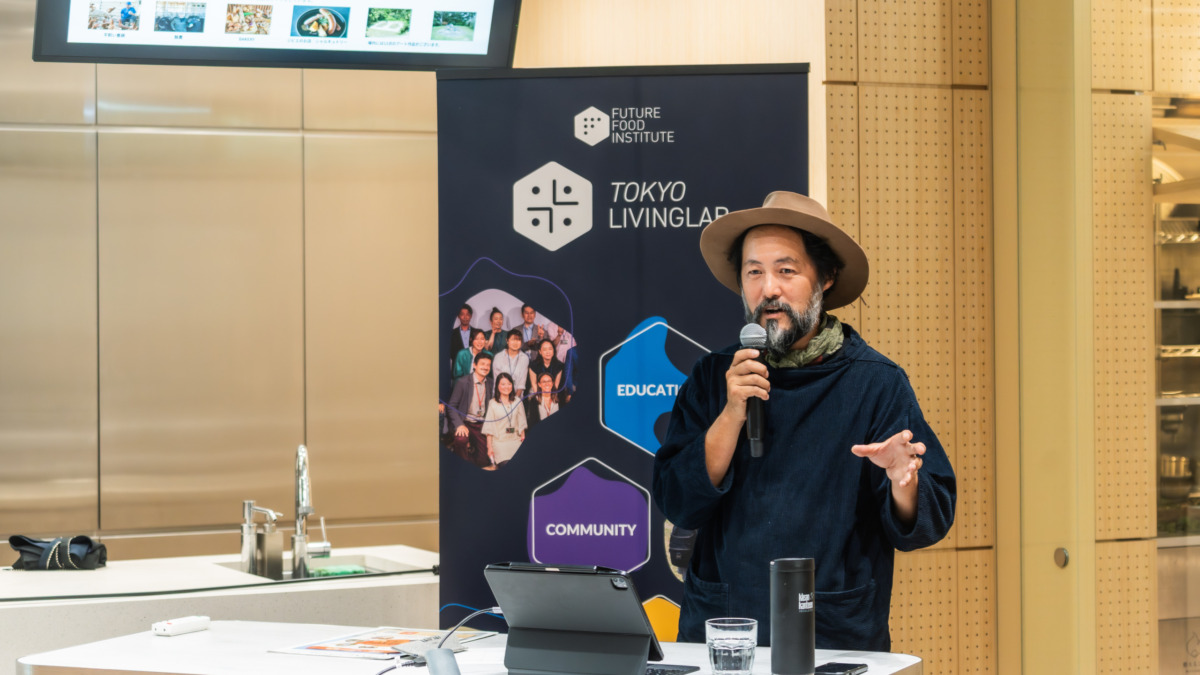
In Part 1, the session explored the theme “Reclaiming the Senses Lost in Urban Life—What Do Food, Agriculture, and Nature-Based Experiences That Regenerate Cities Look Like?” Go Sato introduced the practices of KURKKU FIELDS, where agriculture, food, and art are integrated into daily life. He also spoke about how, even without initially setting out with the concept of “regeneration” in mind, sustained reflection and hands-on practice have led to the gradual restoration of the surrounding ecosystem.
Building on this foundation, Part 2 turns its focus to how we might perceive “nature within the city,” and how such perspectives can be applied to urban areas like YNK. Through discussions with participants, and guided by Sato’s insights, the session explores practical ways of putting “regenerative living” into action in everyday urban life.
In the previous session, participants learned about the initiatives at KURKKU FIELDS, where agriculture, food, and art are integrated in pursuit of coexistence with nature in Chiba. Past visitor surveys revealed that, more than the site’s material offerings, it is the dynamic, lived relationship with nature that truly supports visitors on an emotional level. From here, the session moved into a Q&A, inviting participants to explore this one-of-a-kind approach more deeply.
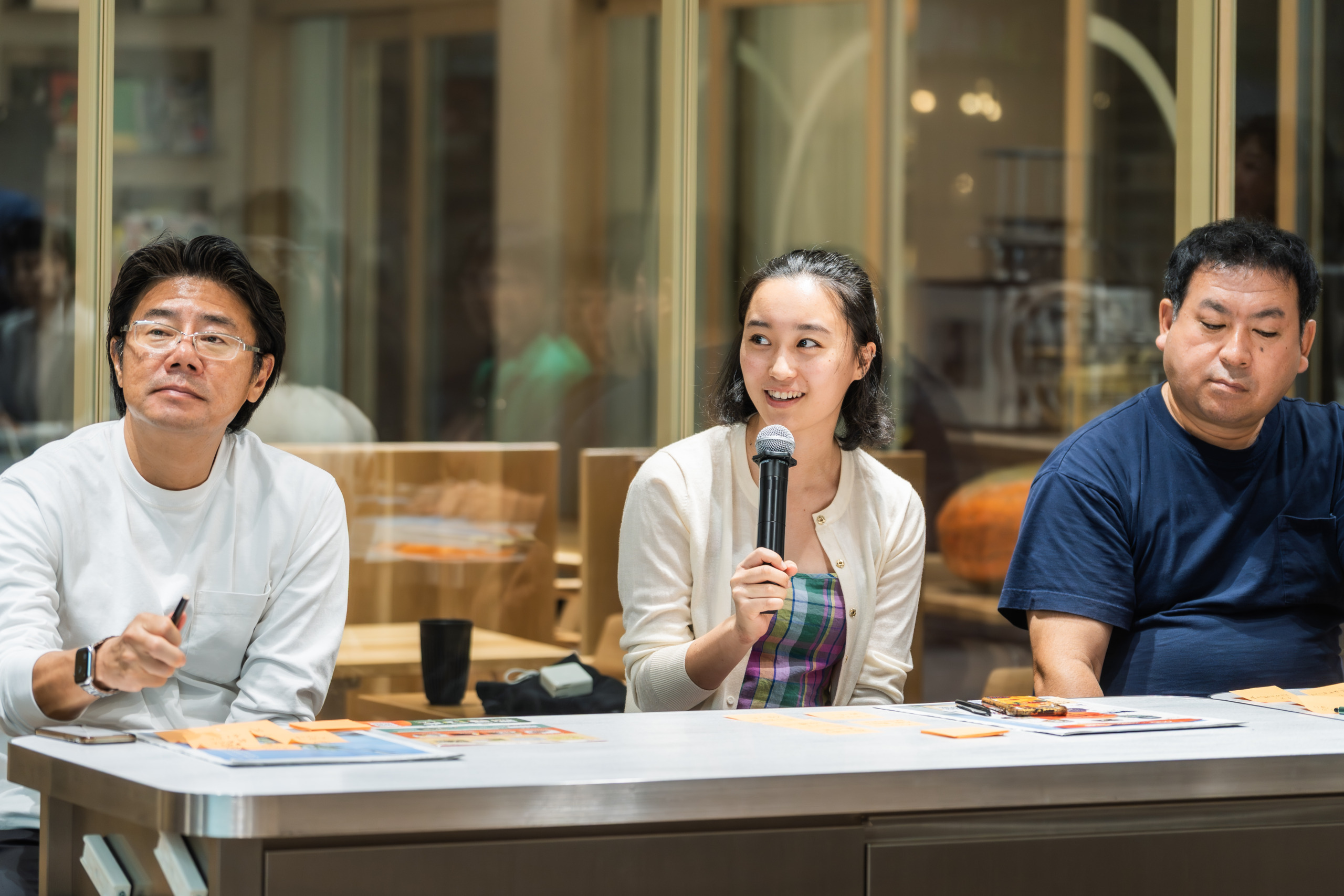
One of the first questions raised concerned collaboration with similar facilities and whether KURKKU FIELDS sees others as competitors. Sato responded that the combination of initiatives practiced at KURKKU FIELDS is rare both in Japan and internationally, and that there are no clear rivals. Rather, he shared that he feels a stronger sense of partnership with others, noting that connections are already forming with people who visit the site for study tours, as well as with other players across the Bōsō Peninsula.
When asked about current challenges, Sato answered candidly: “If we want to create real impact in society, we still need to grow the business.” He emphasized that there is much more the organization hopes to contribute, but that scaling up remains essential.
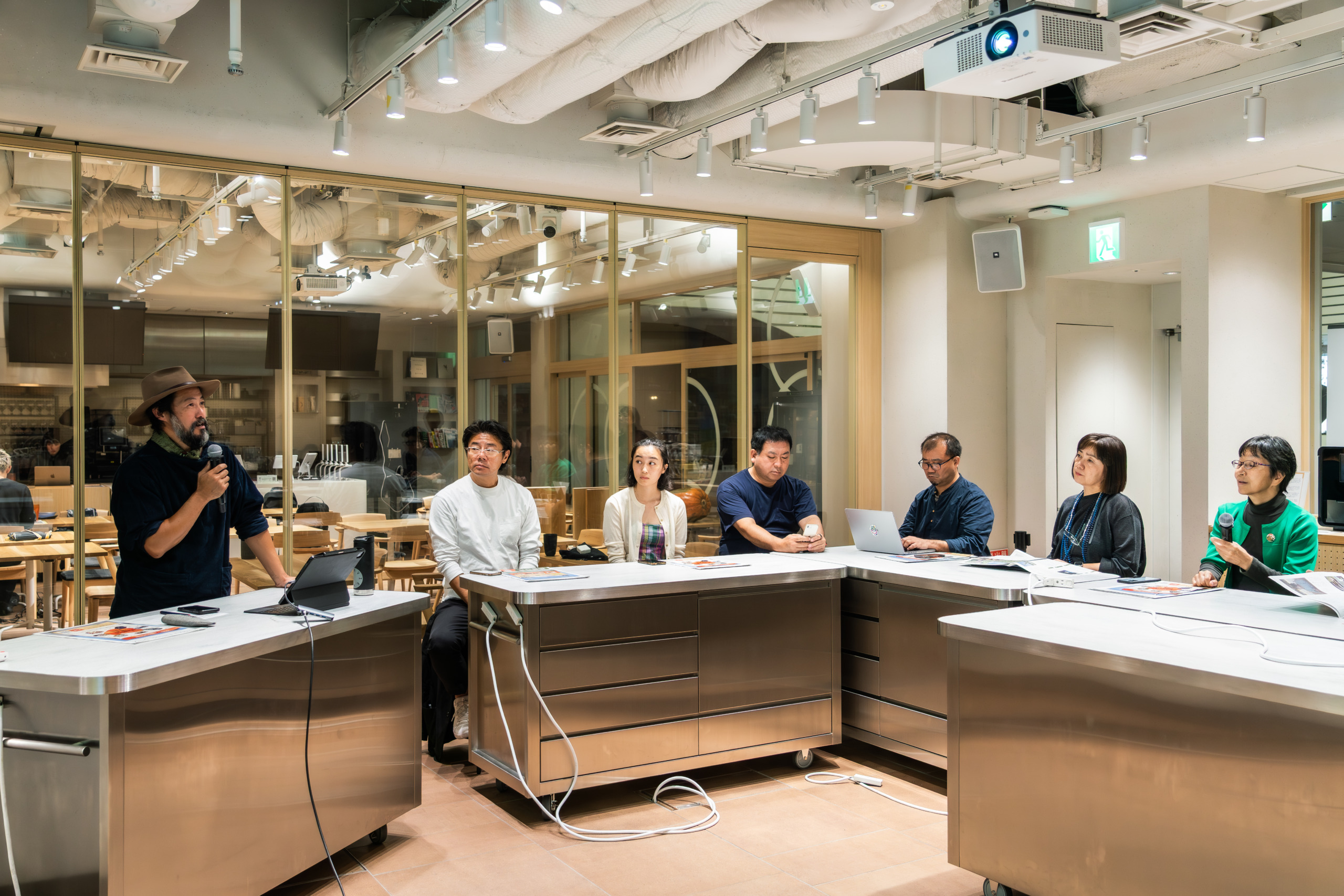
One of the biggest challenges in scaling, he explained, is human resources. “No matter how large the facility becomes, it’s difficult if there aren’t people who can carry its values forward,” he said, pointing to the difficulty of both securing and nurturing talent. Sato shared an anecdote from CEO Takeshi Kobayashi, who often compares the staff to members of a band. Kobayashi’s ideal, he explained, is not a conventional corporate structure, but a gathering of people who genuinely want to express themselves—like a musical session.
“Of course, not everyone naturally fits that model,” Sato admitted. “Drawing that kind of expression out of the people already working here is incredibly difficult. From a development standpoint, it’s one of our toughest challenges.”
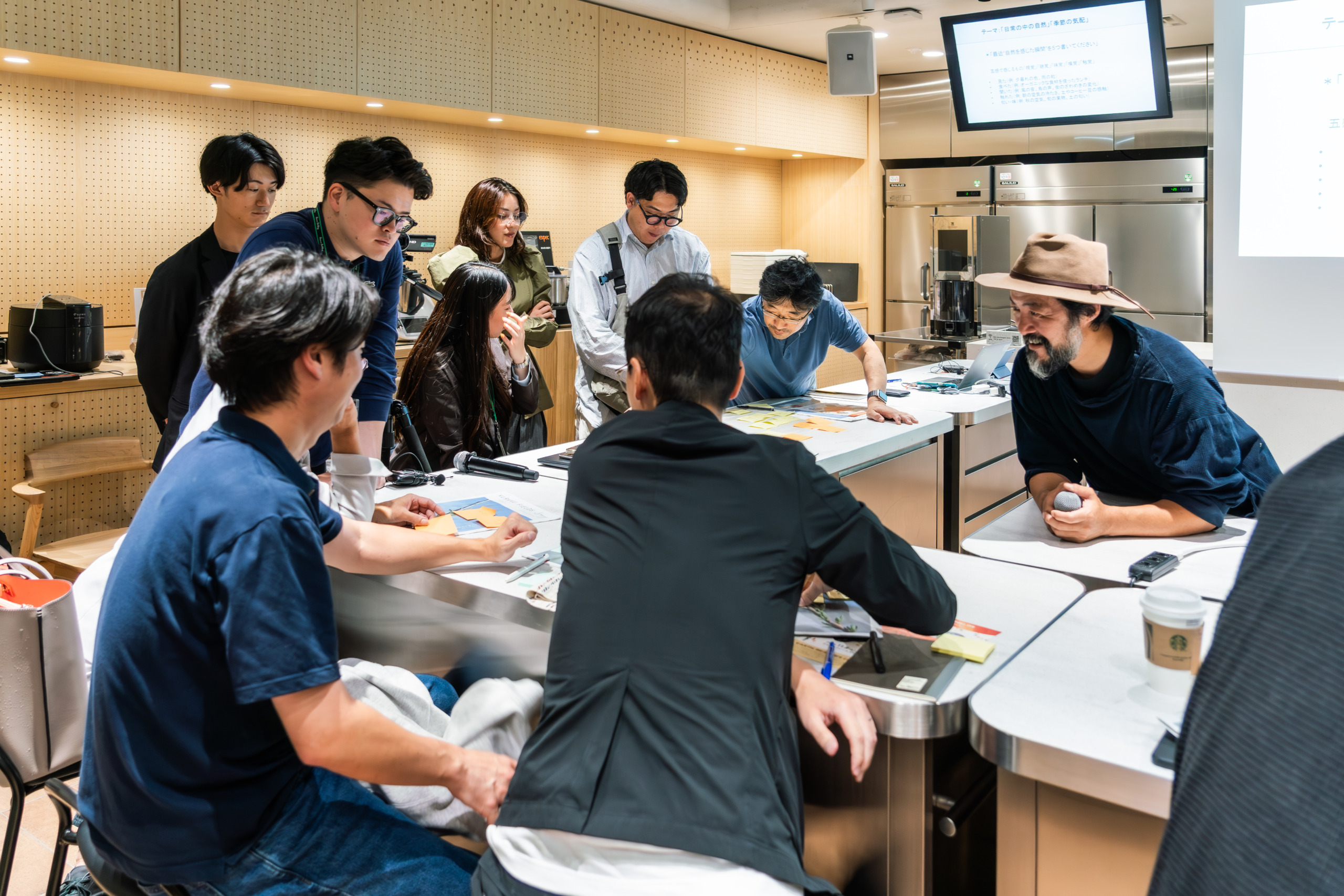
In the latter half of the event, the session shifted into a workshop involving all participants. The first prompt posed was simple: “Please write down five moments when you recently felt nature.”
Responses from around the room included observations such as: “The sun has been setting earlier,” “I was bitten by mosquitoes in a park even though it’s autumn,” “Eating turnips and leafy greens made me feel winter approaching,” and “The smell of ginkgo trees and the sensation of stepping on fallen leaves.” Through these reflections, subtle seasonal changes hidden in everyday life—perceived through the five senses—were shared among participants.
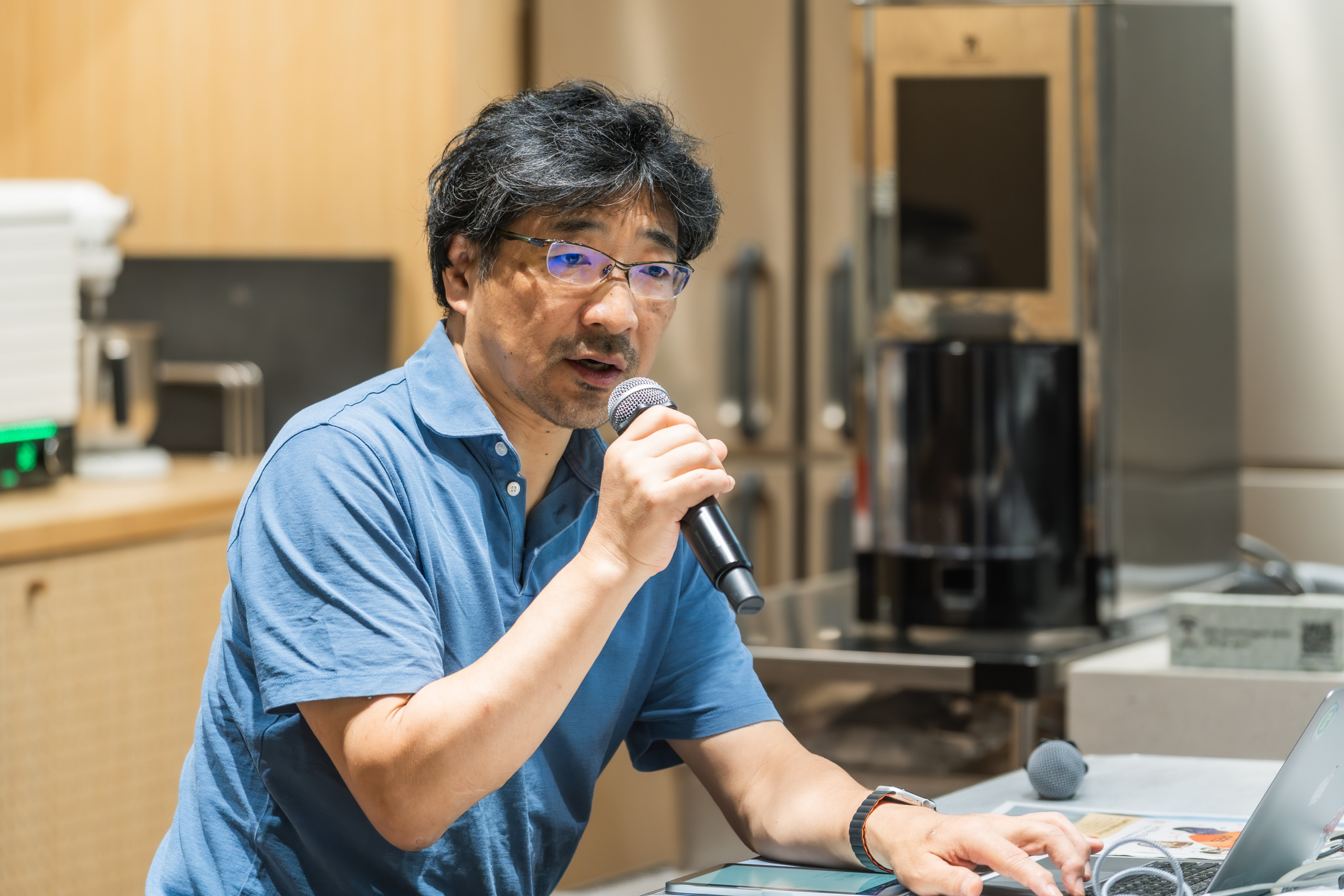
Masanori Fukada of the Future Food Institute, who served as moderator, explained the intention behind the exercise:
“To create a regenerative city, we want to build places where people can sense these ‘small forms of nature.’ Through this workshop, we hoped participants would become more aware of the small moments of nature they already experience in daily life. Even while living in the city, this helps us reconnect with food and production, and to recognize that connection more consciously.”
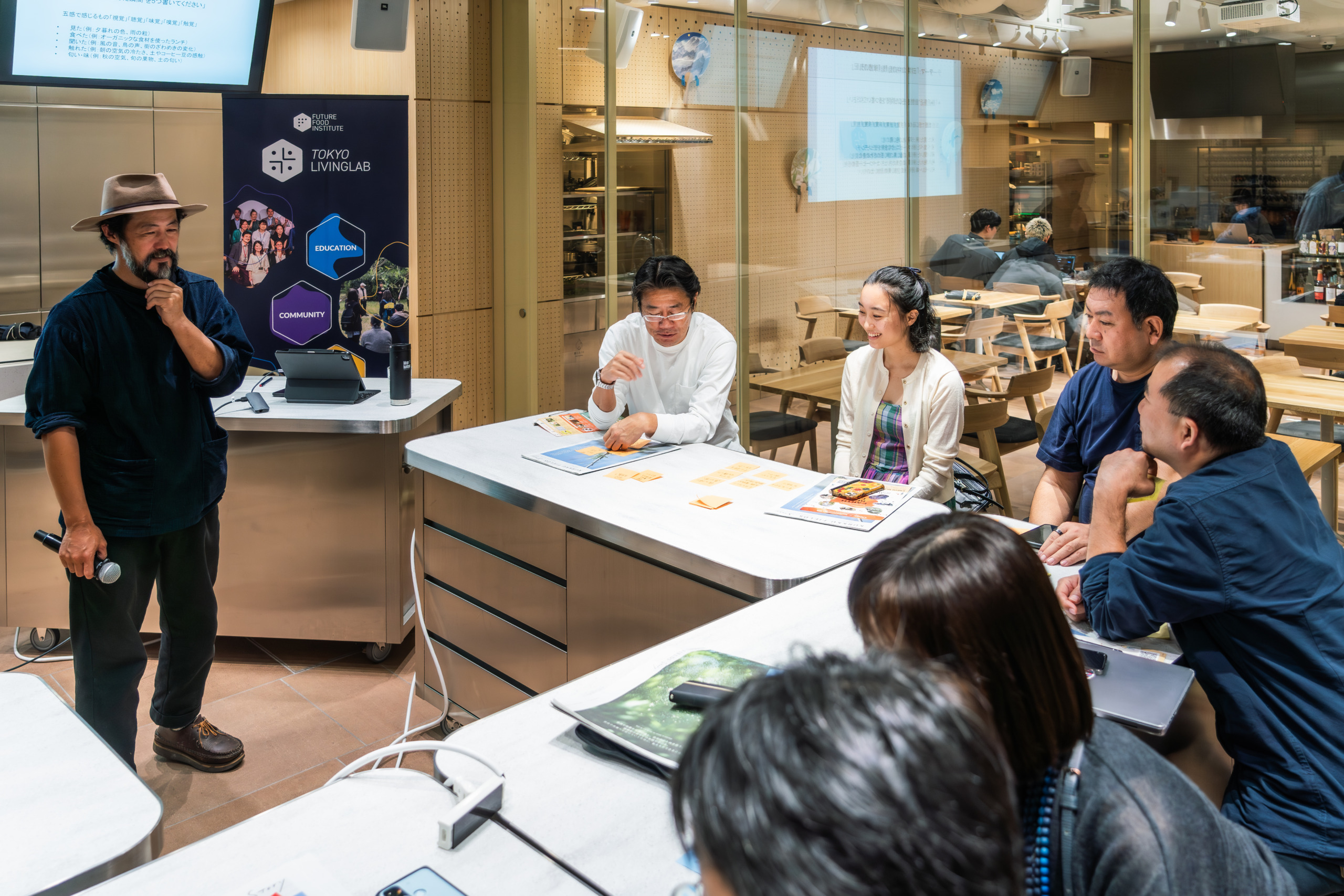
This was followed by a discussion on “How to practice a regenerative way of living without traveling far—that is, within the city itself.” Participants shared perspectives on shifts in personal awareness, such as noticing urban nature more acutely after leaving Tokyo for a trip and then returning. Others proposed concrete actions, including practicing composting at home.
Additional examples of “small pockets of nature” scattered throughout Tokyo were also mentioned: discovering an almond tree in Shimokitazawa; finding a small spice garden tucked away behind Ebisu Garden Place; and personally participating in Komorisu, an initiative that installs small urban forests, practiced by one participant in the Yoyogi-Uehara neighborhood.
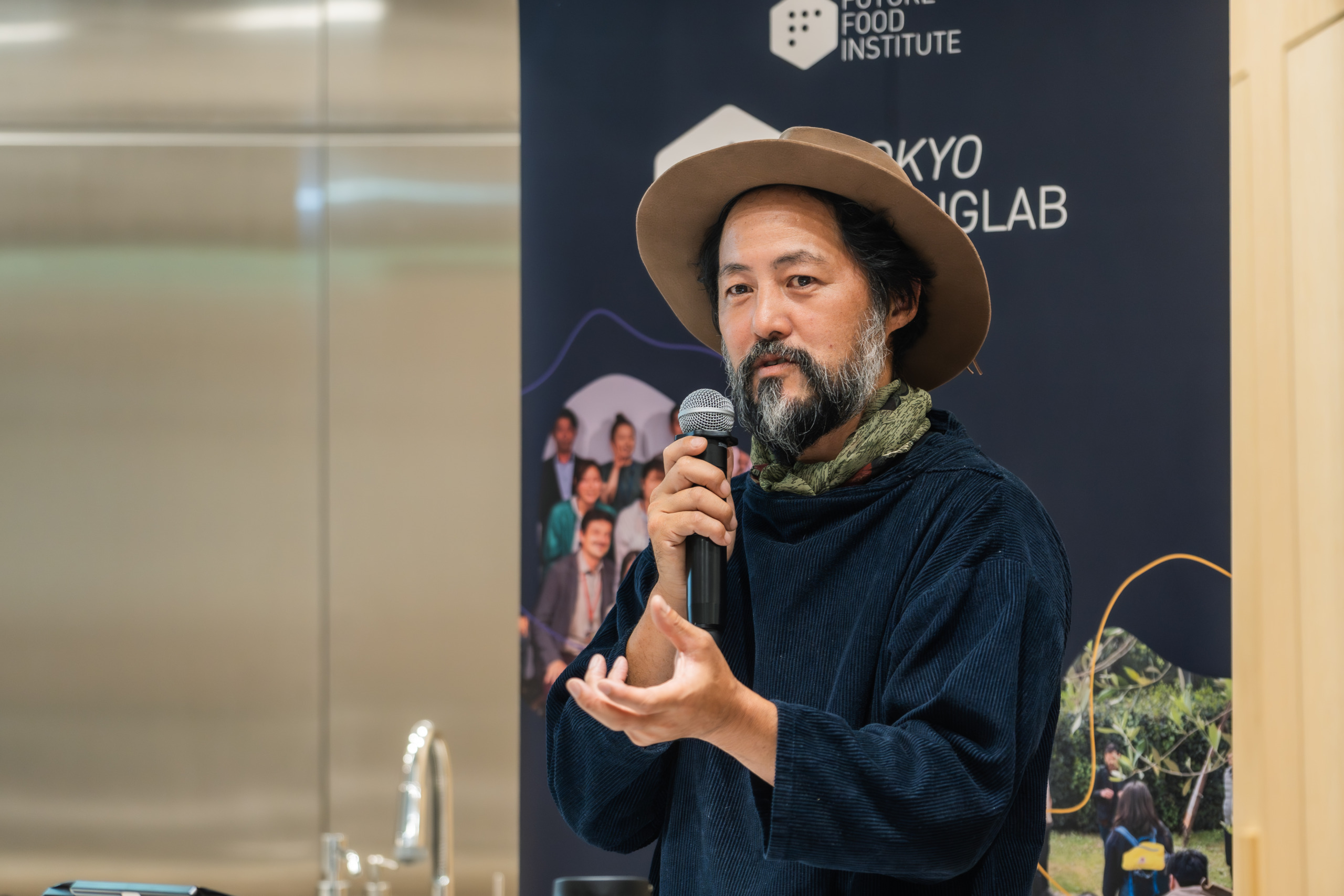
As the event drew toward its conclusion, Sato prefaced his remarks by saying, “There’s no single, clear answer,” before sharing a more personal reflection. “When you live in the city, it’s easy to feel that nature is far away. Not many people in Tokyo may have been born here, but most of us carry formative experiences tied to a hometown—we may have simply forgotten them. And I sometimes worry about what kinds of formative experiences children born in Tokyo will have from now on.”
Picking up on this thread, Masanori Fukada noted that rather than separating cities and rural areas, it is important to recognize that nature exists within cities as well—and that moments of rural nature can also be felt in urban life. “It’s not about choosing between the artificial and the natural,” he said, “but about working with both.”
Sato responded from his experience at KURKKU FIELDS.
“When it rains, people tend to say, ‘Ugh, it’s raining.’ But when you’re farming, you think, ‘Ah, that’s a relief.’ By standing on the side of nature—or of other living beings—you begin to see things differently. The same applies to business. Just as you might say, ‘An economic downturn can be a good thing, too,’ a situation that seems negative from one perspective may be positive from another. Rather than drawing hard lines, I think it’s better to soften them and let those boundaries dissolve.”
In closing, Sato spoke about the importance of investment, referencing a phrase often used by Takeshi Kobayashi of KURKKU FIELDS.
“Kobayashi often says, from a management perspective, ‘There are plenty of people who have more money than I do,’ while talking about his hopes for the future. If more young people who have earned wealth through IT or business were to use their money not for immediate returns, but to invest in the future, we might see far more regenerative practices take root.”
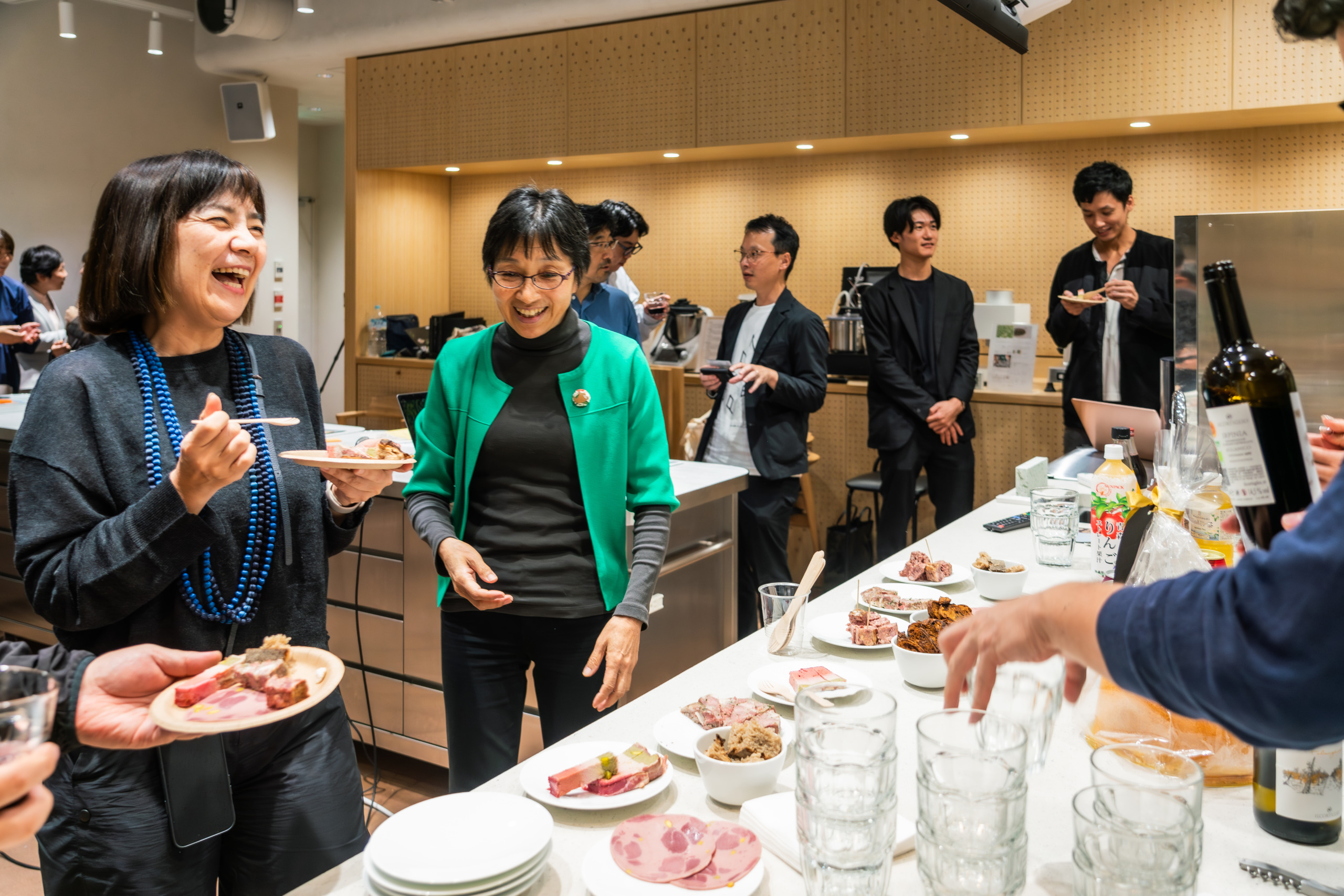
After the talk session, participants gathered to sample dishes prepared by KURKKU FIELDS. Sharing wild game dishes such as wild boar ham and terrines made from muntjac and pork, alongside chiffon cake made with milk from the farm, the group continued their conaversations in a warm, relaxed atmosphere—bringing the evening to a convivial close.
(Text by Michi Sugawara / Photographs by Shuji Goto)
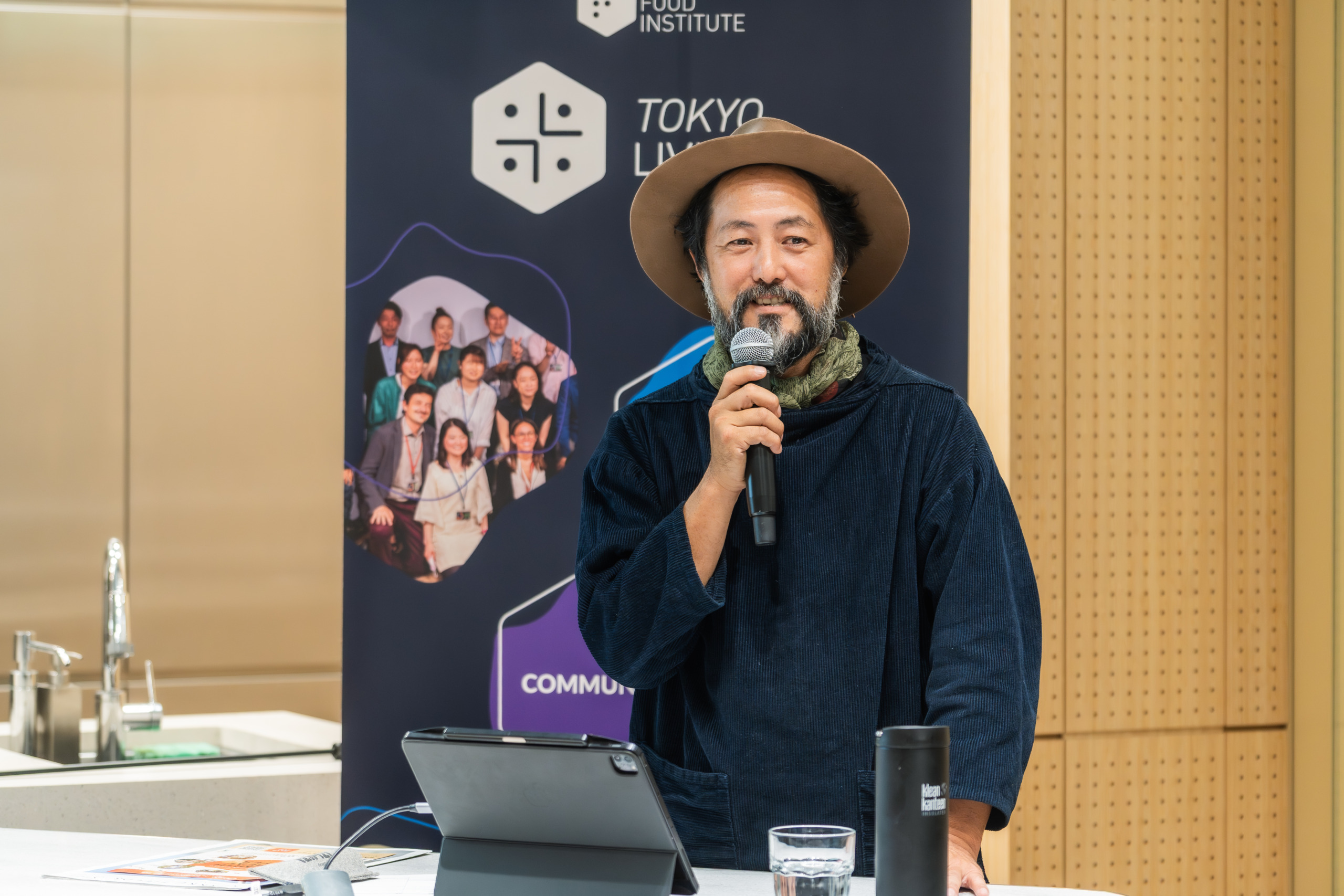
Born in 1980 and raised in Shibuya, Tokyo, Sato grew up immersed in nature, influenced by parents who loved the outdoors. He specialized in outdoor education in both high school and university. In his early twenties, he worked as a nature guide on Amami Ōshima while searching for an ideal way of living.
He later spent nearly a decade at Patagonia International Inc.’s Japan office, where he deepened his understanding of the relationship between the environment and business. Drawing on a long-standing personal interest in leathercraft, he went on to establish an independent, hand-stitched leather brand, focusing on leather as a material that bridges clothing and food.
In 2021, Sato joined KURKKU FIELDS in Kisarazu City, Chiba Prefecture. At this sustainable farm and park—dedicated to practicing and proposing new forms of societal well-being—he works hands-on each day to support systems where people and nature coexist, striving to understand the land and ensure that the environment functions in harmony. Through his work, he shares both practical initiatives and underlying philosophies with those who visit the site.