
Toward a Chain of Inspiration that Gives Rise to a “Regenerative City”: Exploring the Three Principles of the Urban Regeneration with WIRED’s Kotaro Okada 【Regenerative City Inspiration Talk Vol.1 — Part 1】
As the word “sustainability” has become part of our shared social vocabulary, new concepts aiming one step beyond—“regeneration” and “regenerative”—have begun to gain traction. These ideas go further than reducing negative impacts such as environmental burdens; they envision leading human society and entire ecosystems toward richer, more thriving states—toward moving “from zero to positive.”
How, then, can this regenerative mindset be implemented within a major metropolis like Tokyo?
To explore this question, the first session of the new event series “Regenerative City Inspiration Talk — Rethinking the Future of Regenerative Cities from Tokyo” was held on May 21 at TOKYO LIVING LAB in Yaesu.
The opening theme for the series was: “What Should Future Cities Regenerate? A Conversation with the Editor of WIRED Japan.”
The guest speaker was Kotaro Okada, editor of WIRED Japan, who served as the issue editor for both The Regenerative Company and The Regenerative City editions.
The venue gathered a diverse audience, and lively discussions unfolded around the question of what a truly “regenerative city” could be.
As part of the Regenerative City Tokyo initiative—developed by the Future Food Institute (FFI) in partnership with Tokyo Tatemono and the TOKYO FOOD INSTITUTE—this event series is held regularly as one of its key programs.
Toshikazu Sawa of Tokyo Tatemono explains that regeneration is “a value system that goes beyond sustainability’s goal of moving ‘from minus to zero,’ and instead aims to restore and renew — from ‘zero to positive’ — in response to challenges such as climate change.”
This approach is not about simply returning to an original state; rather, it represents a forward-looking, dynamic evolution that also embraces advanced technologies. Its goal is holistic optimization across multiple dimensions—not only the environment and economy, but also society, culture, and everyday life.
Sawa positions this event series as the first step in realizing that cycle: a place where people who resonate with the philosophy can come together and engage in dialogue.
Masanori Fukada of FFI, who served as facilitator, added that the intellectual foundation of regeneration at FFI lies in an approach that “does not treat domains such as the environment, humanity, society, culture, economy, and politics as separate issues, but instead considers them as interconnected and integrated.”
In essence, regeneration is a philosophy that seeks to achieve both “the restoration of the global environment” and “human well-being across economic and social systems,” ultimately aiming for a net-positive state in which the entire ecosystem thrives.
Through these explanations, it became clear that this event series is positioned as a forum for dialogue among people who share and resonate with this philosophy.
WIRED Japan, a media platform known for “implementing the future” and exploring how technology transforms every aspect of life—from culture and business to science and design—released a special issue in September 2024 dedicated to the theme of the “Regenerative City” as a lens for thinking about the future of urban life.
The term itself likely gave everyone in the room a sense that they were standing at the forefront of shaping “the cities of the future.”
Okada introduced three core principles developed together with advisors during the production of WIRED’s special issue “The Regenerative Company.” He positioned these principles as foundational when considering what a regenerative society or city should aspire to be.
MULTI-STAKEHOLDER
Creating Positive Impact for “Stakeholders Without Representation”
Future generations, multispecies communities, and natural capital such as rivers and forests have no one to speak on their behalf. Recognizing these “overlooked” stakeholders—and designing incentives that create positive impact for them—is essential for future business activities.
In doing so, new forms of governance and ownership will play a key role in ensuring that profits and value are returned to the broader ecosystem and communities surrounding a company.
“Once a building is constructed in urban development, it remains for decades. That building will eventually be used by future generations who have not yet been born, but their voices are never reflected at the time of construction. When we think about regenerative cities, we must expand our understanding of who our stakeholders truly are.”

PLURAL CAPITAL
Generating Diverse Forms of Capital and Measuring Their Value
It is now widely recognized that no form of capital exists in isolation; all are intricately interconnected. Beyond maximizing financial capital, companies must redefine how their activities relate to human, intellectual, material, natural, and social capital—and enrich all of these forms simultaneously.
Actively reassessing and elevating forms of capital that have long been overlooked, and making their value visible to society, will become a core responsibility of companies going forward.
SYSTEM CHANGE
Intervening in Complex Systems to Restore and Transform Them
If the challenges society faces today stem from systemic issues, then pursuing sustainability or resilience—or compensating for gaps through philanthropy funded by economic capital generated within existing capitalist rules—only serves to prolong the life of the very systems causing the problems.
What we now need is to intervene in these systems themselves and rebuild them.
Because the systems that sustain ecosystems and local communities are inherently complex, identifying the key intervention points and pinpointing root causes becomes essential.
After explaining the three principles, Okada introduced an example of a regenerative company that embodies them: Utopia Agriculture, the producer of the cheesecake Cheese Wonder.
The company addresses the issue of methane gas emitted through cow burps—a known environmental burden—by adopting a pasture-based dairy system. In collaboration with Hokkaido University, they are researching how the act of cows grazing—stepping on grass and mixing manure with the soil—can increase the soil’s capacity to absorb CO₂. Their aim is to create a system in which the soil absorbs more CO₂ than the methane produced by the cows.
“Consumers can contribute to environmental regeneration simply by enjoying a delicious cheesecake. It is, in my view, an ideal business model—one that restructures the system itself while also driving changes in consumer awareness.”
Why, then, are these three principles needed now?
Okada also pointed to the challenges that contemporary Tokyo faces.
“Since the Urban Renaissance Special Measure Law was enacted in 2002, large-scale redevelopment has progressed rapidly. However, taking an approach that simply opposes or rejects redevelopment is not necessarily effective.
For developments driven by economic rationality, it is important to pursue values beyond economics—such as the richness of the natural environment—or to steer development toward more regenerative directions. In other words, we need to explore more constructive approaches.”
As hints for such constructive dialogue, Okada introduced leading examples from around the world.
New York’s Billion Oyster Project is an initiative to restore one billion oysters to the city’s waterways by 2035.
The project not only harnesses the oysters’ natural ability to purify seawater—an essential “ecosystem service”—but also engages local residents in hands-on participation. Through this involvement, citizens actively contribute to the restoration of their own urban environment, while also fostering new forms of community connection.
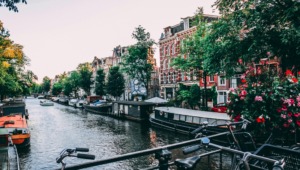
In the field of architecture, Okada also highlighted the “Material Passport” initiative promoted by firms such as RAU Architects in the Netherlands.
This approach assigns individual IDs to building materials, making them traceable so that materials can be reused elsewhere after a building is dismantled, rather than being treated as waste. The concept has been adopted for the Netherlands Pavilion at the Osaka–Kansai Expo, reflecting a philosophy that reimagines buildings not as artificial structures separated from nature, but as components within a broader cycle of life.
This idea is also aligned with the principles behind the Living Building Challenge, considered one of the world’s most rigorous environmental certification systems.
“The philosophy of the Living Building Challenge is fascinating—it starts from the idea that a building is part of a living cycle. Architecture has long been viewed as an artificial construct, separated from the natural environment. But this movement begins by repositioning architecture as part of nature’s circular system.”
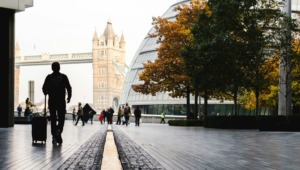
Another example Okada highlighted is the Biodiversity Net Gain policy introduced in the United Kingdom.
Under this law, developments such as residential construction are required to ensure that biodiversity increases by at least 10% compared to pre-development conditions. In other words, it is a framework that mandates regeneration as an integral part of the development process itself.
He also mentioned other cases, such as “low-tech design,” a movement that draws upon local, traditional knowledge and resources, and “The Multispecies City,” a research report released by the City of Helsinki that explores urban environments designed not only for humans but for diverse non-human species as well.
The “edible landscape” implemented by the food-scaping organization Green Neighbors at sites such as Ebisu Garden Place is an approach that not only enhances the beauty of the landscape but also fosters community through the act of growing, tending, and eating crops.
Okada also pointed to several noteworthy developments taking place in Tokyo:
- Mind-Dev (Mind-Development):
An initiative launched by groups such as Tokyo R Real Estate, in which local landlords and landowners collaborate with architects and long-established businesses to proactively lead community-based area development. - Ikimono Tokyu Fudosan:
A project that creates bird nests on urban buildings, aiming to build an ecosystem network for wild birds across the city. - Nishiike Valley:
A West Ikebukuro project in which a landowner with a 17-generation lineage renovates their properties to create a multifunctional complex including shared kitchens, coworking spaces, and residential units.
Okada explained that systematizing and formalizing these individual initiatives into methodologies will be key to envisioning new landscapes in the outer areas of Tokyo.
The three principles presented by WIRED Japan—Multi-Stakeholder, Plural Capital, and System Change—serve as a compass for creating regenerative cities. And the pioneering cases from around the world show that these principles are not abstract ideals, but practical and actionable approaches.
So how can these insights be applied to a complex metropolis like Tokyo?
In the second half of the event, the participants’ Q&A and group discussions revealed concrete pathways for making Tokyo regenerative, as well as hints for overcoming cultural barriers.
(Text: Michi Sugahara)
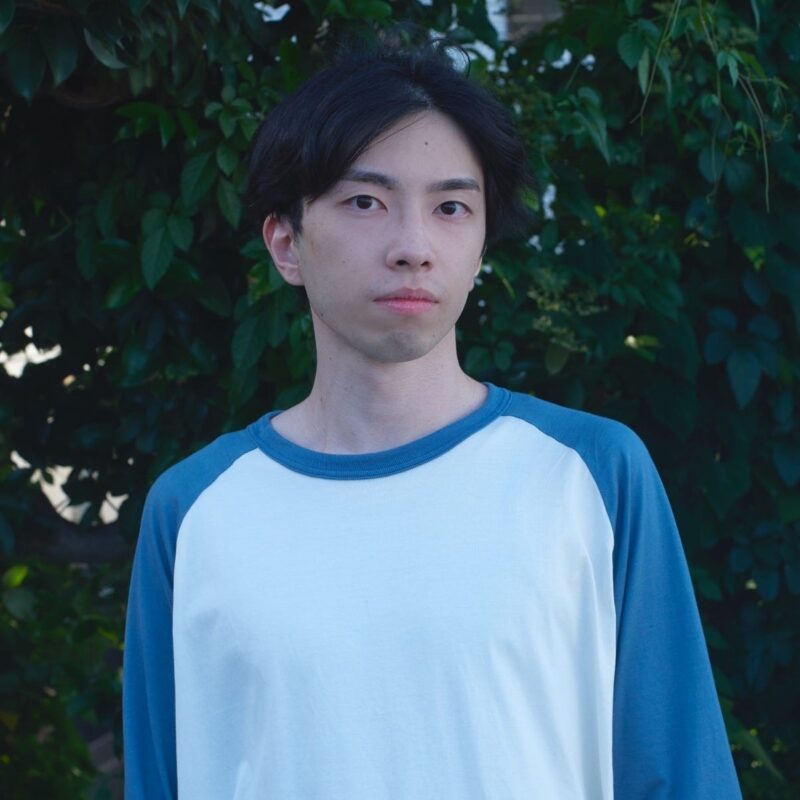
He is also the Representative Director of Desairo and the Representative Director of B-Side Incubator, both general incorporated associations. In addition, he is a partner at the creative collective PARTY.
Born in Tokyo in 1994, Okada studied service design at Keio University. He was selected for Forbes JAPAN “30 UNDER 30” in 2023.