
Cooperatives and the Future of Regenerative Communities — Social Innovation Lessons from Successful Cases in Japan and Italy 【Regenerative City Inspiration Talk Vol.5 — Part 1】
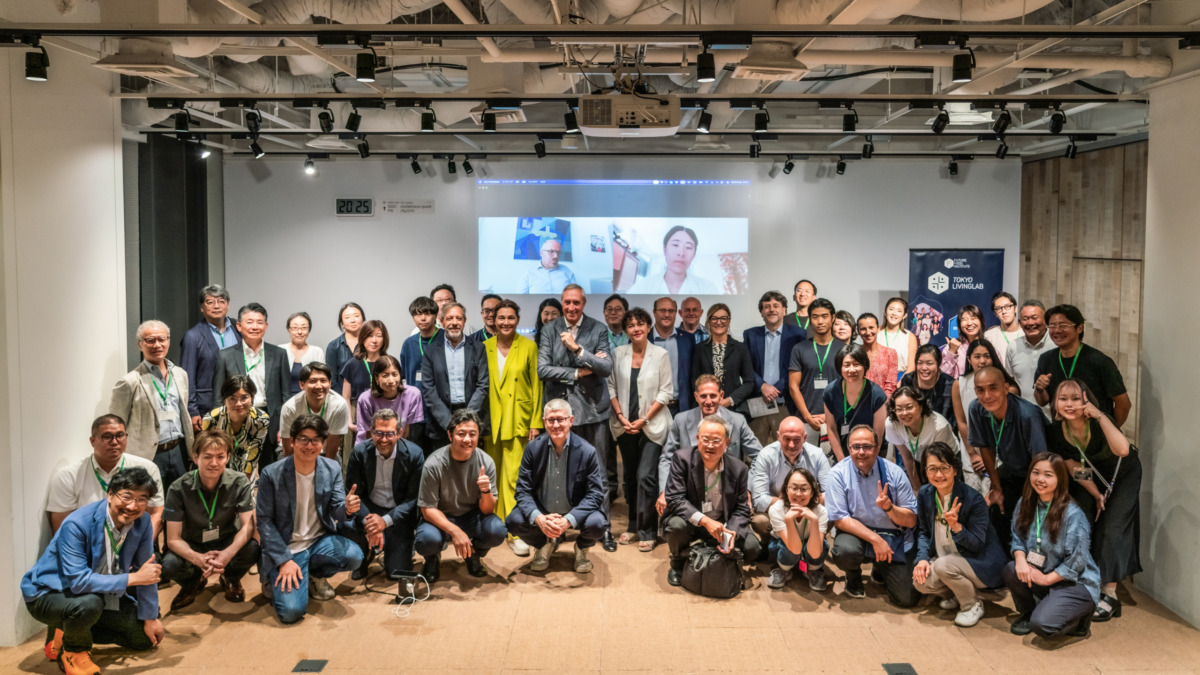
The “Regenerative City Inspiration Talk” is a recurring event series that explores the future of Tokyo through a regenerative lens.The fifth session was held on September 26 at City Lab Tokyo in Kyobashi, Tokyo.
This session was presented as a “Special Edition,” welcoming 12 experts from Italy, including Ernesto Dalle Rive, President of the consumer cooperative ANCC-COOP Italia.From Japan, speakers included Akie Iriyama, Professor at Waseda Business School and a leading management scholar; Mariko Murakami, who promotes foodtech initiatives at Japan’s Ministry of Agriculture, Forestry and Fisheries; and Hirotaka Tanaka of UnlocX, who is engaged in building ecosystems for food innovation.
The theme of the event was “Regenerative City-Making Through Food.”Through a series of presentations, speakers shared initiatives, success stories, and future perspectives centered on cooperatives in Japan and Italy that are driving the transition toward a sustainable society. Insights included ANCC-COOP’s efforts to improve citizens’ quality of life, as well as the factors behind the success of Coop Sapporo in Hokkaido and its strong commitment to social value creation—offering up-to-date perspectives on social innovation in both countries.
The event opened with the participation of 12 guests from Italy, led by Ernesto Dalle Rive, President of the National Association of Italian Consumer Cooperatives (ANCC-COOP).
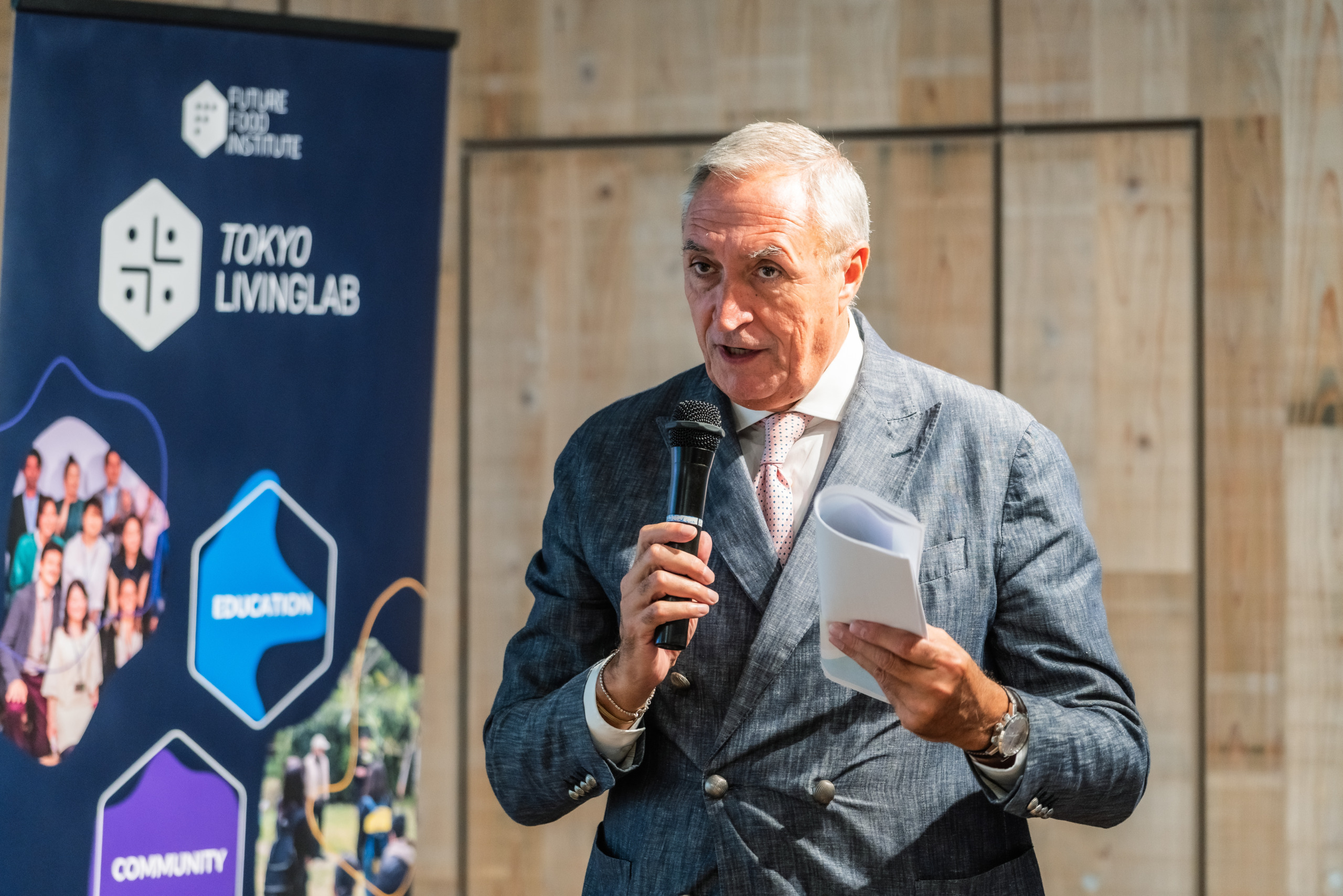
Dalle Rive addressed the challenges facing modern cooperatives, noting that political instability is creating widespread anxiety about the future, which in turn is shaping consumer behavior. In this context, he observed, consumers increasingly tend to place greater emphasis on price.
One of the most pressing challenges facing cooperatives today, he continued, lies in how they can ensure that consumers are able to access high-quality products under these conditions. More specifically, the question is whether it is possible to make good products accessible even at lower prices, while allowing sustainability to coexist within everyday consumption practices—an issue that has become an urgent challenge. At the core of their response is the promotion of the Coop private label. By taking the lead through their own brand, cooperatives are able to exercise control over pricing, advance environmentally responsible product development, and uphold respect for producers’ rights.

Following Dalle Rive, Maura Latini, Managing Director of ANCC-COOP, took the stage to outline concrete innovations behind Italy’s Coop brand, which has built a history spanning 77 years. Guided by a mission to provide high-quality products at affordable prices, the Coop brand has grown to encompass approximately 6,000 items. Throughout its history, it has played an essential role in ensuring access to goods for low-income households facing economic hardship.
Driven by the belief that providing safe, high-quality products—not merely low-priced ones—contributes directly to improving people’s quality of life, the Coop brand has continued to pursue a wide range of innovations.
No Artificial Colorings:
Coop brand products contain no artificial colorings whatsoever, using only naturally derived ingredients.
Complete Phase-Out of Palm Oil:
Since 2016, Coop has eliminated the use of palm oil across all products, with a focus on improving product quality while minimizing environmental impact.
Discontinuation of Antibiotic Use:
Beginning in 2017, Coop undertook the challenging initiative of discontinuing the use of antibiotics in livestock and farmed fish.
Simple Ingredients:
Even as industrially produced goods, Coop brand products are designed to be made from simple, carefully selected ingredients.
Latini emphasized that while none of these initiatives are easy, they are challenges that can only be achieved by moving forward together, through shared commitment and collaboration.
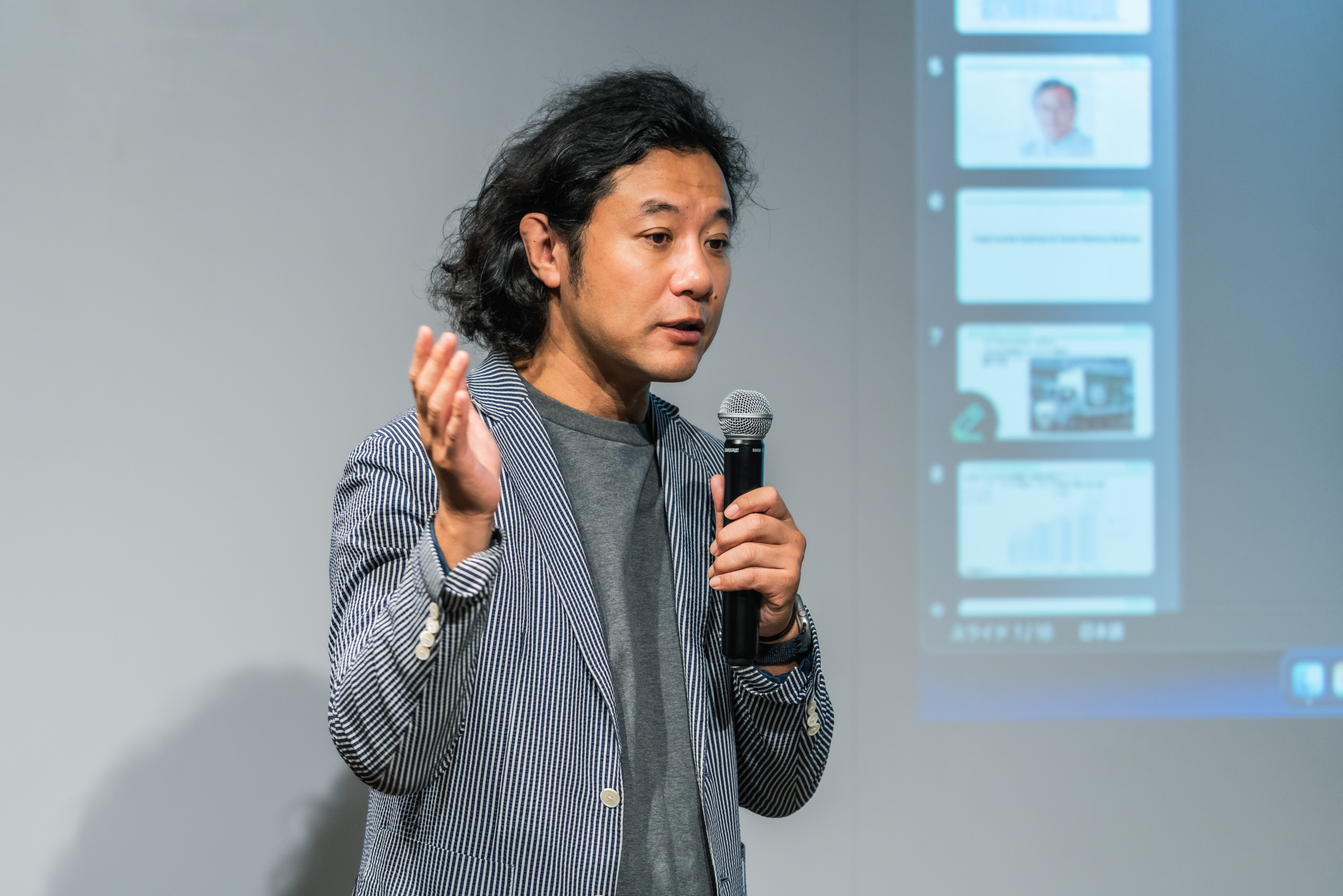
The next presentation was delivered by Akie Iriyama, Professor at Waseda Business School and moderator of the event.
Iriyama introduced the case of Coop Sapporo, a consumer cooperative for which he also serves as a board member. Operating across the entirety of Hokkaido, Coop Sapporo currently counts approximately two million members and generates annual revenues of 321.9 billion yen (approximately €1.83 billion). Iriyama noted that its continued sales growth in Hokkaido—one of the regions experiencing the most severe population decline in Japan—is nothing short of remarkable. Among all consumer cooperatives in Japan, he explained, Coop Sapporo is the only one to have achieved this level of sustained growth.
What makes this achievement particularly noteworthy is the fact that Coop Sapporo experienced a de facto financial collapse in 1998. Its dramatic V-shaped recovery over the subsequent three decades can be attributed, Iriyama explained, to the exceptional leadership of its current Chairperson, Hideaki Omi, whom he described as “without question, one of the top three business leaders in Japan.”
The driving force behind this recovery has been Coop Sapporo’s home delivery business. Today, roughly two-thirds of its revenue comes from supermarket operations, while the remaining one-third is generated by its delivery services. This business has grown rapidly by delivering food and daily necessities to even the most remote rural communities, where aging populations and depopulation have made access increasingly difficult.
Underlying this success is a powerful logistics network built through decades of sustained investment. As Iriyama remarked, “In Hokkaido, it is sometimes said that Coop Sapporo actually has a stronger logistics network than Amazon.” This comment drew audible surprise from the audience.
Coop Sapporo’s stated ambition is to become “a comprehensive infrastructure company that supports the lives of all residents in Hokkaido.” To achieve this, its activities extend far beyond food retail. The cooperative operates a wide range of businesses, including kerosene supply, insurance, travel services, funeral services, food manufacturing, and healthcare. In addition, its social contribution initiatives are positioned as integral business activities rather than peripheral efforts.
One notable example is its recycling business. After delivering products to households, delivery trucks that would otherwise return empty are used to collect waste, which is then processed at recycling centers. This initiative has been successfully turned into a profitable operation. At the same time, Coop Sapporo has developed a school lunch program that utilizes its central kitchen and logistics network to provide affordable, high-quality meals to elementary schools across Hokkaido. By doing so, it has assumed responsibilities that financially strained municipalities would otherwise struggle to fulfill.
“As the capacity of local governments continues to decline, we believe Coop Sapporo can take on an entirely new role—stepping in with private-sector capabilities to fill that gap,” Iriyama explained. “As a board member, I am deeply moved by what Coop Sapporo is accomplishing. I believe the cooperative model itself may be one of the most important organizational forms for the future of capitalism.”
In this way, Ernesto Dalle Rive and Maura Latini of ANCC-COOP emphasized how a rigorous commitment to consumer perspectives can drive regenerative progress in Italy. Building on this, Akie Iriyama explored the potential for regenerative business development in Japan, particularly within the food industry, through the case of Coop Sapporo.
In the second half of the series, Mariko Murakami of Japan’s Ministry of Agriculture, Forestry and Fisheries will present from a governmental perspective on current food policy and the promotion of foodtech. This will be followed by Hirotaka Tanaka of UnlocX, who will outline the state of ecosystem development in Japan, before the session concludes with a discussion among participants.
A leading figure in the cooperative movement, Ernesto Dalle Rive has been actively involved in consumer cooperatives since 1990. He has held executive positions at Federconsumatori Piemonte, Lega Coop Piemonte, and regional consumer cooperative associations, serving as president of both organizations.
Throughout his career, he has served on the boards of numerous organizations, including Finsoe, PROMO.GE.CO., Distribuzione Roma, Obiettivo Lavoro, Tangram, the Coop School of Moncalieri, and Coop Italia, where he also served as Chair of the Supervisory Board.
He is currently a board member of Coop Consorzio Nord-Ovest S.c. a r.l. and has served as President of Nova Coop Soc. Coop. since 2007 (holding the roles of CEO and General Manager from 2007 to 2022). Since 2019, he has also served as Vice Chair of Unipol Gruppo S.p.A. In October 2024, he assumed the role of President of ANCC-COOP Italia.
Akie Iriyama specializes in business strategy, innovation, and organizational theory. After graduating from Keio University, he worked at Mitsubishi Research Institute before earning a Ph.D. in Management from the University of Pittsburgh. He subsequently served as Assistant Professor at the Smeal College of Business, Pennsylvania State University, before assuming his current position at Waseda Business School.
With a core focus on bridging academic research and real-world practice through the exploration and application of knowledge, he is deeply engaged in corporate innovation and executive education. He is also an active public intellectual, contributing through television, newspapers, books, and lectures. His book Management Theory at Global Standards became a bestseller and has been highly acclaimed both in Japan and internationally.

Ministry of Agriculture, Forestry and Fisheries (MAFF), Japan
Mariko Murakami joined Japan’s Ministry of Agriculture, Forestry and Fisheries in 2005. She has worked extensively in livestock hygiene and food safety administration.
Since May 2023, she has been assigned to the New Business and Food Industry Department, where she supports the creation of new food-related businesses in Japan and serves as part of the secretariat for the Public–Private Foodtech Council. She is originally from Hiroshima Prefecture and is a graduate of the Faculty of Veterinary Medicine at Hokkaido University.
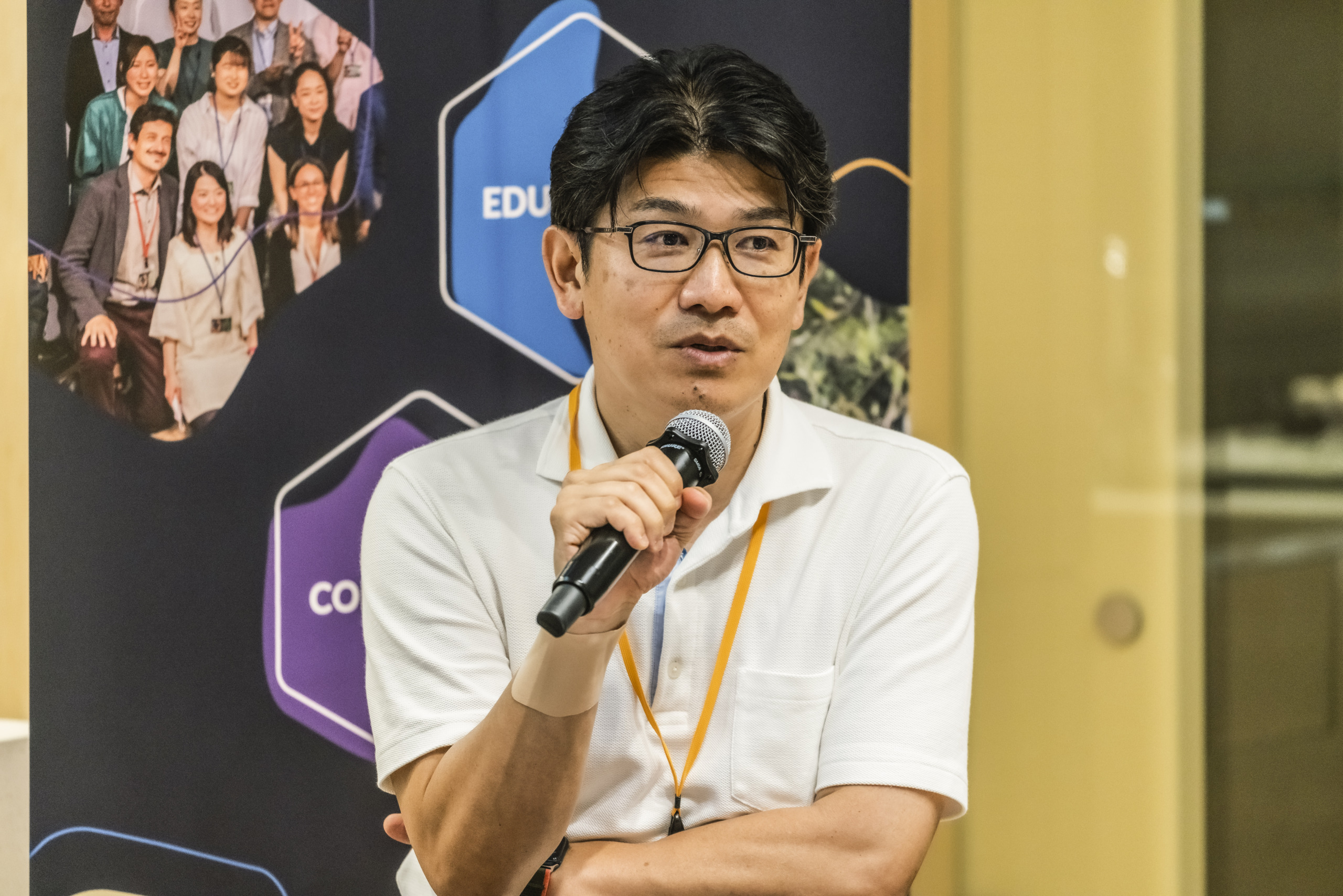
After beginning his career at Panasonic, Hirotaka Tanaka spent eight years at McKinsey & Company, primarily serving clients in the high-tech and telecommunications sectors. His work focused on growth strategy development and execution, M&A, new business creation, and venture partnerships.
In 2017, he joined Sigmaxyz, where he launched SKS JAPAN, a global foodtech summit. Through his involvement in business development support and community building within the food sector, he founded UnlocX in October 2023 with the aim of creating a robust food ecosystem in Japan.
He is the co-author of The Foodtech Revolution (Nikkei BP, 2020) and The Future of Food Transformed by Foodtech (PHP Shinsho, 2024). His additional roles include Director of SPACE FOODSPHERE (General Incorporated Association), Outside Director of Base Food Inc., Outside Director of TechMagic Inc., and Representative Director of Next Prime Food (General Incorporated Association).