
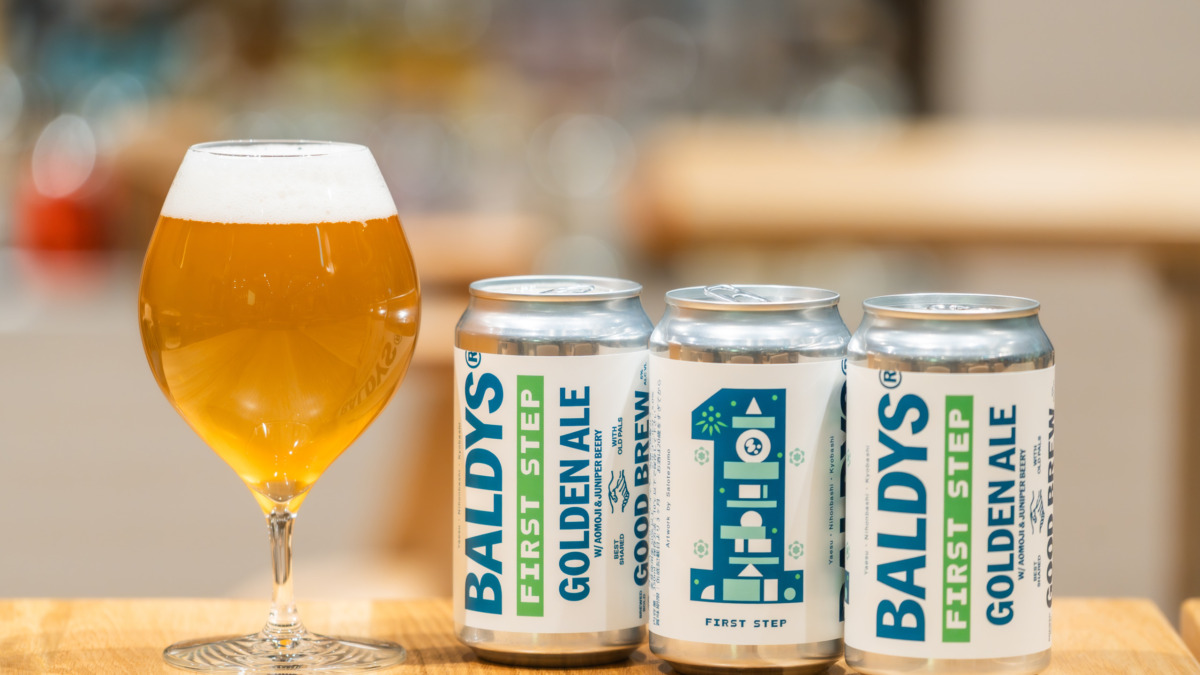
“Getting to Know Leads to Caring” — How First Step Connects the City and Its People【Regenerative City Inspiration Talk Vol.7 — Part 2】
Set in the Yaesu, Nihonbashi, and Kyobashi (YNK) area, the Community Beer Project brings together transition design and craft beer making. In Part 1, we explored the underlying challenges that gave rise to the project, the “system structures” of the city that emerged through fieldwork and workshops, and the shared vision of “Outside the box”—stepping beyond established frames.
In Part 2, we turn our focus to the changes brought about by the completed craft beer, First Step: how it begins to influence the city, and the ideas participants shared around what they envision as the project’s “Second Step.”
Note: First Step is classified as happoshu (a low-malt alcoholic beverage) under Japanese law and is not legally categorized as beer.
First Step is not merely a commemorative item created for a one-off event. It was conceived as a medium that would be served at local restaurants and continue to connect people throughout the city. In fact, starting in early December 2025, the beer has been gradually offered at select restaurants across the YNK area, including long-established local businesses that also participated in the workshops.
Daiki Matsumura, Representative Director and systemic designer at Butterfly Lab Inc., who led the project, shared his hopes for its impact. “Visions and concepts don’t easily spread through words alone,” he said. “But when they take the form of a physical product, they remain as a ‘seed’—something people can enjoy and talk about together. I hope the number of places where this beer can be enjoyed will continue to grow, like points appearing on a map, and that each of those points will become a starting point for conversation.”
Motohiro Taniguchi of Tokyo Tatemono Co., Ltd., who has been involved in the project since its inception, also spoke about the collaboration with BALDYS, the brewery in Nihonbashi Kabutocho that supported the beer’s production. “In many cases, projects like this are created with the business operator bearing all the costs,” he noted. “This time, however, the brewery resonated with the project’s vision and chose to be involved as a sustainable scheme.” His comments underscored that the project had secured not only cultural resonance, but also business viability.
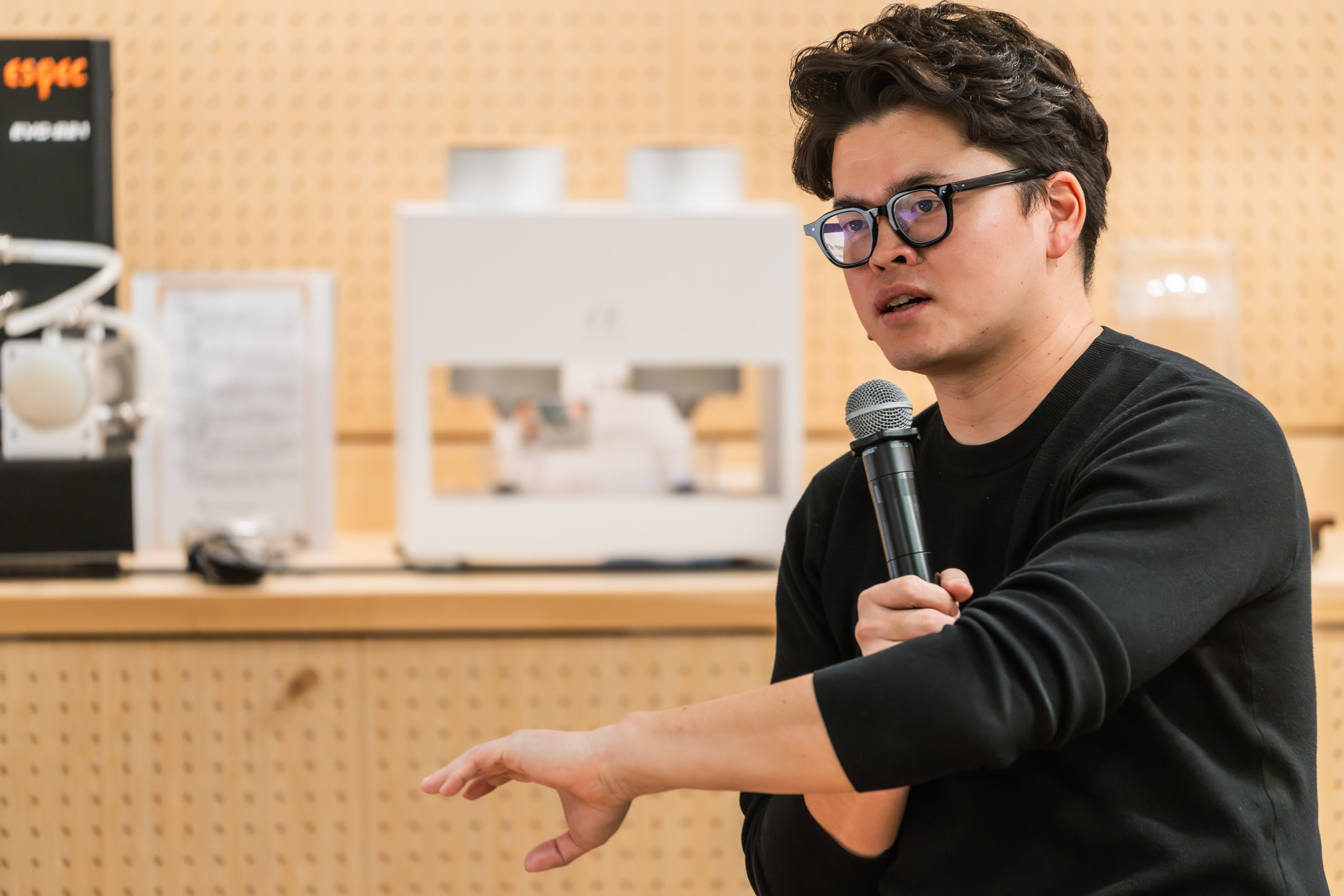
Taizo Matsubara shared insights he gained through reflecting on the project as a whole.
“Perhaps because I’m a designer, I had always assumed that communities are better when they are open and oriented toward freedom,” he said. “But through the discussions in the workshops, I began to realize that the YNK area—which at first glance can seem cool and inorganic—actually has aspects more like a ‘village’ once you engage with it deeply.
It may take time for newcomers to become part of the community, but once they do, the relationships are deep and warm. There is a strong sense of pride among the shop owners, as well as human ties and obligations. I came to feel that this ‘closed, village-like quality’ is precisely what forms the YNK brand. I’m not yet sure how this realization will be put to use, but being able to arrive at it was what made me happiest.”
Elements that may initially appear exclusive, he suggested, can reveal themselves as deeply human and organic forms of connection when viewed from a different perspective. Yet such connections cannot emerge without points of contact. The name First Step carries the meaning of “taking the first step toward an unfamiliar shop or community.” Stepping slightly off one’s usual commuting route and entering a small, tucked-away restaurant in search of this beer—such a modest shift in behavior may mark the beginning of a transition, one that starts to alter the loop structures of the present.
In the latter half of the event, participants broke into group discussions. The first question posed to them was, “How can this beer be used to make the city even more regenerative?”
Ideas for community-building through craft beer quickly began to surface, such as “creating a ‘beer curry’ so that even people who don’t drink alcohol can take part,” and “installing vending machines around the city where people can buy First Step.” Alongside these suggestions, participants also proposed more unconventional ideas, including a “cheers counter”—a system where points accumulate with each toast and can be used like a form of local currency—making social interaction itself visible.
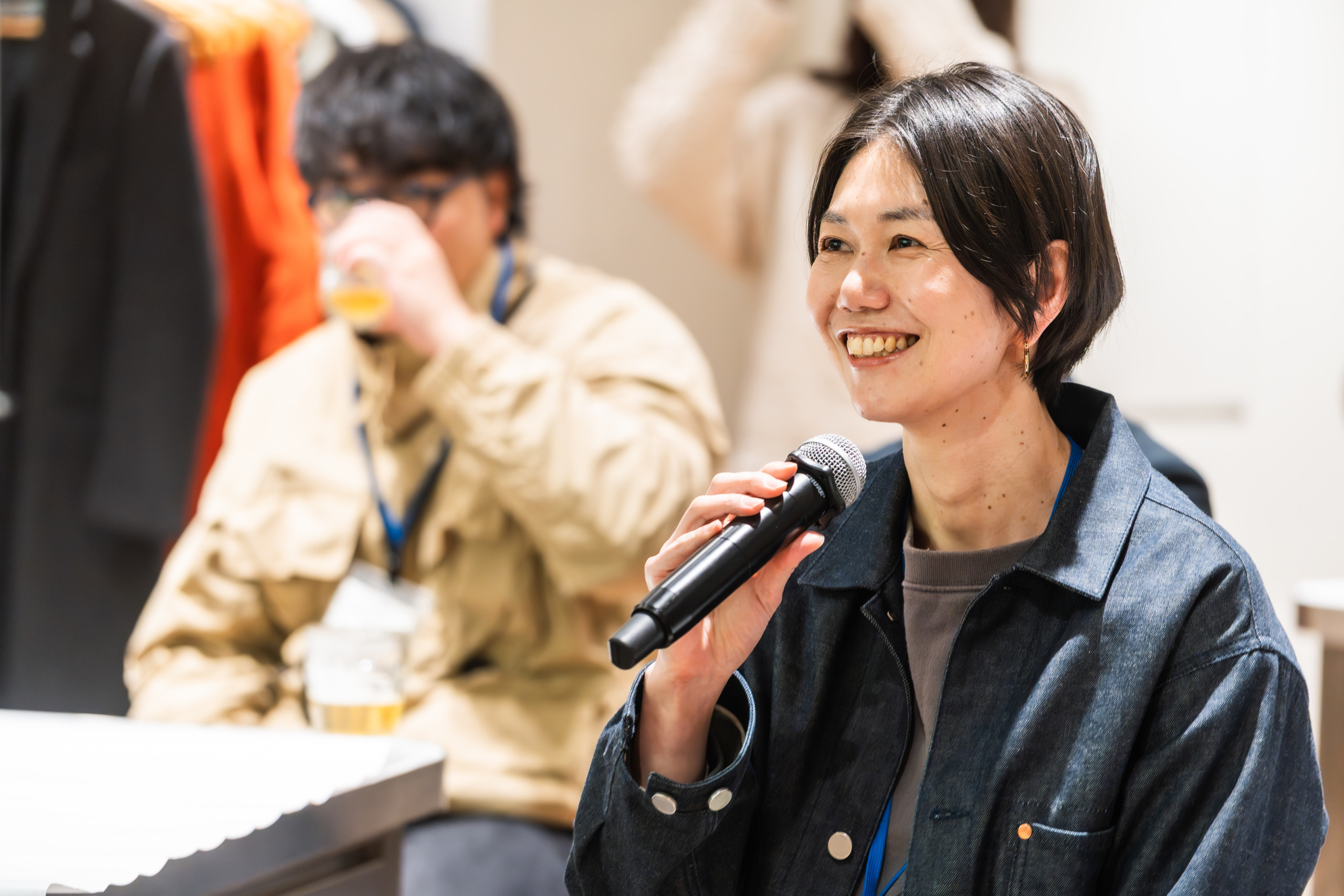
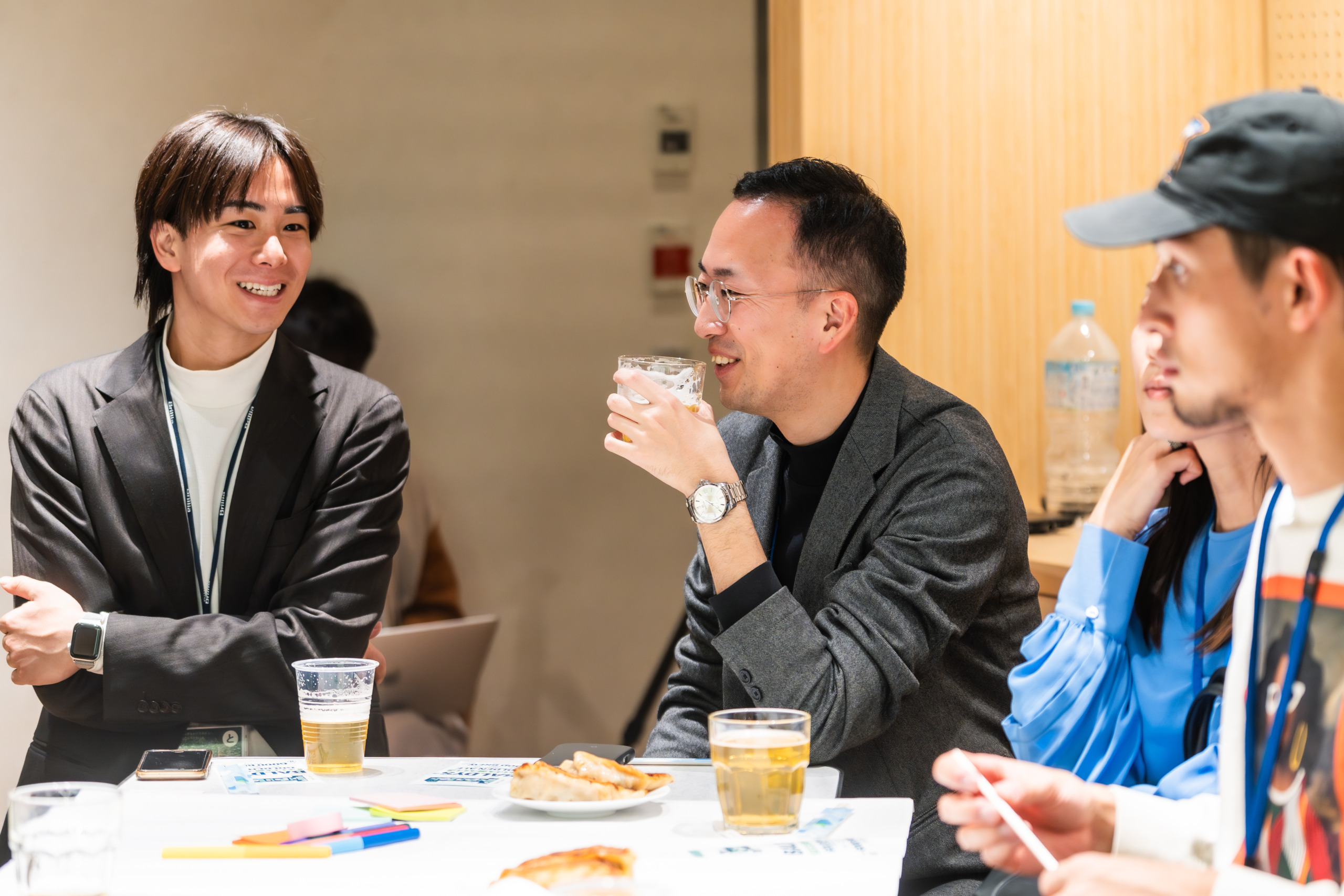
When the next question was raised—“What should we do for next year’s ‘Second Step’?”—the room filled with animated conversation, laughter, and flushed faces as participants, now pleasantly tipsy, eagerly shared their thoughts. Reflecting this upbeat atmosphere, the ideas that emerged grew increasingly bold and playful, infused with a sense of joy and imagination.
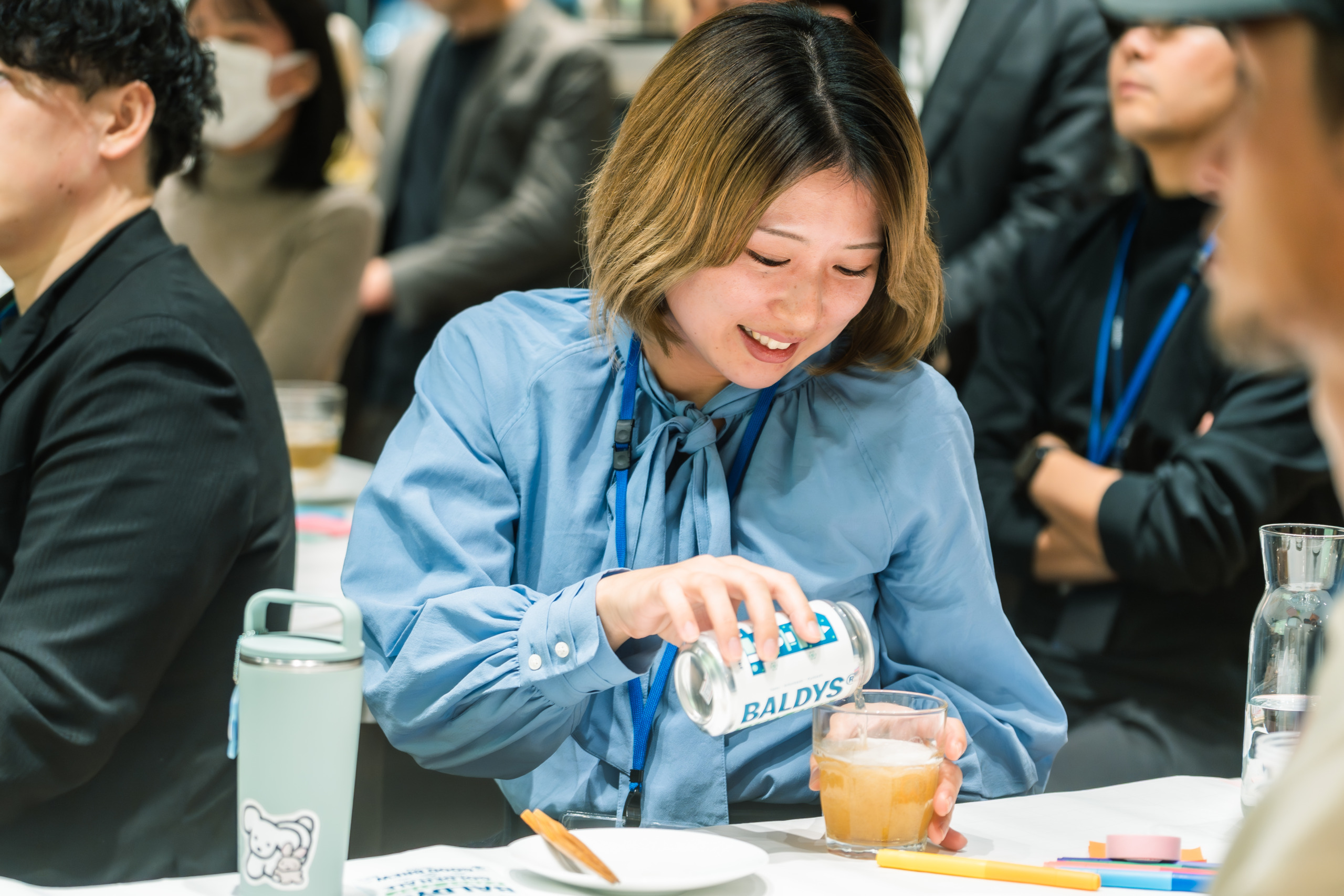
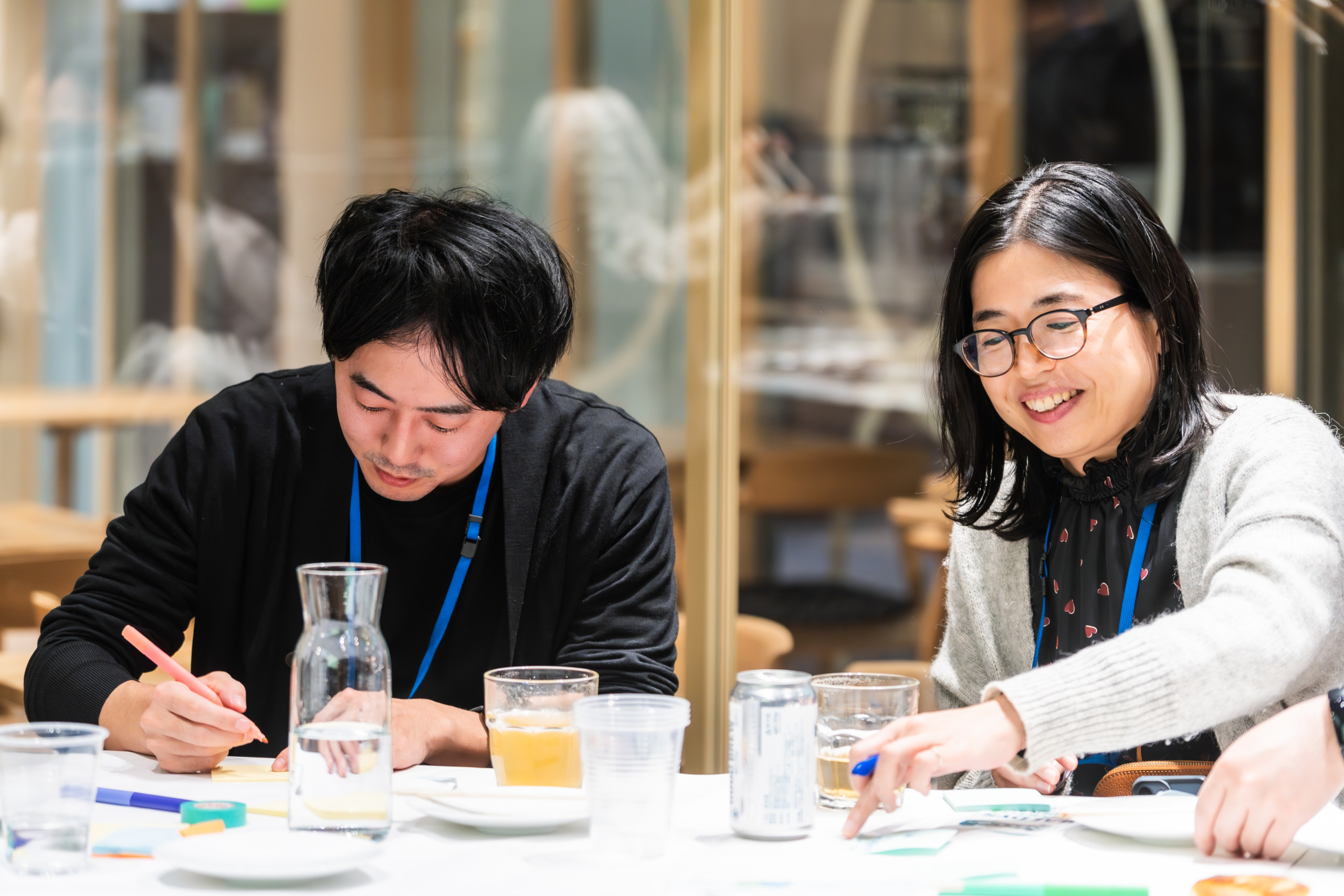
Ideas ranged from “creating a city anthem, because a community needs a song everyone can share,” to “building a sauna called ‘Second Step Spa’ where people can connect through the openness of shared bathing,” and “distributing planters to companies so they can grow hops—the key ingredient for beer—and brew a community beer together.” The proposals grew increasingly ambitious, culminating in the bold vision of “Tokyo Tatemono building a stadium in Yaesu so that people from diverse backgrounds can link arms and drink beer together!” The venue was filled with laughter and excitement.
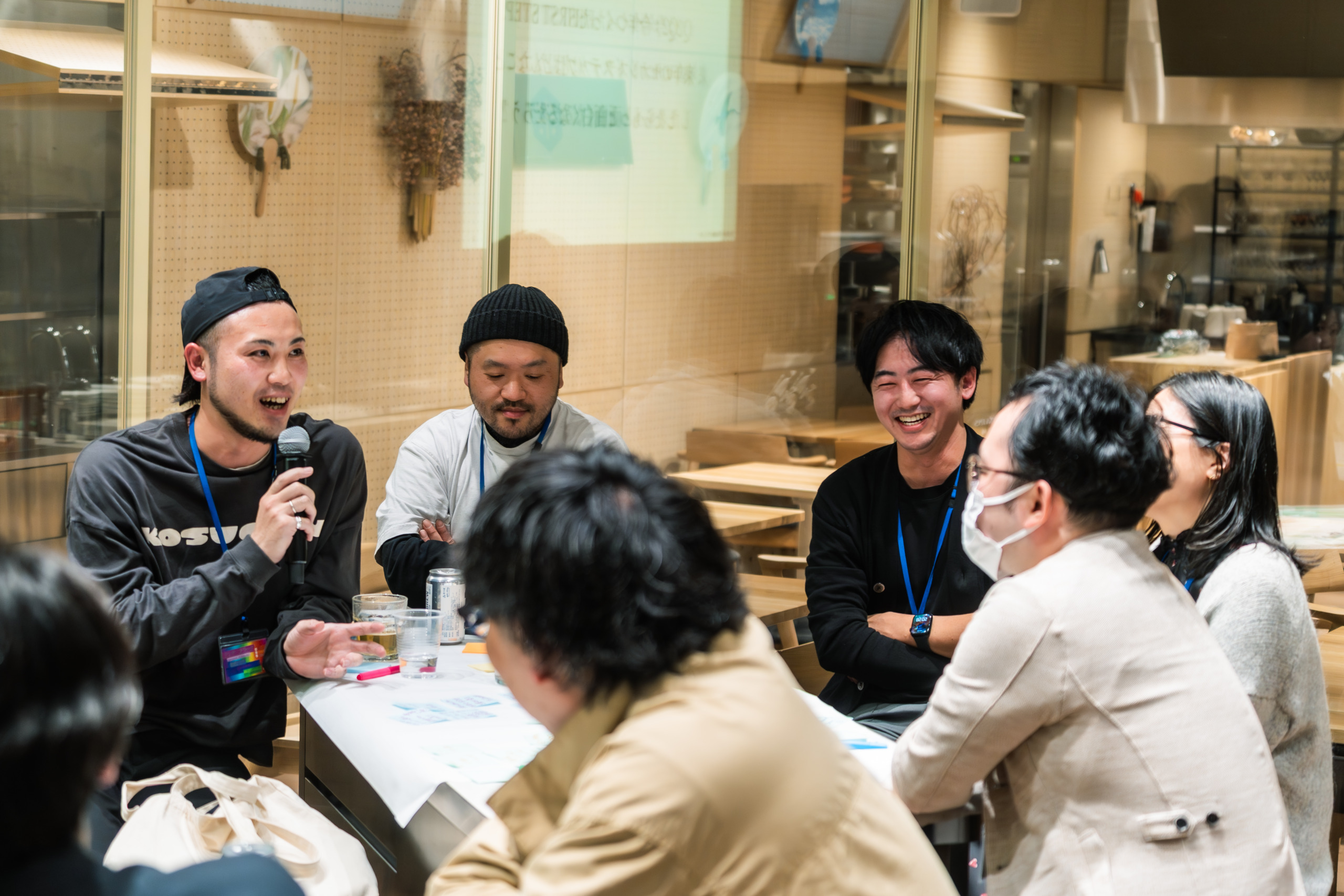
Drawing on these ideas, Taizo Matsubara, who led the project’s creative direction, reflected on the value of shared cultural experiences. “Creating something that gives people a sense of shared experience and pride—like cheering for the same team or singing the same songs, as in British pub culture—is wonderful,” he said. “And to reveal one of my own ambitions, I’d love to host a ‘Community Beer Festival’ someday, bringing together community beers from different neighborhoods.”
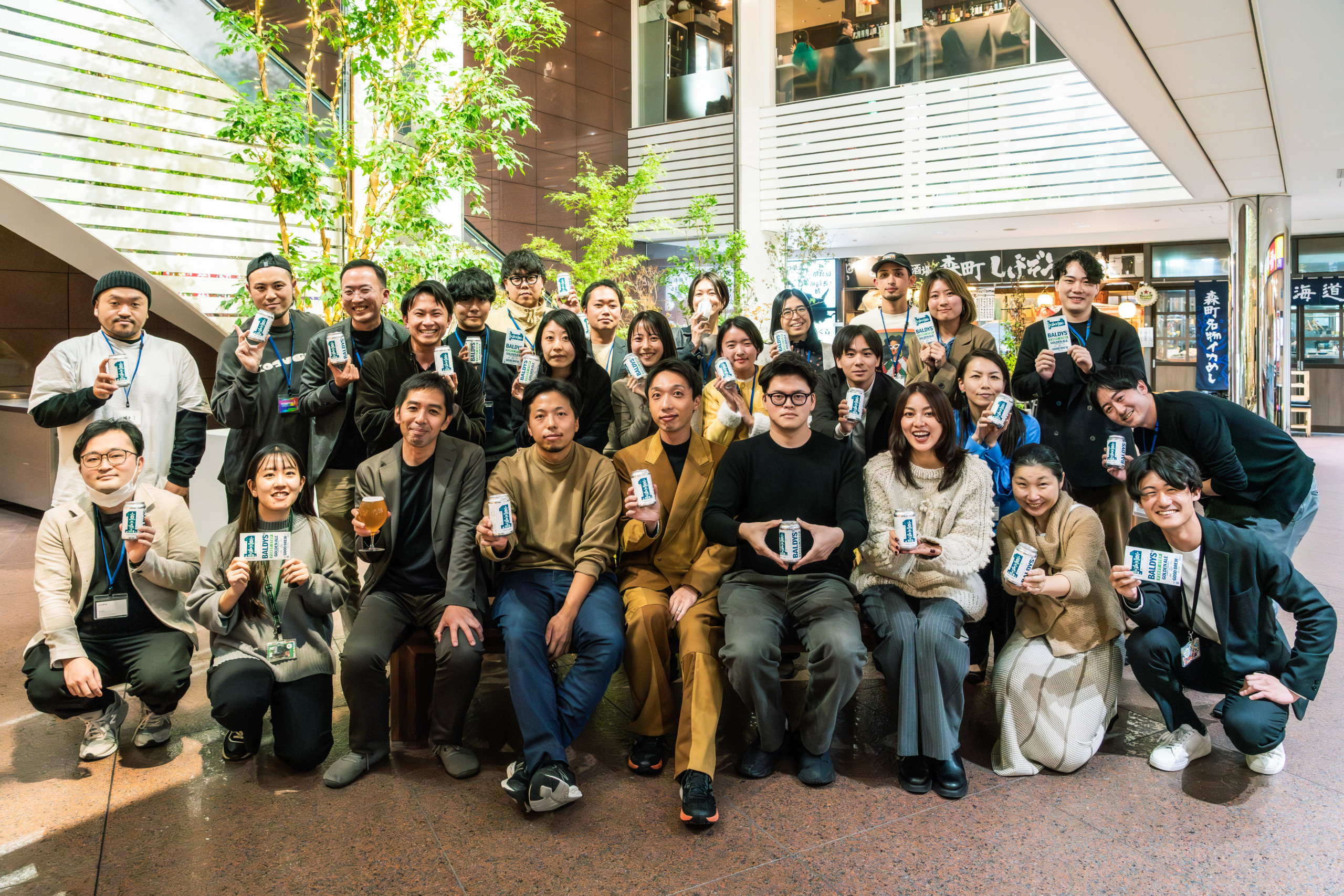
In closing, both Daiki Matsumura and Taizo Matsubara reflected on the event and shared their thoughts.
“Combining transition design with craft beer may have seemed unconventional, but it turned out to be an incredibly meaningful experience,” said Matsumura. “Through the workshops, we became familiar with the people who have long sustained businesses in this neighborhood. Simply recognizing one another and exchanging greetings created small but genuine connections, and that alone changed how the city appeared to us.
We set out to think about the regeneration of the community, and before we knew it, we were all making this city’s beer together. I believe that this shared experience—along with the straightforward joy of something being ‘delicious’—has the power to reconnect people with one another, and people with the city. I’m already looking forward to seeing these relationships continue over the coming years, maturing and fermenting over time. Beer really is something special.”
Matsubara also reflected on his own shift in perspective. “For me, the area around Tokyo Station had always been just a place I passed through,” he said. “But through this project, I experienced how going out of your way to get to know a place can lead to genuine affection. The more deeply I became involved, the more I came to appreciate the ‘village-like’ qualities—the personalities and quirks of the people who live and work here.
The tough yet warm words shared by long-established businesses during the workshops shook the project at its core. As a result, First Step became a beer with real character—one that carries the texture and flavor of its backstory. With the Second Step, I want to create a system that allows many more people to share this feeling of ‘liking something because you took the time to understand it.’ I now truly feel that this is what it means to expand a regenerative network of relationships.”
With that, the session came to a close. Even during the networking time that followed, conversations continued to flourish. What began with a simple “cheers” marked a quiet yet certain first step—a genuine beginning for a small but growing community.
(Text by Michi Sugawara / Photographs by Shuji Goto)
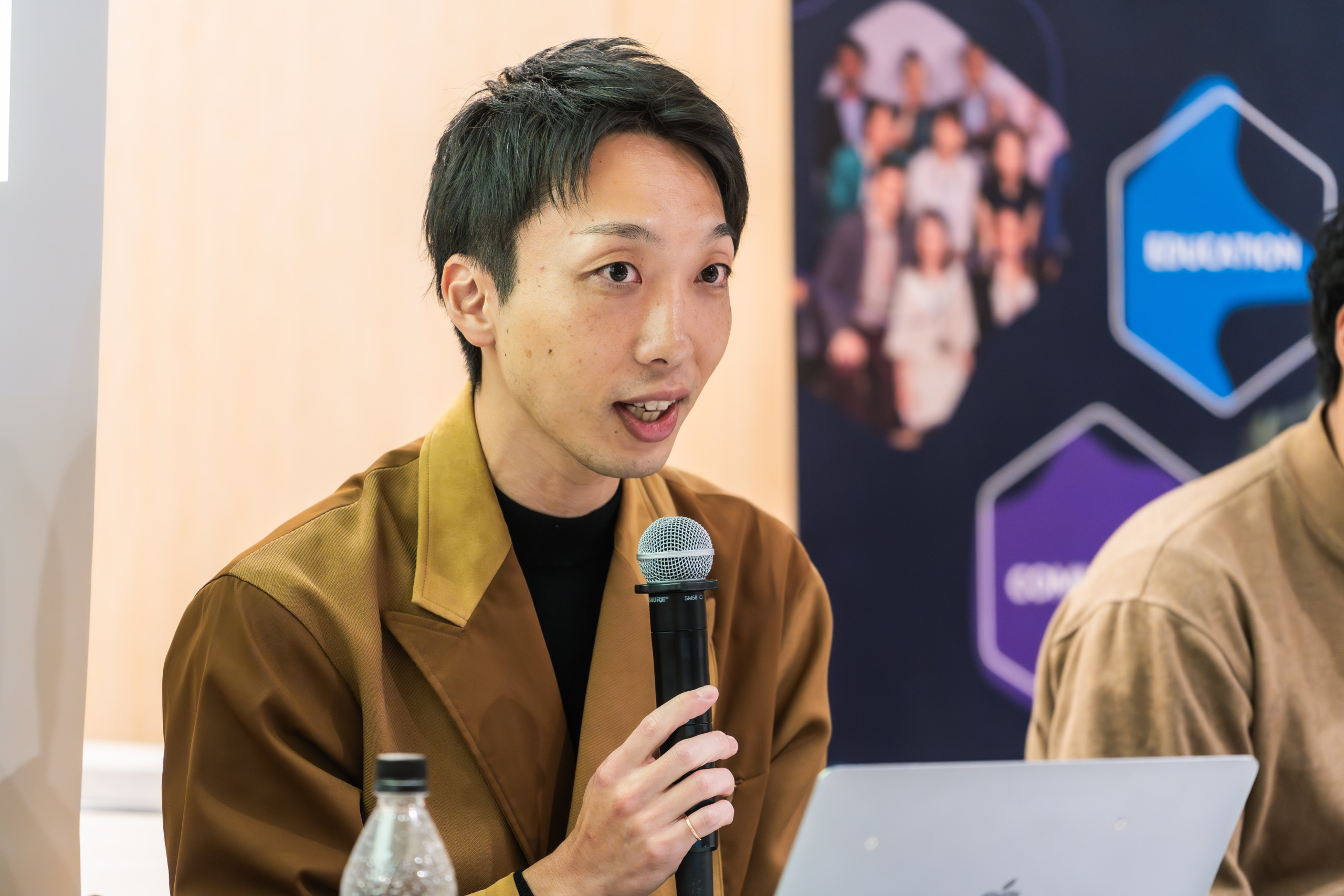
Butterfly Lab Inc.
After working at Yahoo Japan on business development and branding with U.S.-based companies, as well as post-disaster reconstruction support following the Great East Japan Earthquake, Matsumura founded Harmonia Inc. in 2015. He has since led initiatives focused on food loss reduction, corporate consulting, and vision-making.
From 2025 onward, under the name Butterfly Lab, he has been engaged in collaborative exploration projects that address complex challenges such as climate change, the future of cities, and industrial transition—approaching them through the lenses of behavioral change design and transition design. He has a deep affection for craft beer, bookstores, and public bathhouses. His publications include The New Textbook of Pricing: From the Fundamentals of Price Setting to the Frontlines of PriceTech (Diamond Publishing).
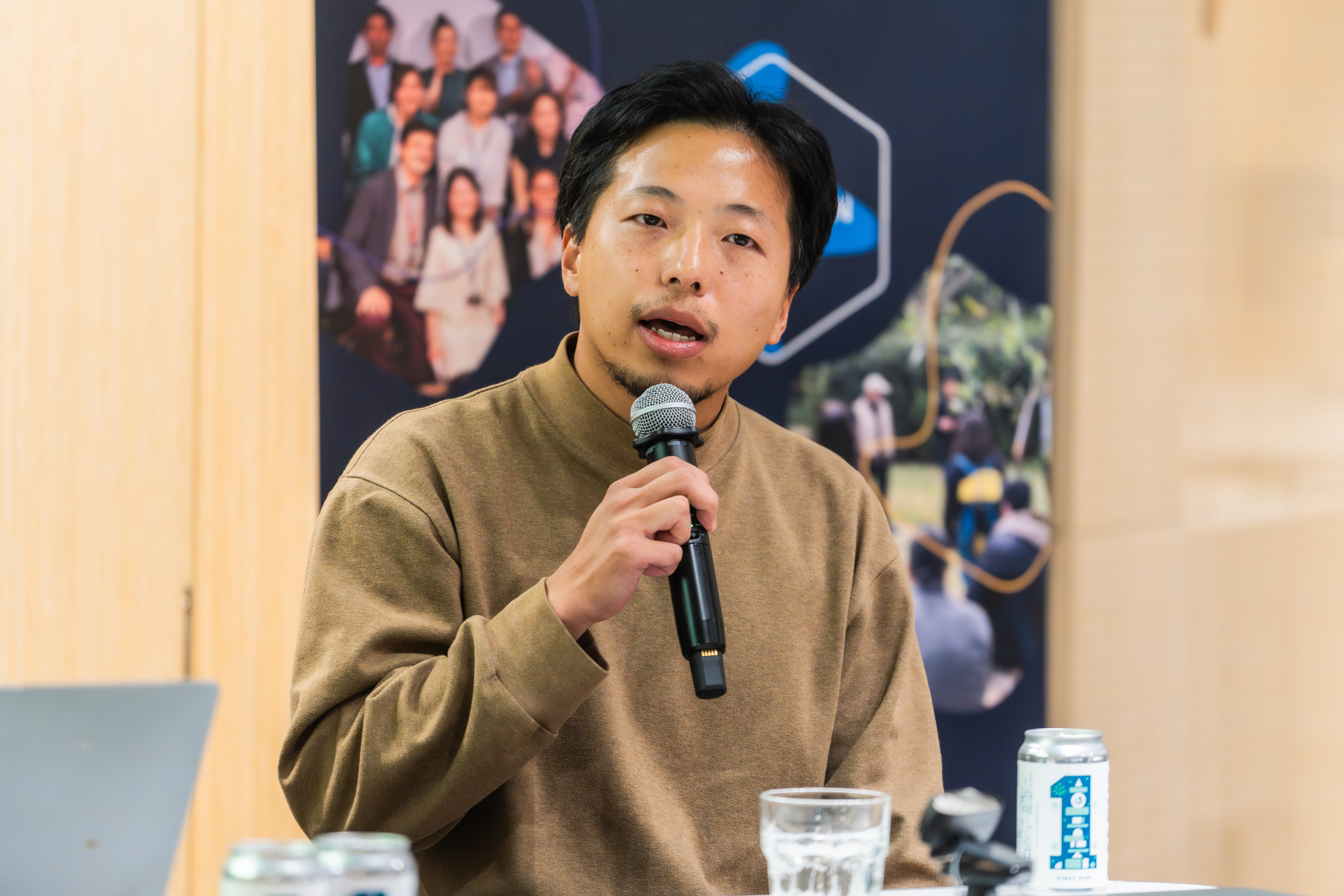
Zou Inc.
Matsubara began his career as a spatial designer, working on a wide range of projects including offices, factories, schools, and hotels. In 2024, he founded Zou as a human-centered design management company, aiming to create comfortable and meaningful transformation for organizations, businesses, and individuals—starting from the design of places where people work.
In parallel, he serves as a brand manager at Regale Inc., operating food and beverage establishments rooted in Asakusa and loved by the local community—or aspiring to be. Through these activities, he is also deeply committed to community design.