
Reconnecting the Lost Relationship Between Cities and the Sea — Exploring the Frontlines of Regenerative Fisheries and Seaweed Habitat Restoration【Regenerative City Inspiration Talk Vol.8 — Part 1】
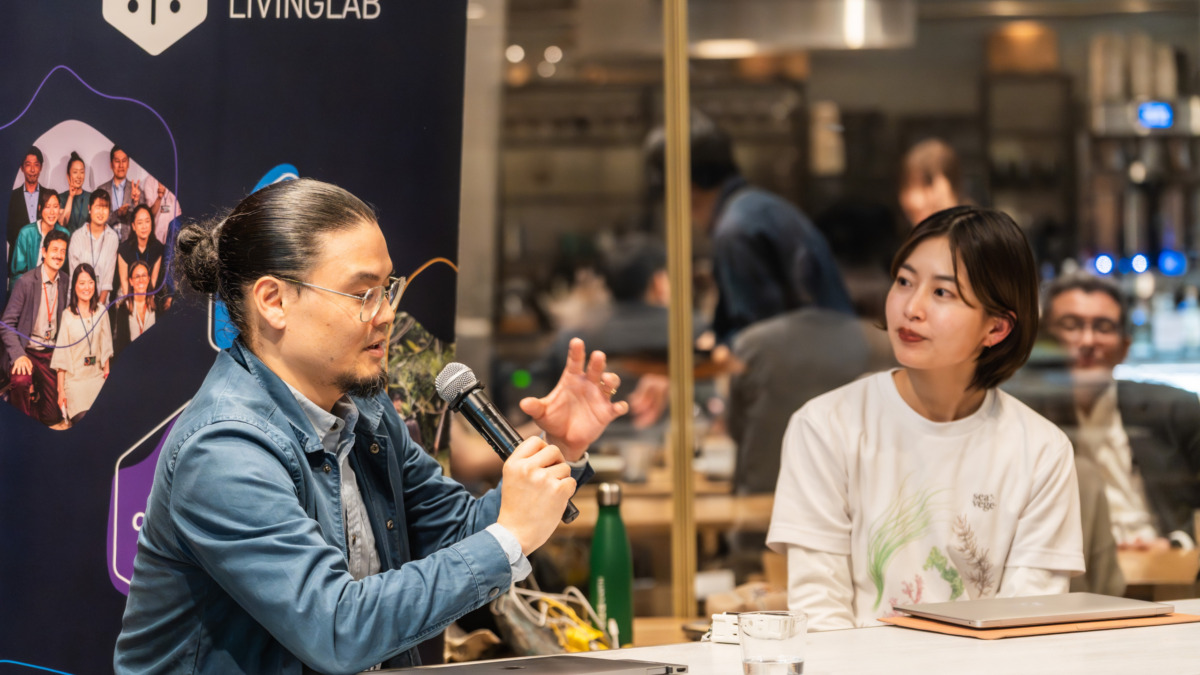
On December 18, the eighth session of the ongoing event series, Regenerative City Inspiration Talk — Rethinking the Future of Regenerative Cities from Tokyo, was held at Tokyo Living Lab in Yaesu, Tokyo. This edition explored the theme, “Regenerative Fisheries and the Future of Cities — Rethinking Food Through Innovation in Traditional Industries.”
As urbanization continues to distance people from the sea, the deep relationship between marine ecosystems and human life has become increasingly difficult to perceive—both physically and psychologically. Can food, business, and community serve as pathways to reconnect what has been lost?
To explore this question, the event welcomed two speakers working at the forefront of regenerative innovation. Louie Okamoto of UMITO Partners Inc., a marine consulting firm that combines scientific research with on-the-ground expertise to support sustainable fisheries, joined Chihiro Teramatsu of Sea Vegetable LLC, a startup that is pioneering both land-based and ocean cultivation of seaweed to restore marine forests and promote a new food culture.Together, they explored how restoring ecosystems and revitalizing local livelihoods can go hand in hand.
Tokyo’s urban skyline and the surrounding sea of Yagishiri Island, a remote island off the coast of Hokkaido—at first glance, the two landscapes could not seem more different. Louie Okamoto of UMITO Partners, an organization dedicated to supporting sustainable fisheries, opened his talk by placing two seemingly unrelated landscapes side by side.
“Although they appear to belong to completely different worlds,” he said, “human society is deeply dependent on—and continuously benefits from—the ocean in countless ways.”
From the food we eat to the economies we build and the cultures we create, many aspects of modern life would not exist without the sea.Yet, according to Okamoto, as urbanization continues around the world, the relationship between people and the ocean has become less and less visible.
Guided by its purpose of “reconnecting people and the ocean through positive relationships,” UMITO Partners works to rediscover and rebuild that essential connection.
At UMITO Partners, rising greenhouse gas emissions, habitat loss, overfishing, declining water quality, and microplastic pollution are regarded as some of the most critical challenges facing the ocean today. In today’s world, these issues are deeply interconnected, contributing to global challenges such as biodiversity loss, ecosystem degradation, and climate change. Ultimately, they threaten food security and intensify the impact of natural disasters.
Against this backdrop, the discussion turned to the work of the two speakers who are seeking to reconnect the increasingly unseen relationship between people and the ocean through the lenses of food, business, and community.
UMITO Partners, where Okamoto works, is a marine consulting firm committed to advancing Nature Positive for the Ocean—a vision of creating a future where both human society and marine ecosystems can flourish. To help realize this vision, the company promotes sustainable fisheries and develops initiatives such as blue finance.
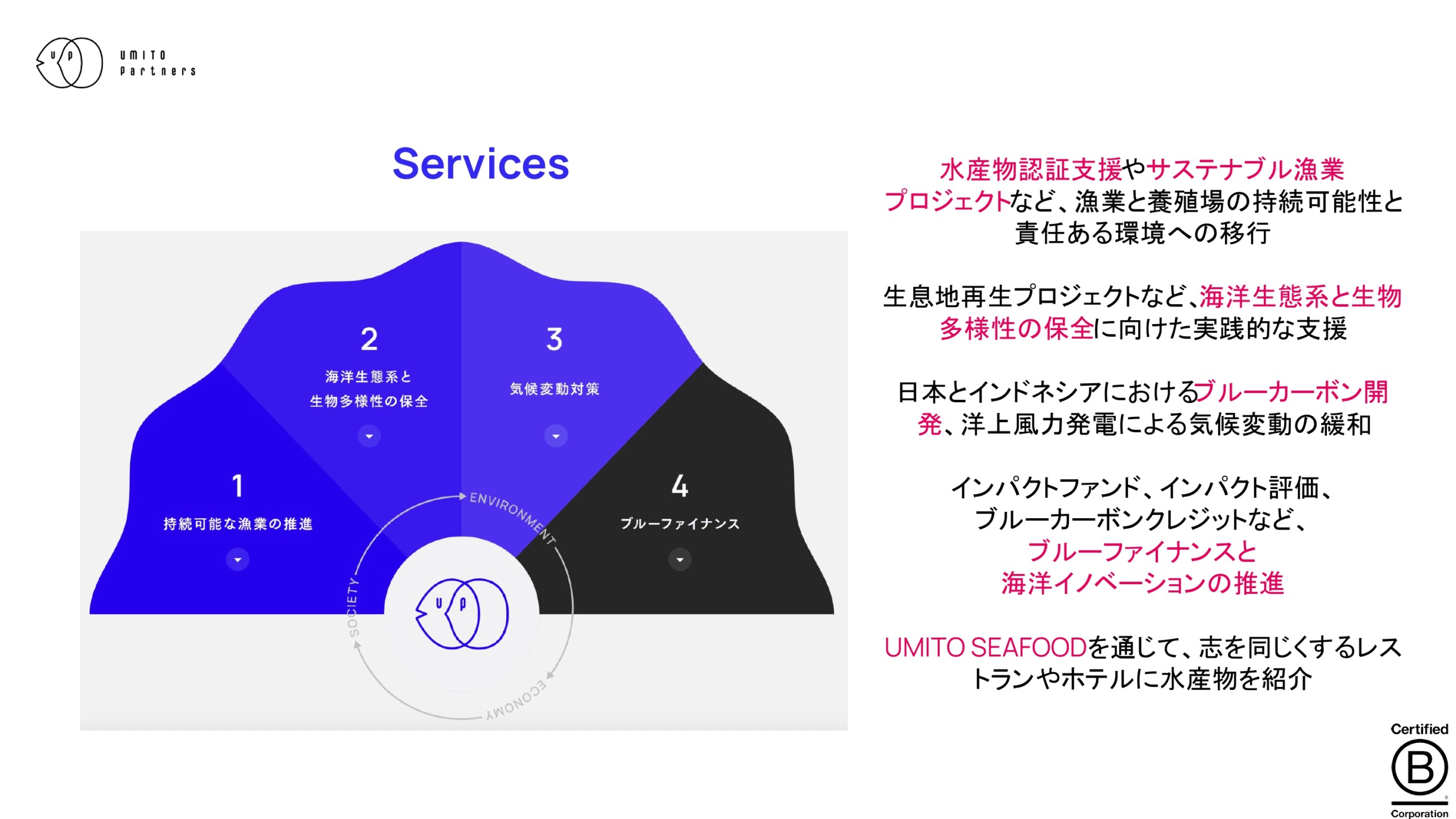
The company’s work is built around four core areas.
- Promoting Sustainable Fisheries
Supporting international sustainability certification programs for seafood, while working alongside fishing communities to advance projects that foster sustainable and regenerative fisheries. - Protecting and Restoring Marine Ecosystems and Biodiversity
Advancing the restoration of marine ecosystems and habitats through sustainable fishing practices. - Climate Action
Creating new business opportunities by recognizing the value of natural assets—such as blue carbon—that have historically gone unrecognized. - Blue Finance
Using financial approaches, including impact investing, to unlock new opportunities for the ocean and accelerate the development of innovative marine businesses.
One example of this work is UMITO Partners’ support for internationally recognized certification programs, including the Marine Stewardship Council (MSC) for wild-capture fisheries and the Aquaculture Stewardship Council (ASC) for aquaculture. At the same time, the company works closely with local fishing communities on sustainable fisheries projects.
One such initiative is the Mizudako Barrel Fishing Sustainable Fisheries Project in Tomamae, Hokkaido. As part of the project, local fishers continuously collect catch data and collaborate with the prefectural fisheries research institute to monitor octopus stocks. Based on the findings, they take the lead in adjusting fishing operations and resource management according to the condition of the population. The project is distinguished by its combination of voluntary resource management and fishing methods designed to minimize impacts on the surrounding ecosystem.
Tomamae, a small fishing town with a population of fewer than 3,000 people, is home to a traditional fishing method known as barrel fishing. In this practice, a rope fitted with octopus traps is attached to a floating barrel and set adrift at sea. When an octopus is caught, the movement of the barrel stops, allowing fishers to locate it visually before hauling in the catch. Today, a new generation of local fishers is working to preserve this tradition by transforming it into a more sustainable model that also contributes to the revitalization of the community.
“To avoid putting pressure on octopus stocks, our community has agreed to limit the number of fishing barrels that can be used each day to 15,” Okamoto explained. “We also keep annual catch records and work with the fisheries research institute to scientifically assess the status of the stock. If the data show that the population is beginning to decline, we have a rule to reduce the daily limit to 12 barrels the following year.”
What makes these initiatives particularly significant is that the rules are not imposed from the top down. Instead, they are shaped through extensive discussions among local fishers—raising questions such as “Would this rule be fair?” or “Would it actually be effective?”—while also drawing on scientific advice from fisheries experts.
Another example is the Sea Urchin and Seaweed Habitat Restoration Project on Yagishiri Island, which aims to restore the balance of the local marine ecosystem. The island had been facing a serious problem known as isoyake, or “marine desertification,” in which an overabundance of sea urchins consumed vast amounts of seaweed. As their food source disappeared, the sea urchins themselves became undernourished and produced poor-quality roe.
In response, all 20 sea urchin fishers on the island—out of a total population of just 160 residents—joined the project. Together, they designated waters deeper than five meters as no-fishing zones and began restoring seaweed habitats using three different approaches: the Seed Stone Method, the Cellulose Method, and the Seed String Method. Led by the fishers themselves, the project seeks to restore seaweed forests, improve the condition of sea urchins, and rebuild a healthier marine ecosystem.
“The area targeted for seaweed habitat restoration covers 591 hectares—the equivalent of 127 Tokyo Domes—giving it the potential to become the largest seaweed restoration project in Japan,” Okamoto said. “By embracing regenerative fisheries, we can improve both the marine ecosystem and the fishing industry itself. Our goal is to create a win-win relationship where nature and local livelihoods can thrive together.”
UMITO Partners also operates UMITO SEAFOOD, a seafood brand and network that supports fishers working on the ground of sustainable fisheries. Under the slogan, “Creating Delicious Fisheries Through What We Eat,” the initiative introduces seafood produced by fishers whose practices have a positive impact on the ocean and the environment to consumers, chefs, and hotels, while also supporting them through sustainable sourcing opportunities.
Through these diverse initiatives, UMITO Partners connects fishers with scientific expertise, businesses, and consumers—helping build a more sustainable future for the ocean.
Taking a different approach to marine regeneration is Sea Vegetable LLC, a startup working to restore marine forests by cultivating seaweed both on land and in the ocean.
Chihiro Teramatsu joined the company five and a half years ago, during what the company describes as its “second founding phase.” At the time, careers centered on seaweed were far from widely recognized. But as Sea Vegetable continued to unlock the potential of seaweed, its reputation steadily grew. Today, people often say, “When it comes to seaweed, Sea Vegetable is the first name that comes to mind.”
Teramatsu began by turning the audience’s attention to the crisis facing Japan’s seaweed culture.
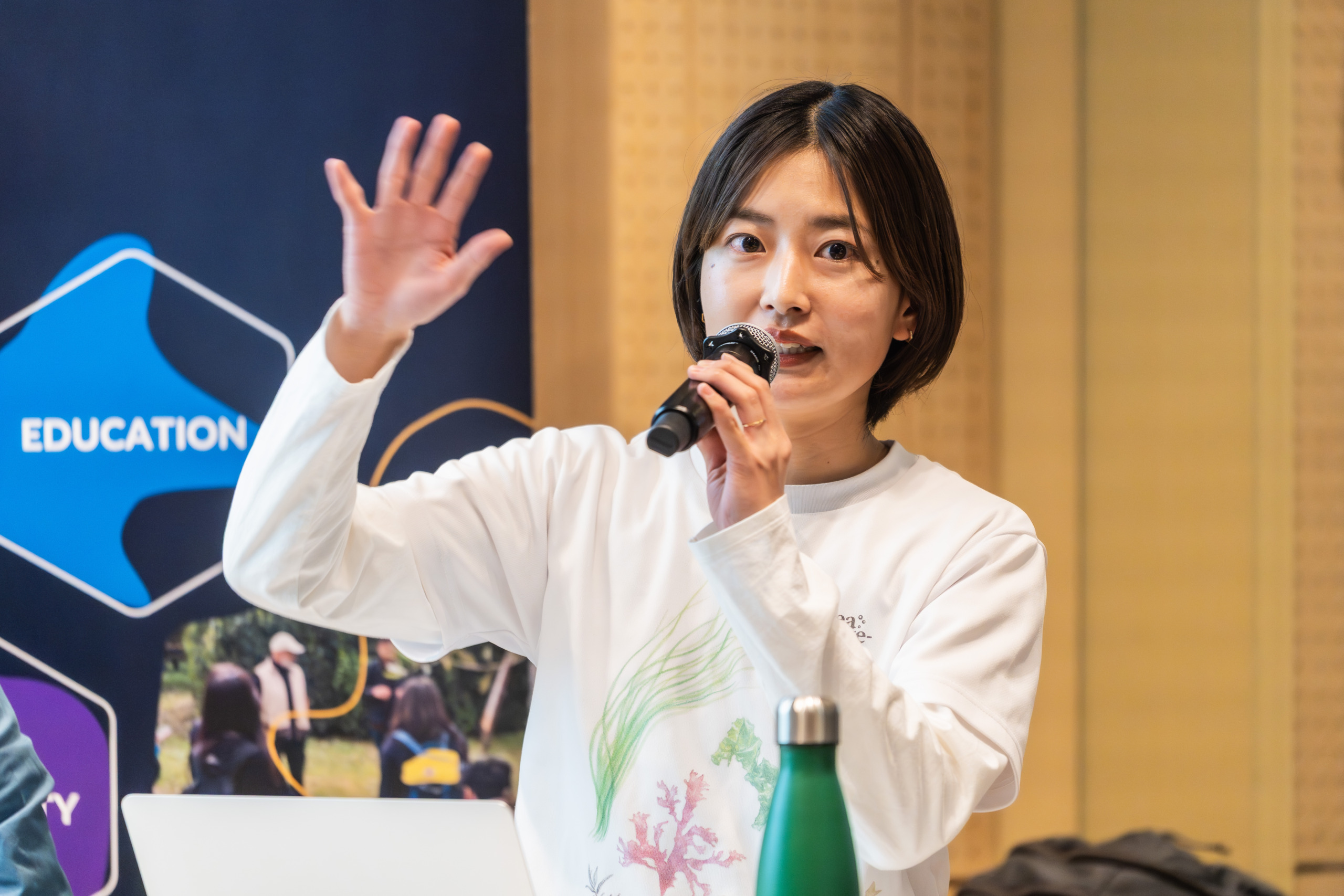
“Japan’s coastal waters are home to around 1,500 species of seaweed, all of which are non-toxic and edible. Japan’s seaweed food culture is also among the most advanced in the world. In recent years, seaweed has even gained attention in the world of gastronomy. One notable example was Noma, widely regarded as the world’s best restaurant, which featured seaweed shabu-shabu as the centerpiece of its Kyoto pop-up,” Teramatsu said.
Despite this rich culinary tradition, Japan’s seaweed industry is facing a serious challenge. Over the past 18 years, nori production has declined by 50 percent, and in 2020, some regions recorded a harvest of zero kilograms for Suji Aonori, one of Japan’s most prized seaweed varieties.
To address this crisis, Sea Vegetable has adopted two approaches. The first is land-based cultivation, an initiative the company launched in 2016.
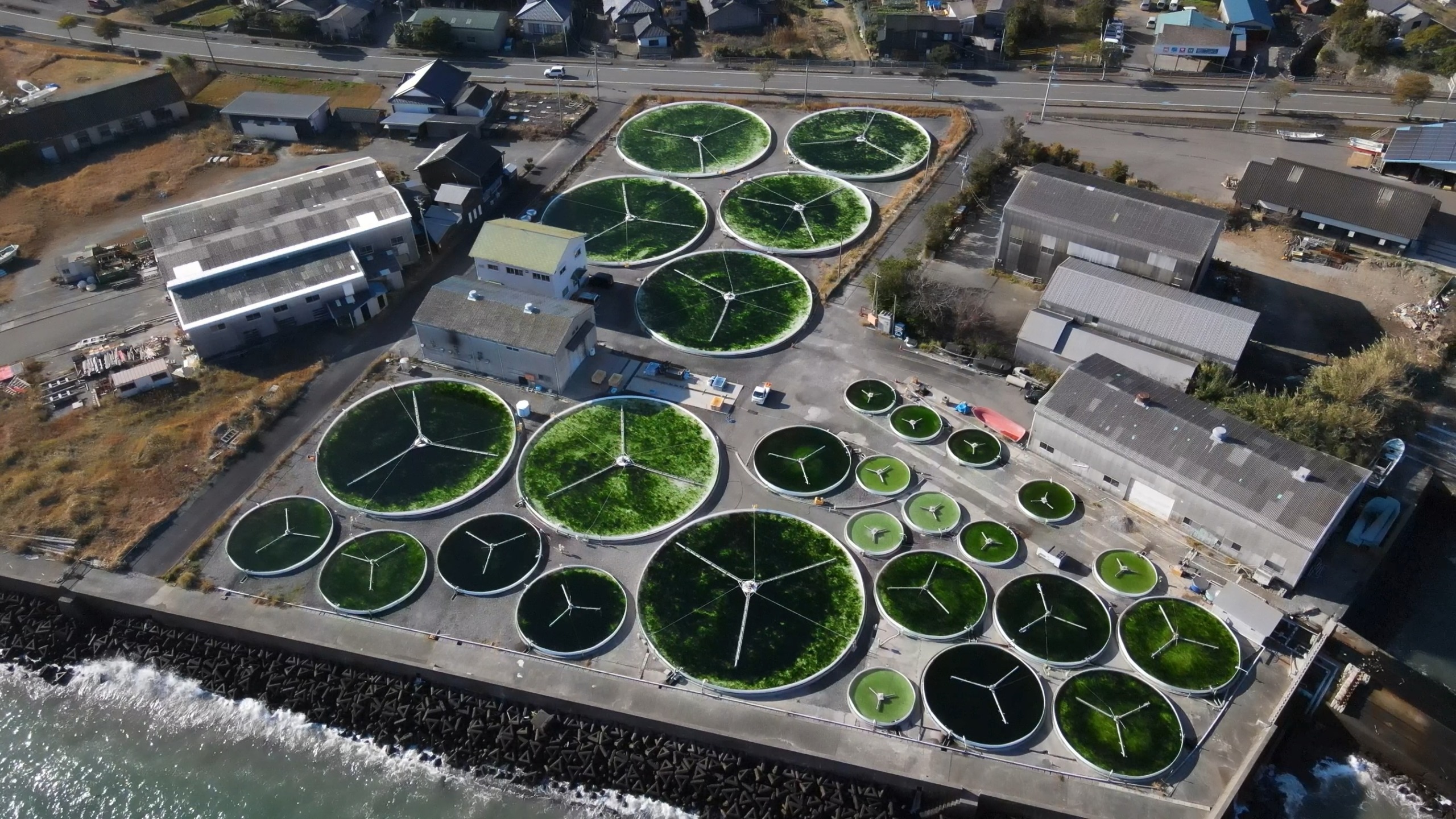
Sea Vegetable was the first company in the world to establish a land-based cultivation system that uses seawater pumped from underground aquifers to grow seaweed such as Suji Aonori in a stable-temperature environment. Today, the company operates cultivation sites across Japan and supplies its products to renowned hotels and food manufacturers, earning a leading share of the domestic market for Suji Aonori. Because many of these facilities are located in rural coastal communities, Sea Vegetable also works with local senior residents and employment support organizations for people with disabilities, creating new industries and job opportunities in the regions where it operates.
“The project began when Suji Aonori from the Shimanto River in Kochi Prefecture—once considered the highest-quality variety—could no longer be harvested,” Teramatsu said. “It was once used generously in well-known potato chips, but production had fallen dramatically despite continued demand. Rather than relying on deep ocean water, which is costly and difficult to source, we developed a cultivation model using underground seawater, whose temperature remains stable throughout the year. In doing so, we hoped to help preserve Japan’s seaweed food culture.”
The company’s second approach is to create cultivated seaweed habitats in the ocean.
Seaweed forms the foundation of the marine ecosystem, nurturing fish and other marine life much as plants do on land. Yet beyond the public eye, marine desertification, known in Japan as isoyake, continues to spread. It is estimated that Japan loses around 6,000 hectares of seaweed habitat each year—an area equivalent to approximately 1,200 Tokyo Domes.
To better understand the ecological impact of seaweed restoration, Sea Vegetable partnered with the Good Sea Association, Kagoshima University, and other organizations. Together, they conducted fixed-point surveys comparing marine life in areas where seaweed was cultivated with areas where it was not. The results showed that fish populations were up to 36 times higher in waters where seaweed had been grown.
“We have expertise in seaweed seedlings, cultivation techniques, and fundamental research,” Teramatsu said. “Our team also includes researchers who specialize in seaweed, and together with our co-representative, they have dived in coastal waters all across Japan. By building on these strengths, we are working with fishing communities nationwide to expand cultivated seaweed habitats—what we like to think of as ‘fields of the sea.’”
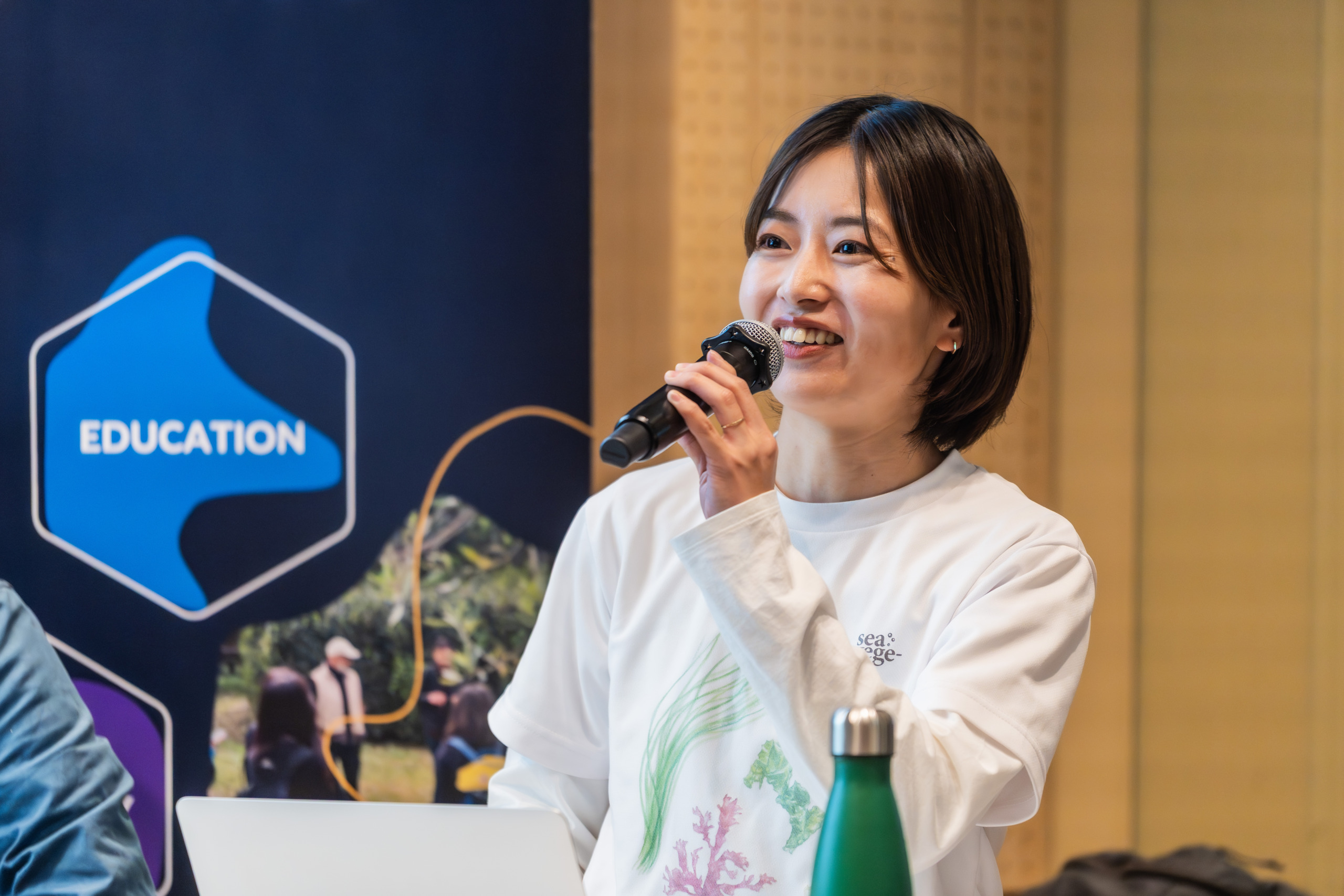
What Teramatsu emphasized was that expanding seaweed consumption is essential to sustaining these efforts to restore the marine environment. Seaweed is an annual plant, and harvesting it before it dies is part of the natural cycle that helps keep marine ecosystems healthy. Yet data show that daily seaweed consumption per person in Japan has declined by 40 percent over the past 22 years, highlighting the scale of the challenge.
“I think this is closely tied to the decline of traditional Japanese food culture. Just as people rarely eat seaweed when they have bread, our eating habits have changed,” Teramatsu said. “That’s why we want to create new ways for people to enjoy seaweed.”
To help make that happen, Sea Vegetable has launched a wide range of initiatives to bring seaweed into the everyday lives of urban consumers. These include hosting events that transformed the food halls of Isetan Mitsukoshi department stores into showcases for seaweed, as well as collaborating with familiar brands such as 7-Eleven, Soup Stock Tokyo, DEAN & DELUCA, and Ryohin Keikaku, the company behind MUJI.
In March 2026, the company is also scheduled to open Sea Vegetable Stand in the YNK area, a new venue where visitors can enjoy seaweed-based dishes and drinks. The menu will feature creations by Sea Vegetable’s in-house chef, including seaweed ramen and a variety of seaweed-inspired small plates. Through initiatives like these, Sea Vegetable is fostering a new seaweed food culture while reconnecting people with the ocean.
Through UMITO Partners’ efforts to promote sustainable fisheries and Sea Vegetable’s work to restore marine forests through cultivated seaweed habitats, a regenerative future is beginning to take shape—one in which people can once again feel a tangible connection to the ocean.
How will these two initiatives continue to grow and inspire others? With “science,” “networks,” and “delicious food” as the guiding themes, the conversation continues in Part 2.
(Text by Michi Sugawara / Photographs by Shuji Goto)
Born in Los Angeles, Rui Okamoto earned a bachelor’s degree in Marine Ecology from California State University, Monterey Bay. While working in the field of education, Okamoto was also involved in initiatives related to marine ecology and sustainable seafood at the Monterey Bay Aquarium.
In 2016, Okamoto moved to Japan with the goal of contributing to sustainable fisheries and regional communities. In 2019, Okamoto was selected as a Fellow of the Blue Pioneer Program, an initiative dedicated to developing the next generation of ocean leaders across the Asia-Pacific region.
As a founding member of UMITO Partners, Okamoto now provides cross-functional support spanning both on-the-ground fisheries projects and organizational management.
Communicator, Food Culture Co-Creation Department
Born in Toyama City, Toyama Prefecture, in 1996, Chihiro Teramatsu's perspective on life changed profoundly after participating in an internship in Cambodia while at university. Inspired by the experience, Teramatsu decided to pursue peace studies.
After working in the wedding and food service industries, Teramatsu developed a strong desire to contribute to work that enriches people's everyday lives. This led to joining Sea Vegetable in 2020, during the company's early growth stage, where Teramatsu helped establish a wide range of departments and initiatives.
Teramatsu also played a key role in launching the Sea Vegetable Stand, which opened in Yaesu, Tokyo, in March 2026. Through promoting seaweed as an everyday ingredient—as familiar and accessible as vegetables—Teramatsu is working toward a future where both people and the ocean can thrive.