
Restoring Our Oceans Through Delicious Food: A Regenerative Future for the Ocean and the City 【Regenerative City Inspiration Talk Vol. 8 — Part 2】
The eighth Regenerative City Inspiration Talk explored the theme, “Regenerative Fisheries and the Role of Cities: Envisioning the Future of Food Through Innovation in Traditional Industries.”
In Part 1, we examined the challenges facing our oceans—and the signs of hope emerging from them—through the firsthand experiences of Louie Okamoto of UMITO Partners and Chihiro Teramatsu of Sea Vegetable.
What will it take for each of us to make their work personally relevant and carry it into our own lives? In Part 2, we explore this question through a dialogue with the two speakers.
Louie Okamoto of UMITO Partners connects fishers with scientists, seeking to balance effective resource management with sustainable livelihoods. Chihiro Teramatsu of Sea Vegetable is working to restore marine ecosystems by cultivating seaweed both on land and at sea, creating farmed seaweed beds that can help revive the ecological functions of natural seaweed habitats. What they share is a commitment to actively guiding the ocean toward a healthier state through human intervention.
But is that intervention truly leading in the right direction? Moderator Ayaka Onodera of the Future Food Institute raised this question.
“Over the long term, human intervention does not necessarily produce positive outcomes. When considering its potential impact, do you involve experts and others in the discussion?” asked Onodera.
Okamoto explained that UMITO Partners collaborates not only internally but also with biologists and economists in Japan and abroad.
“One of our strengths is the extensive network we have built both in Japan and internationally. There are naturally many things we cannot accomplish on our own, so it is essential to collaborate with partners and connect the right people. For example, when examining the impact of oyster farming on the marine environment, we work with specialized institutions to study water quality and benthic organisms,” said Okamoto.
Science and networks—only by bringing these two forces together can action avoid becoming narrow or self-serving.

The conversation then shifted to the question of funding—an essential element in sustaining these efforts.
Ocean regeneration is not something that can be achieved through a single project. Continuing this work over the long term naturally requires a sustainable business model. When Toshikazu Sawa of Tokyo Tatemono and the Tokyo Food Institute asked about the challenges involved in scaling their businesses, Okamoto and Teramatsu each described their respective approaches.
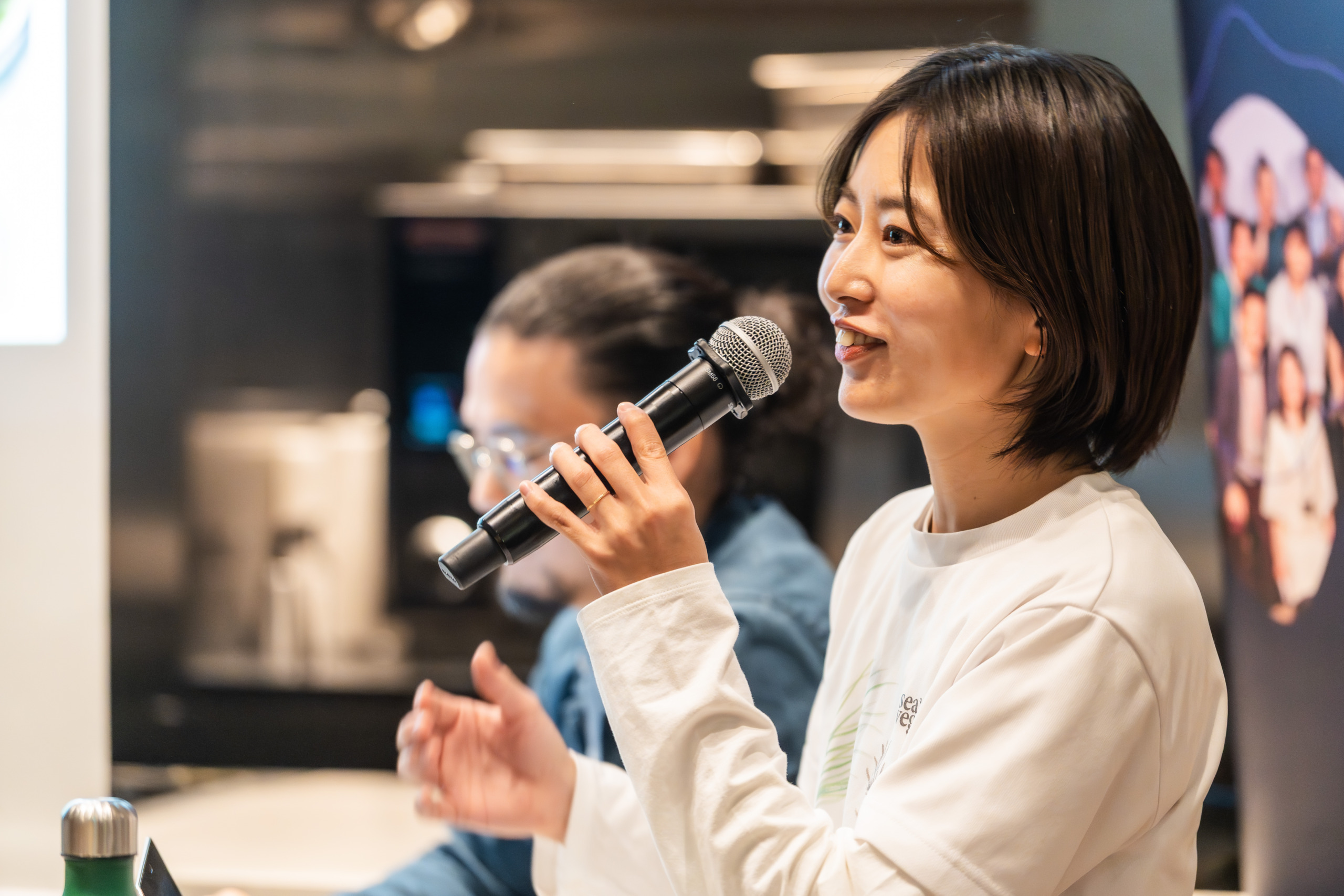
Teramatsu highlighted collaboration with local governments. Japan’s fishing-rights system creates a significant barrier to entry, making it difficult for new players to expand their activities at sea. Sea Vegetable first builds trust within local communities through land-based cultivation, then uses those relationships as a foundation for expanding its work into the ocean. The company also makes use of Japan’s corporate hometown tax donation program as a source of funding.
“Even if we succeed in reviving a product that was once a regional specialty, the market does not immediately return. With ingredients such as seaweed, which are deeply tied to local culture and identity, it is particularly important to take a community-based approach. To make the business sustainable, we need a strategy that brings both local governments and companies on board,” said Teramatsu.
Okamoto, meanwhile, revealed that UMITO Partners is focusing on the emerging field of “blue finance.” By leveraging impact investment in partnership with overseas investment funds, the organization aims to overcome the limitations of its own capital and create new ventures in areas such as ocean innovation. This approach offers one possible answer to the challenge of transitioning from nonprofit initiatives to commercially sustainable businesses.
Among the audience was a participant from a remote island in the Seto Inland Sea. Faced with a complex web of challenges—including mass oyster die-offs, sharply declining catches, marine debris, and a shortage of successors—they posed an urgent question: “What can we do to help revitalize our island?”
Where should a community begin when working to restore its surrounding waters? Okamoto and Teramatsu shared the same answer: start small and build trust over time. Okamoto first emphasized the importance of accurately understanding current conditions.
“By comparing the changes fishers perceive through their firsthand experience with scientific data from fisheries research institutes and other sources, we may begin to see what is really happening,” said Okamoto.
Teramatsu, meanwhile, prefaced her response by noting that there is no single definitive answer.
“Even when we interview fishers, it can still be difficult to get to the heart of the issue. Marine challenges are complex, and they vary from one region to another. That is precisely why we begin by bringing our own knowledge and strengths into the community and conducting small-scale trials—even if it means starting with just a single rope. I believe the only way forward is to build trust gradually through this process,” said Teramatsu.
Regional regeneration cannot be achieved by outside experts alone, nor solely by those directly involved on the ground. Masanori Fukada of the Future Food Institute highlighted the importance of “intermediary support”—connecting stakeholders whose interests often conflict. He emphasized the vital role of organizations such as UMITO Partners and the Future Food Institute, as well as spaces where people can engage in future-oriented dialogue.
“How can we create regenerative change within our immediate communities?” With this question as their starting point, participants began discussing ideas with one another.
After a lively exchange, each group presented its ideas. The first group argued that the emotional power of “delicious” could be a particularly compelling starting point. They proposed using it to lead people toward firsthand learning experiences in educational settings, as well as creating dramas, manga, and other content centered on the ocean and fishers.
In response, Teramatsu shared her thoughts on the importance of storytelling.“Just as mushrooms became familiar through catchy commercial songs and anime, I believe seaweed also needs appealing characters and narratives that people can connect with,” she said.
Okamoto also emphasized the importance of food as a bridge between “delicious” and education.“The foods we eat as children and the traditions we encounter in our daily lives become part of our identity—and can serve as a positive driving force. When we think about children’s futures, I believe the key to creating lasting change is to combine deliciousness with other values, such as health, safety, and peace of mind,” said Okamoto.

Another group proposed combining fish scraps with takeout boxes to create a new kind of gift from sushi restaurants. The idea came from two sources: a participant who works at a sushi restaurant and sees large quantities of scraps from wild-caught fish discarded every day, and the widespread custom overseas of taking home unfinished food.“For customers, receiving those fish scraps at the end of the meal—together with a delicious recipe—would be fantastic,” said Teramatsu, expanding on the idea of transforming food waste into something valuable.
Another participant suggested that eating seasonal ingredients can help people reconnect with the rhythms of nature. Okamoto strongly agreed.“That is certainly true. Supermarkets in the United States tend to offer only a limited variety of fish, whereas the seafood sections in Japan reflect both seasonality and the changing of the four seasons. Becoming aware of those seasonal changes is an important sensibility that we should pass on to children,” he said.

The final group put forward a bold hypothesis: “Edo itself lies at the heart of regeneration.” They proposed reimagining Tokyo as a “delicious watershed” stretching from the headwaters of Okutama to Tokyo Bay. Their concept was an immersive program combining food and the arts, in which participants would enjoy orchestral masterpieces surrounded by mountains and the sea, then cook and savor ingredients they had harvested themselves.
Okamoto immediately gave the idea his enthusiastic approval: “Consider it adopted!” he said with a laugh.
“When the joyful activities of like-minded people and communities begin to connect—spreading from individual points into lines and eventually across entire areas—we may find important clues for bringing many more people into the movement for regeneration,” said Okamoto.

Teramatsu, who says she loves Edo so deeply that she is moved to tears when looking through photo collections from the period, also responded enthusiastically to the idea.
“I believe people today are seeking genuine human connections beyond social media, as well as tangible, embodied experiences. It would be wonderful if we could take part in seaweed cultivation in Tokyo Bay, at the downstream end of Edo’s watershed,” she said with a laugh.
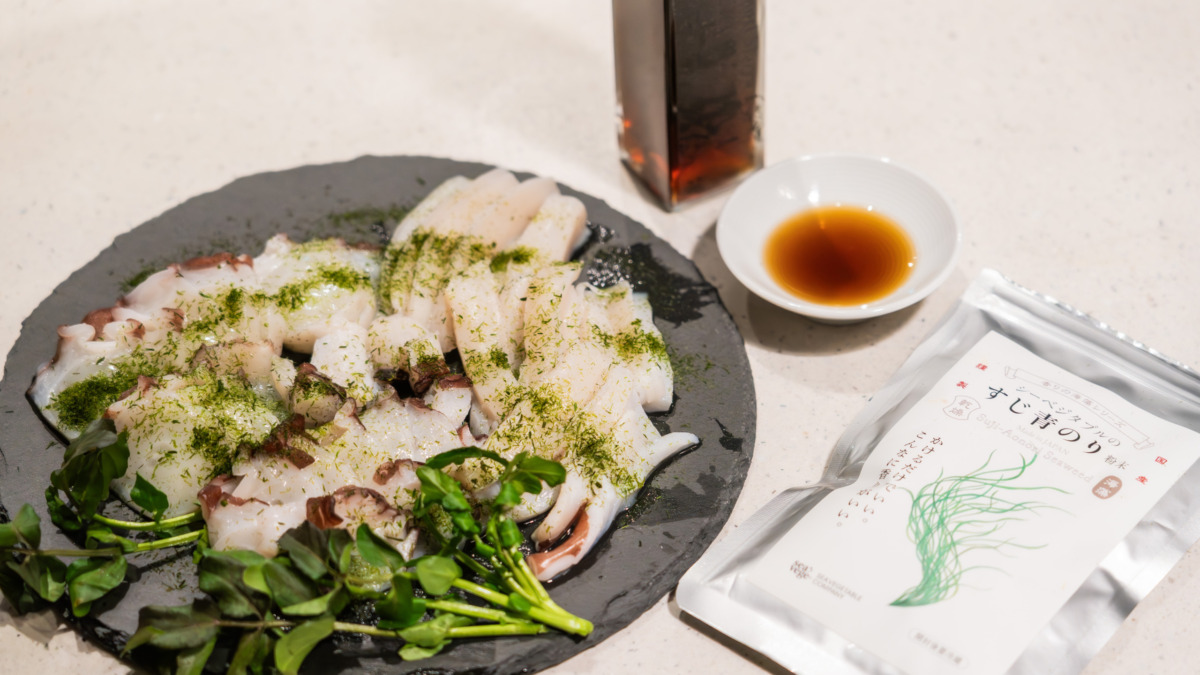
As the discussion drew to a close, the table was set with the original craft beer First Step, Re:tako octopus from Tomamae, Hokkaido, and potato chips seasoned with Sea Vegetable’s suji aonori.
Beginning with the simple pleasure of delicious food, these efforts are reconnecting the ocean with the city—and people with one another. That day, deep beneath the metropolis of Yaesu, another meaningful step toward regeneration may well have been taken.
(Text by Michi Sugawara / Photographs by Shuji Goto)

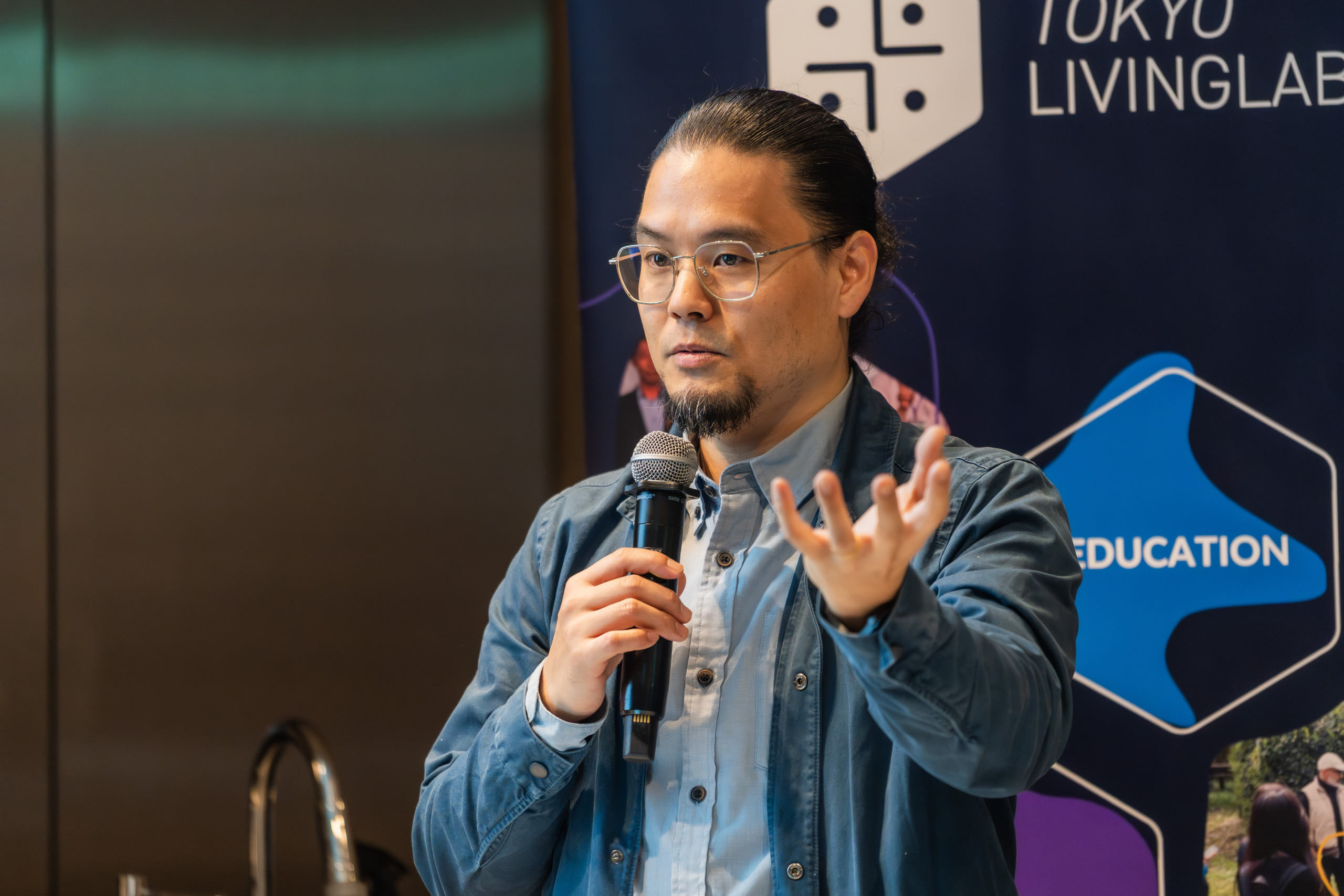
Born in Los Angeles, Rui Okamoto earned a bachelor’s degree in Marine Ecology from California State University, Monterey Bay. While working in the field of education, Okamoto was also involved in initiatives related to marine ecology and sustainable seafood at the Monterey Bay Aquarium.
In 2016, Okamoto moved to Japan with the goal of contributing to sustainable fisheries and regional communities. In 2019, Okamoto was selected as a Fellow of the Blue Pioneer Program, an initiative dedicated to developing the next generation of ocean leaders across the Asia-Pacific region.
As a founding member of UMITO Partners, Okamoto now provides cross-functional support spanning both on-the-ground fisheries projects and organizational management.
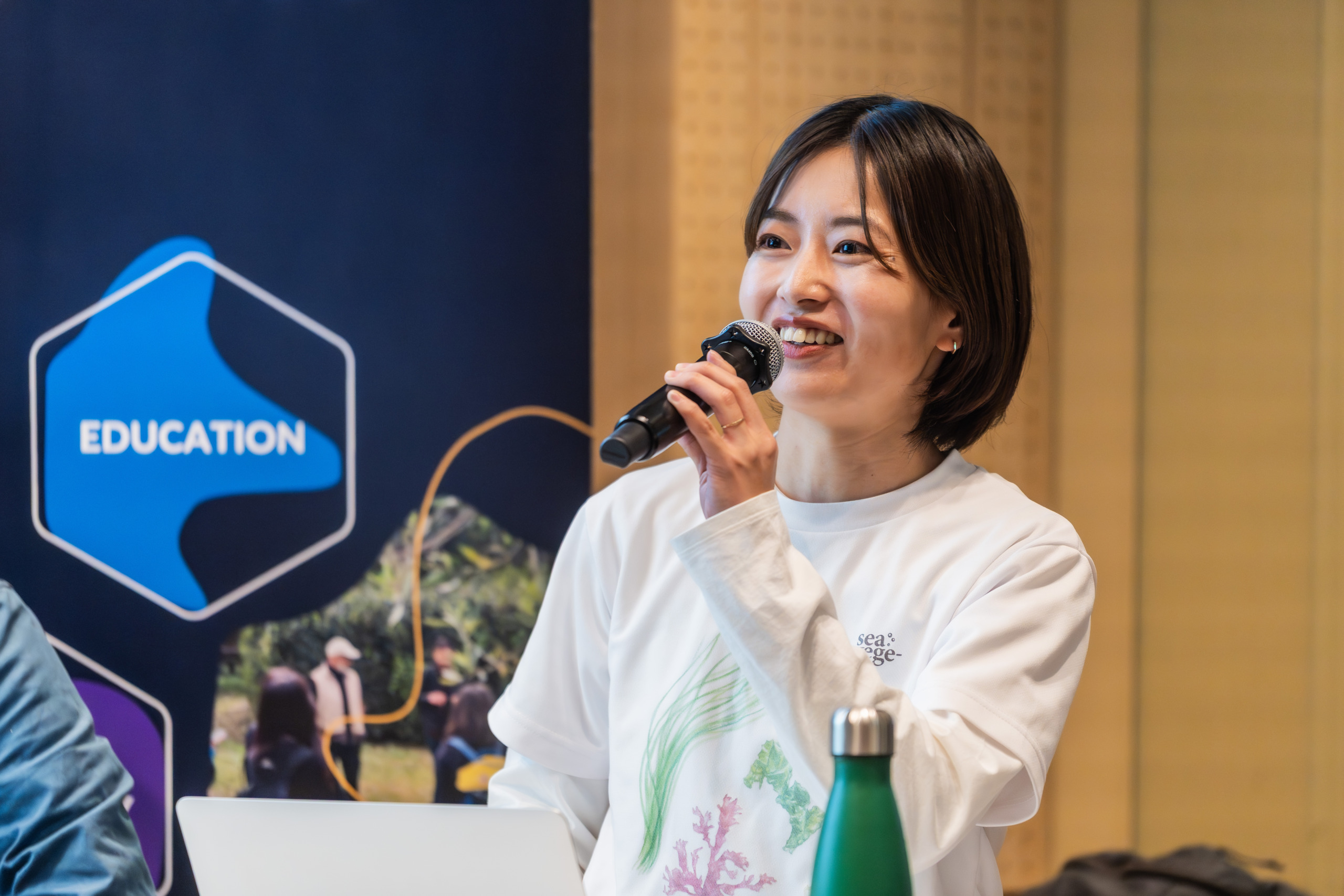
Communicator, Food Culture Co-Creation Department
Born in Toyama City, Toyama Prefecture, in 1996, Chihiro Teramatsu's perspective on life changed profoundly after participating in an internship in Cambodia while at university. Inspired by the experience, Teramatsu decided to pursue peace studies.
After working in the wedding and food service industries, Teramatsu developed a strong desire to contribute to work that enriches people's everyday lives. This led to joining Sea Vegetable in 2020, during the company's early growth stage, where Teramatsu helped establish a wide range of departments and initiatives.
Teramatsu also played a key role in launching the Sea Vegetable Stand, which opened in Yaesu, Tokyo, in March 2026. Through promoting seaweed as an everyday ingredient—as familiar and accessible as vegetables—Teramatsu is working toward a future where both people and the ocean can thrive.