
A Cycle Where “Everyone Wins” Can Regenerate the City — A Regenerative Future That Begins with What Excites Each of Us 【Inspiration Talk Vol. 10, Part 1】
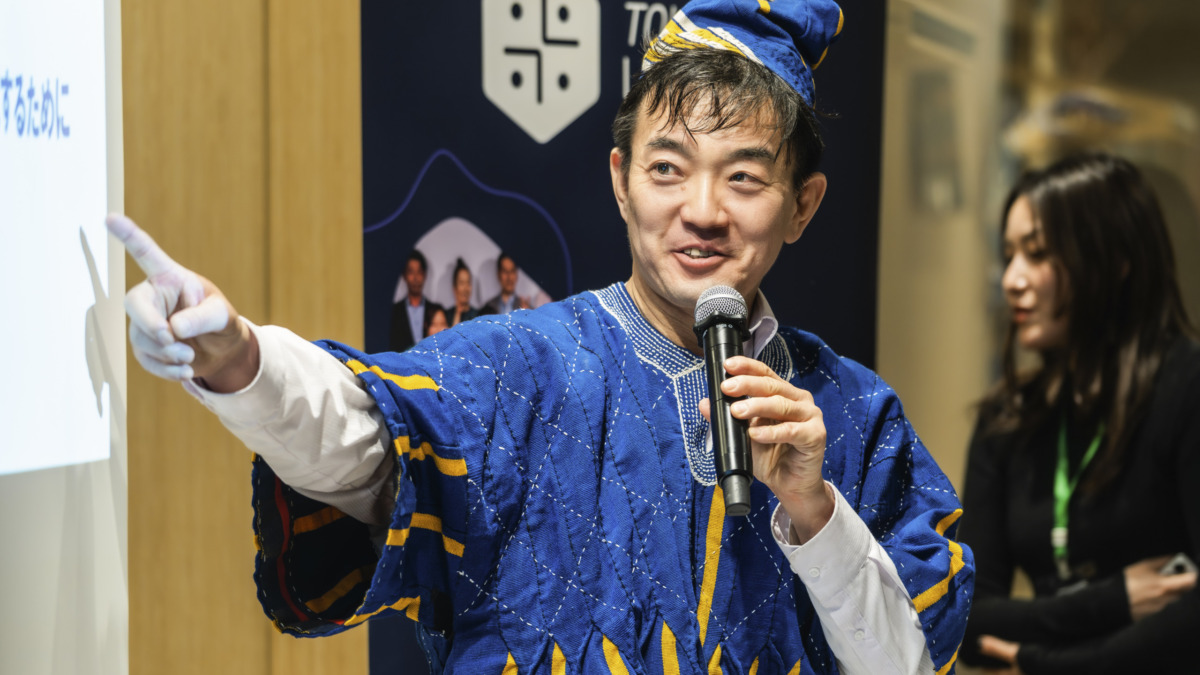
On March 18, 2026, the tenth session of the ongoing event series Regenerative City Inspiration Talk: Envisioning the Future of Regenerative Cities from Tokyo was held at Tokyo Living Lab in Yaesu, Tokyo. The theme was “When Personal Benefit Naturally Becomes Public Good — Learning from Food Innovation Projects to Create Regenerative Projects Where Everyone Wins.” The guest was Yusuke Takahashi, a self-described “regenerative public-private co-creation practitioner” who has also led a social business project in Ghana aimed at improving nutrition.
In Part 1, we trace Takahashi’s journey of co-creation back to his time working at an amino acid fermentation plant, where he saw untapped potential in making greater use of biomass generated as a fermentation byproduct. From that realization, he worked with a wide range of stakeholders to build a circular model involving farmers, distributors, and local government. His volunteer work promoting Saga’s local specialty, “Sicilian Rice,” as a way to revitalize the community would eventually go on to connect with biomass policy at the national level.
Yusuke Takahashi is a self-described “regenerative public-private co-creation practitioner” who says he awakened to regenerative thinking through an event organized by Tokyo Tatemono. After earning a master’s degree in engineering from the Tokyo Institute of Technology, now the Institute of Science Tokyo, he went on to study agricultural MOT (Management of Technology) at Saga University and earned an MBA from Hitotsubashi University. Following a research role at a food company, he has taken on projects that transcend the conventional boundaries between municipalities and private-sector companies. At the core of Takahashi’s career is a mission: to solve global nutritional challenges by sustainably delivering truly nutritious food, through viable businesses, to people around the world who genuinely need it, using appropriate technologies and at affordable prices.
That mission also fueled Takahashi’s long-standing passion for Ghana. In 2006, while working as a fermentation researcher at a food company, he learned of a project that sought to apply amino acid technology to improving nutrition for infants during the weaning period. Inspired by the initiative, he directly appealed to its originator for an assignment in Ghana. He was advised, however, that he was not yet ready to take responsibility for a business on the ground and that, in addition to research expertise, he would need to develop practical business experience and stronger English skills.
Thirteen years later, after gaining frontline sales experience in Kyushu selling biomass generated as a fermentation byproduct, studying for an MBA, working in a business division, and eventually being seconded to a foundation, Takahashi finally secured an assignment in Ghana. There, he began working on the Ghana Nutrition Improvement Project (GNIP).
That same passion has driven a wide range of initiatives, from community revitalization efforts in Saga to collaborations connected with the Biomass Industrial City initiative. In particular, a project to build an agricultural value chain using biomass generated as a fermentation byproduct received recognition through both the Japan SDGs Award and the Low Carbon Cup, now known as the Decarbonization Challenge Cup. These achievements demonstrate how Takahashi’s co-creation projects have generated lasting impact on both the social and economic fronts.
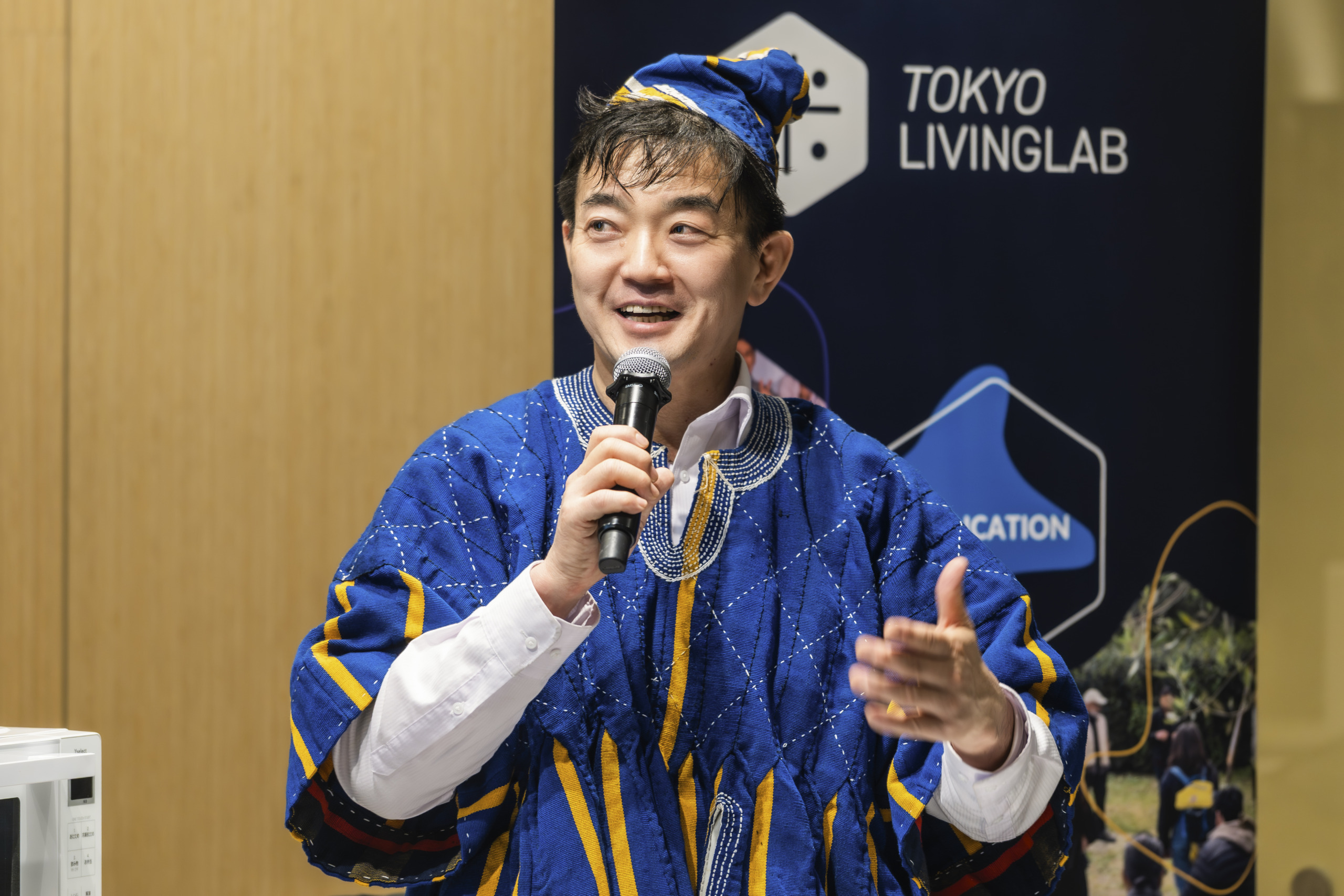
“Ultimately, if I’m not genuinely excited about something, a sense of obligation alone will never be enough to move me to action.”
According to Takahashi, regeneration can be understood as an extension of sanpo-yoshi, the traditional philosophy of Omi merchants: good for the seller, good for the buyer, and good for society. By adding a fourth dimension — “good for the future” — it becomes what he calls shiho-yoshi, or “good for all four.” In other words, regeneration is about designing cycles in which everyone involved can benefit and thrive.
The roots of Takahashi’s regenerative perspective can be traced back to his time working at a fermentation plant in Saga Prefecture. The facility produces amino acids through fermentation, a process that generates a viscous residue known as “fermentation byproduct biomass,” or fermentation liquor. At the time, the plant was already working to recycle this resource by drying it with heavy fuel oil and selling it as fertilizer. Takahashi, however, saw room for further improvement.
“We were burning enormous amounts of heavy fuel oil just to dry the byproduct biomass. I felt a strong sense of contradiction in calling that resource circulation while relying on heavy fuel oil to make it happen,” Takahashi recalls.
His ideal solution was to use the biomass in liquid form, without drying it, thereby reducing both CO2 emissions and costs. But at the time, Takahashi was essentially the only person responsible for the initiative and had almost no resources at his disposal. In search of partners, he used an email newsletter published by the Kyushu Bureau of Economy, Trade and Industry and conducted persistent outreach to some 2,500 companies. Around ten emerged as potential partners, but one after another declined, saying the fermentation byproduct biomass was simply “too sticky and difficult to handle.”
The breakthrough came from the ingenuity of a carrot farmer in Miyazaki Prefecture. The farmer was mixing the fermentation byproduct biomass directly into compost. Compost is a natural fertilizer made by piling together materials such as straw, fallen leaves, and animal waste and allowing them to decompose through natural fermentation. Over roughly three months, microorganisms break down organic matter such as cattle manure, generating heat in the process.
The farmer’s thinking was simple: if the heat from the compost could evaporate the moisture in the byproduct, there would be no need to dry it separately. Once the two materials were mixed, microbial activity intensified and the fermentation temperature rose to around 80°C, allowing the water to evaporate naturally without the use of heavy fuel oil.
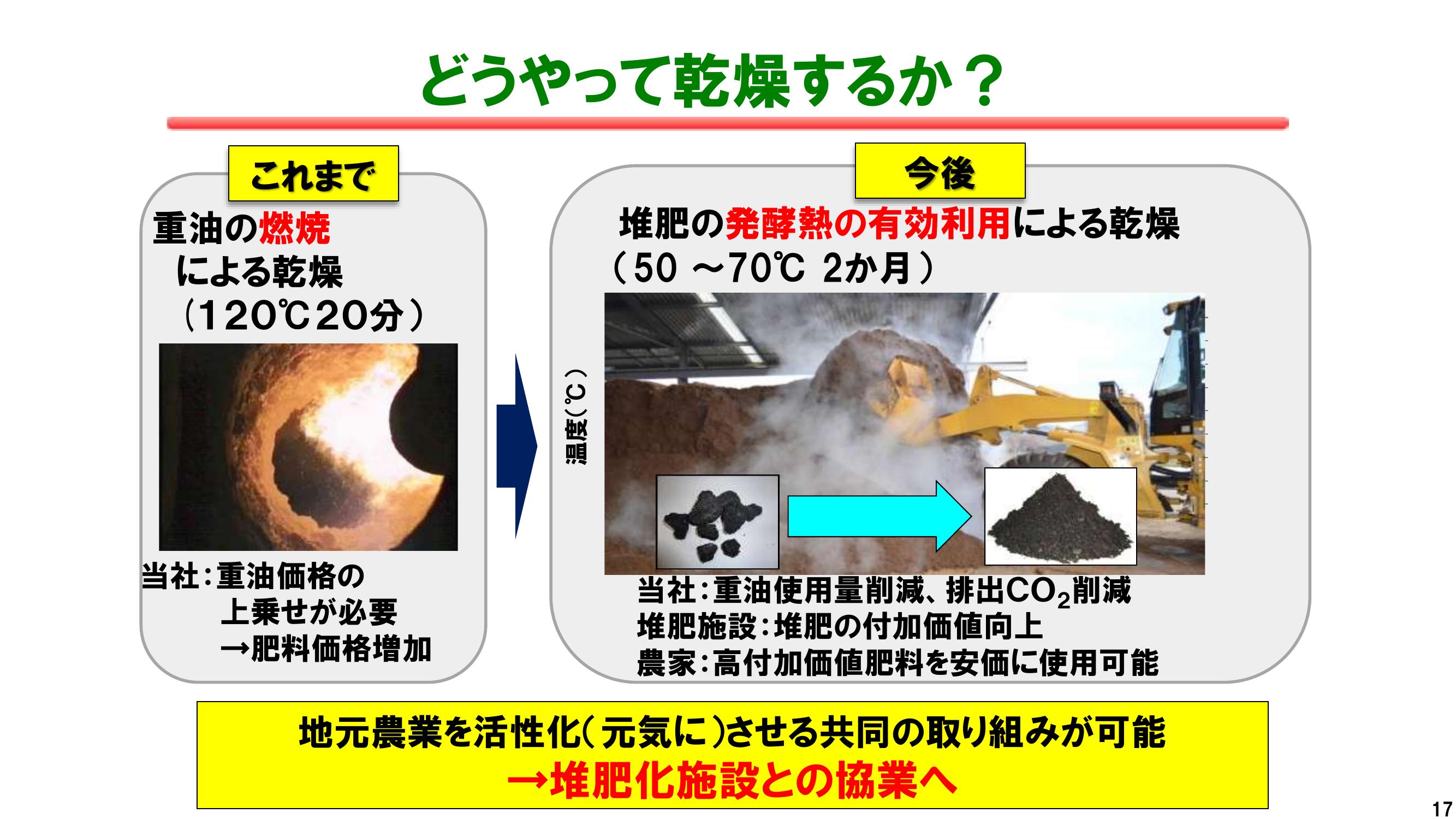
Building on this natural drying process, Takahashi began collaborating with composting facilities. In rural communities facing an aging population, transporting and spreading compost had become physically demanding work. But this fertilizer, made simply by mixing fermentation byproduct biomass into existing compost, could reduce the amount of labor required while providing farmers with an affordable fertilizer rich in amino acids. The aim was to improve both farmers’ working conditions and the profitability of their operations.
Data also showed that the amino-acid-rich fertilizer could significantly increase the sugar content of vegetables. This completed a model in which everyone could benefit: produce that was both delicious and environmentally friendly.
Takahashi then sought to connect the fertilizer directly with consumers rather than treating it merely as an agricultural input. To do so, he began working with a major retailer operating supermarkets and food stores throughout Kyushu. The company shared a commitment to delivering safe, reliable, and environmentally friendly fruits and vegetables to its customers. Together, the amino acid fermentation plant, composting facilities, livestock farms, contract farmers, and the retailer launched a project to develop branded fruits and vegetables.
“What was interesting was that, at first, the discussions focused mainly on the concerns of each stakeholder. But as we continued meeting, our shared goal gradually shifted toward solving problems from the farmers’ perspective — asking ourselves, ‘How can we make the farmers happy?’ Once that became our common focus, the project began to work remarkably well,” Takahashi says.
As the stakeholders continued to meet and discuss how vegetables grown with the fertilizer could be used, they evolved into a single team whose purpose extended beyond their individual interests. What began as a solution to a waste and fertilizer challenge ultimately became a regenerative asset, creating new connections with Saga City and the major retailer and opening the door to further collaboration.
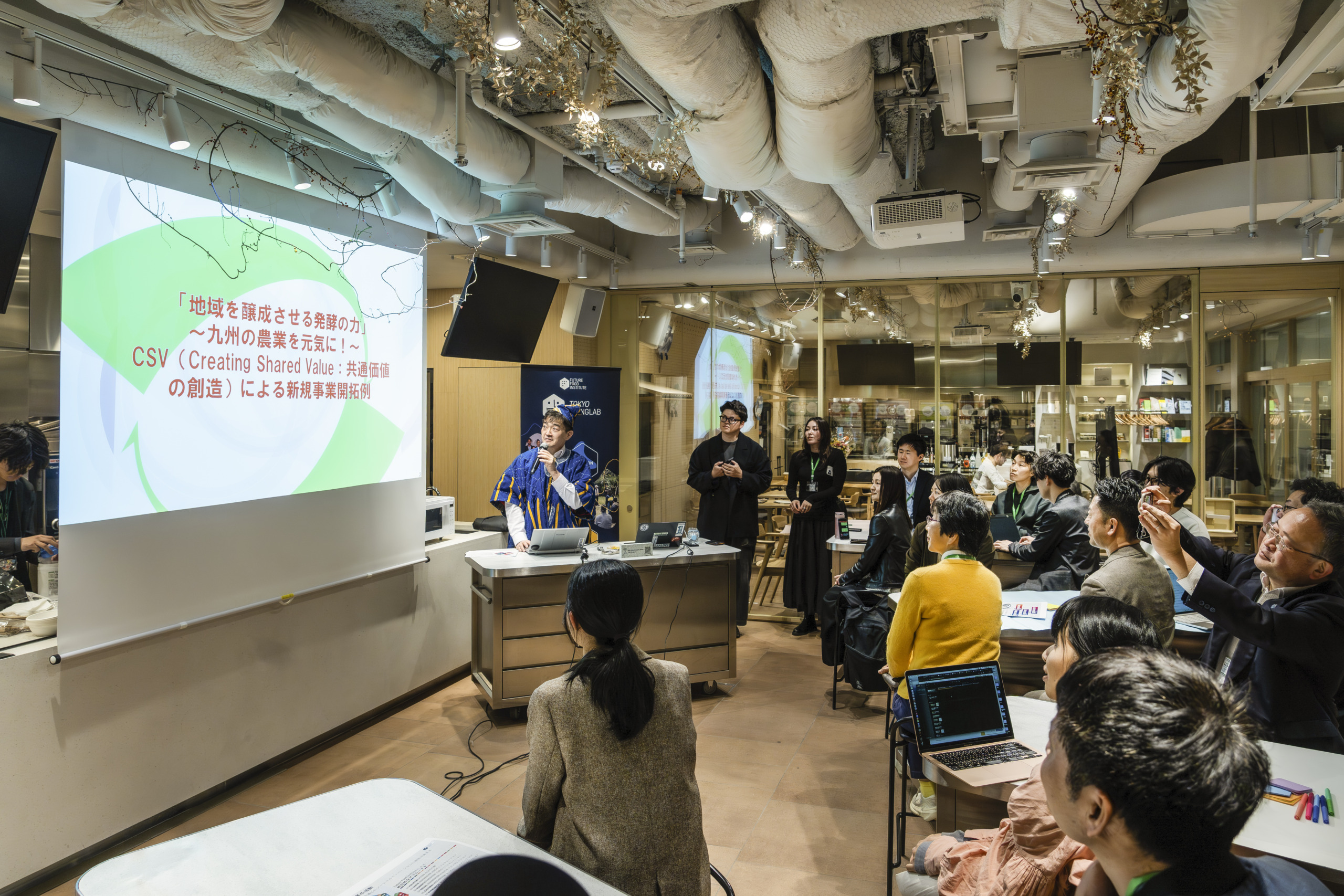
Alongside the vegetable project led by the major retailer, Takahashi also approached Saga City with a proposal to collaborate on realizing the city’s Biomass Industrial City initiative. The concept was to create energy and resources by mixing fermentation byproduct biomass into sludge compost produced at Saga City’s sewage treatment center, generating outputs such as methane-based power and compost, and circulating them as fully as possible back into uses including renewable electricity and local agriculture. In doing so, the city sought to build an integrated regional system that could achieve both environmental conservation and economic development.
The model also led Saga City to participate, through a national “Bistro Sewerage” collaboration council, in a network of municipalities across Japan pursuing similar initiatives.
Behind Takahashi’s ability to build this partnership with Saga City was a network of relationships he had developed through one of his own passions: American football. After taking on the role of head coach for Saga University’s American football team, he became deeply involved in the local community. Through the connections he formed there, he attended Saga University’s Housu-juku, a program for fostering entrepreneurs, for two years. He later joined fellow participants in establishing the Saga Katsu-Katsu Juku, a volunteer-led community group. Its motto played on the Japanese word katte, meaning “on one’s own initiative”: revitalizing the community simply because they wanted to, without being asked by anyone else.
Their first project was an effort to build excitement around “Sicilian Rice,” a local specialty of Saga. Takahashi and his colleagues conducted their own market research and raised funds through personal contributions and individual donations to create a kappa-inspired mascot character named “Sicilian-na.” They then designated April 4 as “Sicilian Rice Day” and proposed that the mayor of Saga take on the ceremonial role of king of the “Kingdom of Sicilian Rice.” The mayor gladly accepted.
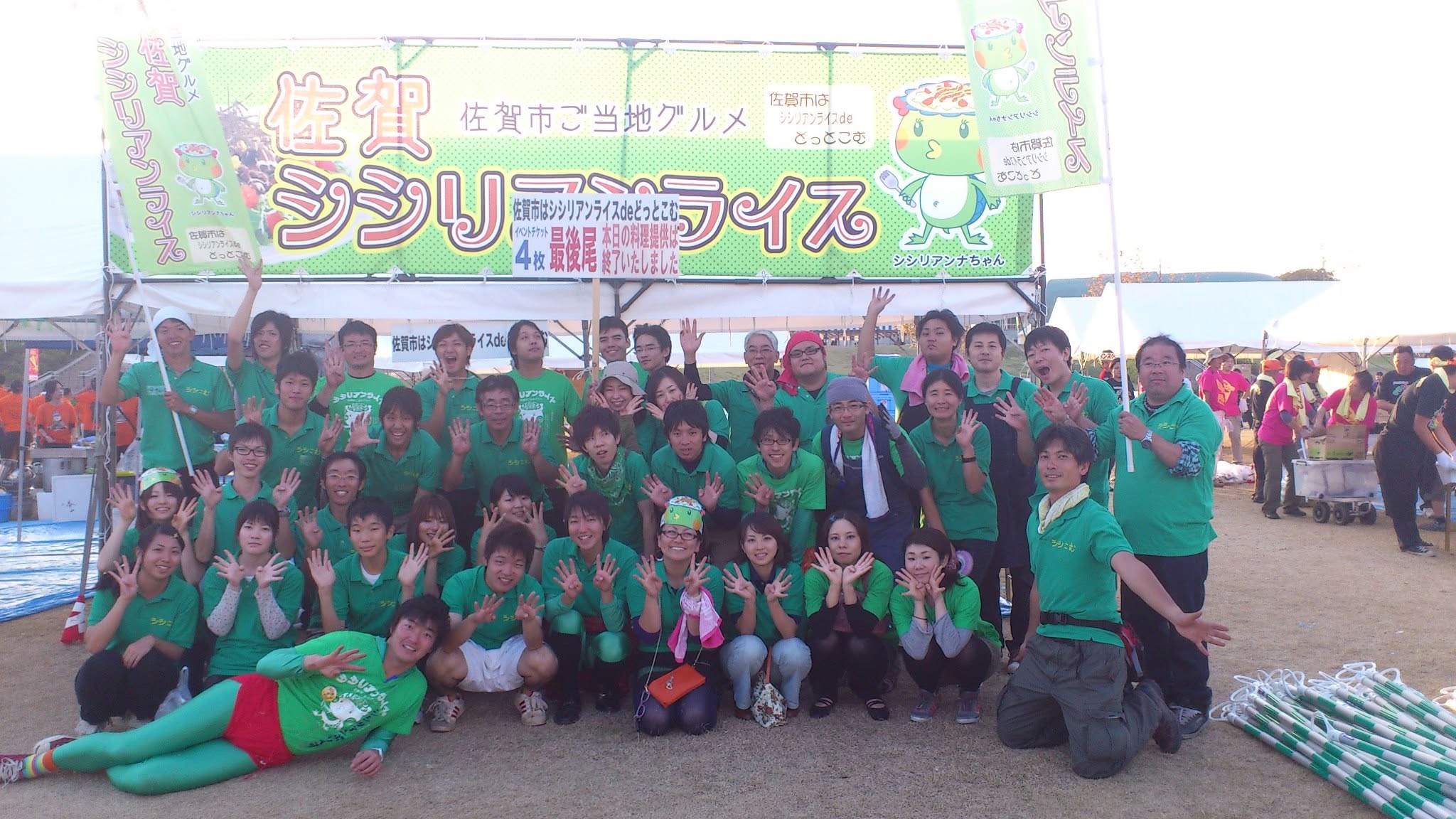

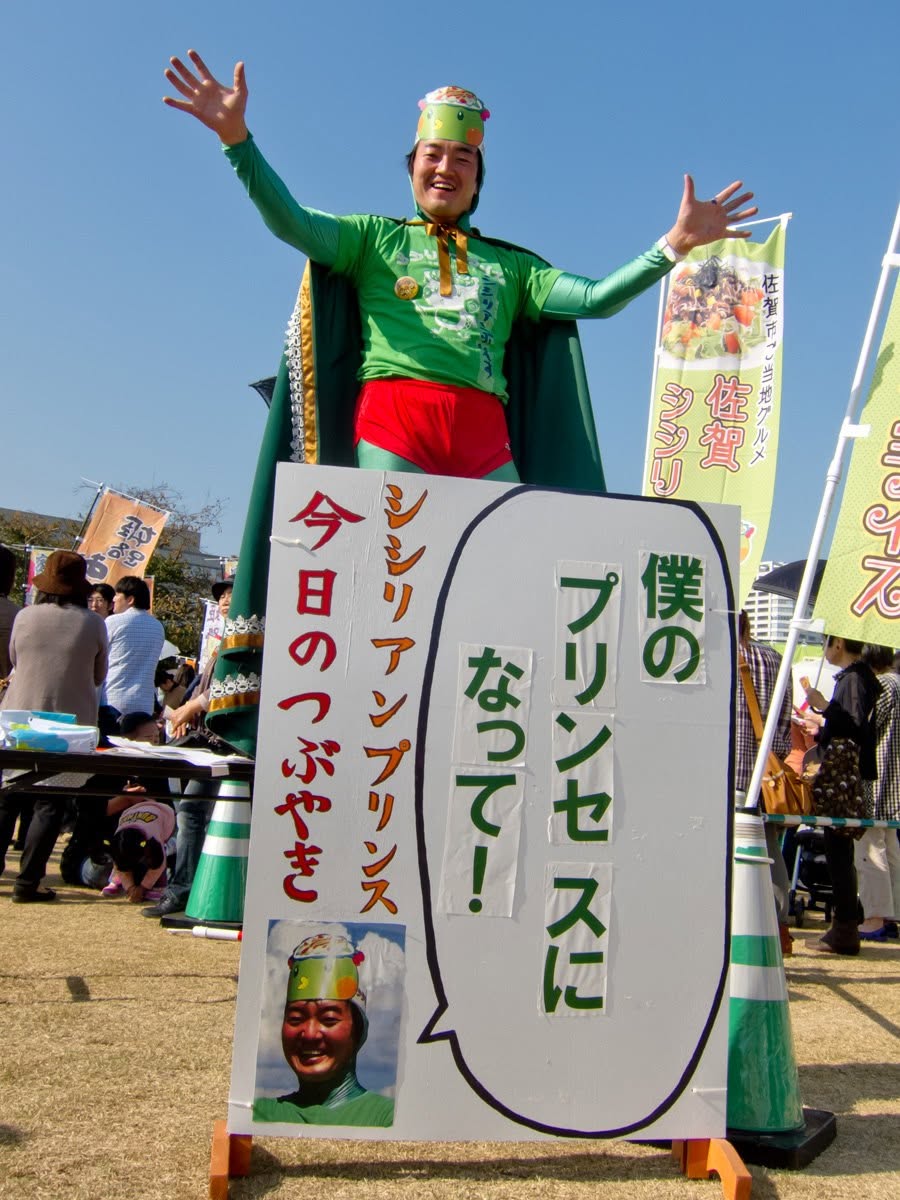
“Through these volunteer activities, I developed a good relationship with the mayor. Later, he introduced me to the team responsible for Saga City’s sewage treatment facility, and that connection eventually led to a large-scale biomass project,” Takahashi says.
The trust built through this self-motivated passion eventually led to collaboration with officials in Saga City and became integrated into the Saga City Biomass Industrial City initiative — a nationally recognized model for regional resource circulation that returns sewage sludge and fermentation byproduct biomass to local agriculture and energy production.
What began as a playful initiative driven simply by one individual’s sense of excitement led Takahashi to meet and collaborate with public-sector officials who shared a desire to transform Saga. Ultimately, those encounters grew into a regenerative movement that would connect with environmental policy at the national level.
With the philosophy of circularity he had cultivated in Kyushu and Saga, Takahashi finally made his way to Ghana, fulfilling a dream he had pursued for 13 years. But what awaited him was far more complex than the simple assumption that a good product would naturally reach the people who needed it.
In Part 2, we follow Takahashi’s efforts on the ground in Ghana and explore the “small moments of happiness” imagined by Inspiration Talk participants who were inspired by his approach.
(Text by Michi Sugahara / Photography by Shuji Goto / Materials courtesy of Yusuke Takahashi)
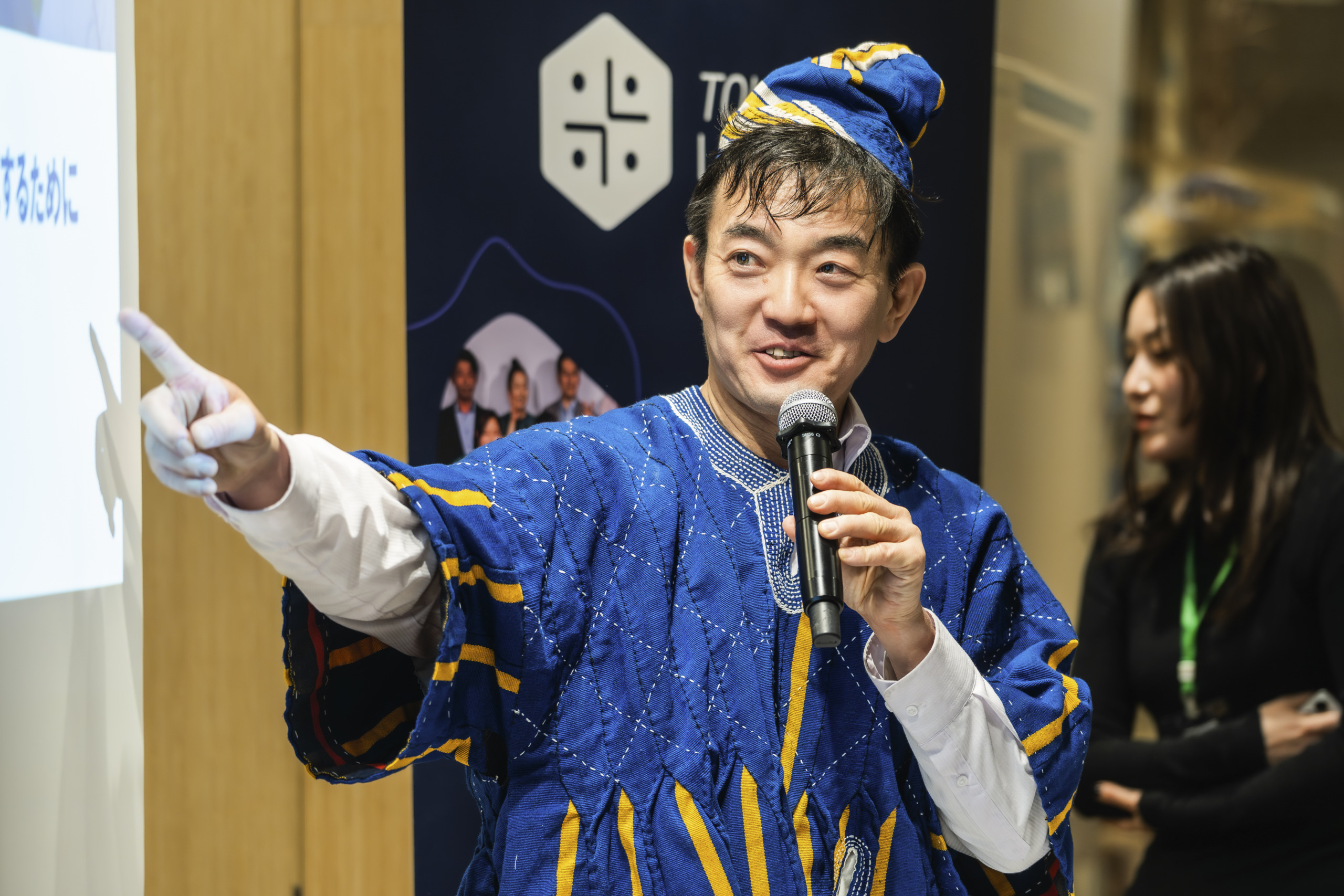
Takahashi holds a master’s degree from the Graduate School of Bioscience and Biotechnology at the Tokyo Institute of Technology (now the Institute of Science Tokyo). He also studied agricultural MOT (Management of Technology) at Saga University and earned an MBA from Hitotsubashi University. He is a certified Small and Medium Enterprise Management Consultant and describes himself as a “regenerative public-private co-creation practitioner.”
Takahashi has led a range of public-private initiatives, from community revitalization through Saga Sicilian Rice and a circular agriculture project using industrial byproducts in Kyushu, to Saga City’s Biomass Industrial City initiative and the Ghana Nutrition Improvement Project in partnership with the Ghanaian government. Through these efforts, he has expanded public-private collaboration from local communities in Japan to Ghana, pursuing projects that create both social and economic value. Looking ahead, he aims to expand these partnerships globally and address the challenge of reducing greenhouse gas emissions. Projects he has been involved in have received several honors, including a Japan SDGs Award, the Best Story Award at the Low Carbon Cup, and a Minister of the Environment Award for Global Warming Prevention Activities.