
From Café Hopping to Idols: Turning What You Love into Regenerative Action 【Inspiration Talk Vol. 9, Part 2】
The ninth edition of the Regenerative City Inspiration Talk was held in Yaesu, Tokyo, on January 21, 2026. In [Part 1] of our report, Leo Kominz, CEO of SEAMES, compared tackling social issues to habits such as working out or waking up early, and explored how art and entertainment can be used to design meaningful behavior change.
In Part 2, participants took part in a workshop that combined the things they personally love with social issues. From café hopping and journaling to idol fandom, each participant began with a personal interest, sparking a lively discussion about how those passions might lead to regenerative action.
Rather than confronting social issues head-on, Leo’s approach begins with a person’s curiosity and their instinctive sense that something is interesting. By deliberately shifting the original purpose by just “10 degrees,” he believes it becomes possible to inspire people to take action. After hearing about this philosophy and SEAMES’s work (see [Part 1]), participants split into three teams—Pink, Yellow, and Blue—for a hands-on workshop.
The session was supported by Minami Shinohara, a professional workshop facilitator at SEAMES, and each participant received a SEAMES worksheet titled “RE:UNIVERSE × REGENERATIVE.” The workshop followed the four steps outlined on the sheet.
The Four Workshop Steps
STEP 1 — “WHAT IS…?”: Start with Brainstorming
Introduce yourself and identify elements related to regeneration.
STEP 2 — “THINKING”
Dig deeper into what you love and explore where it connects with regeneration.
STEP 3 — “BUILDING”: Give It Shape
Define the ideal outcome and develop what makes the idea distinctive as a project.
STEP 4 — “PLANNING”: Make a Plan and Start Taking Action
Work out the practical requirements for bringing the project to life and prepare to put it into practice in society.
For this workshop, participants were given an overview of this step only.
With these four steps as a framework, Leo opened the workshop with an invitation: “Let’s come up with projects that combine regeneration with the things you love or the work that matters most to you.”
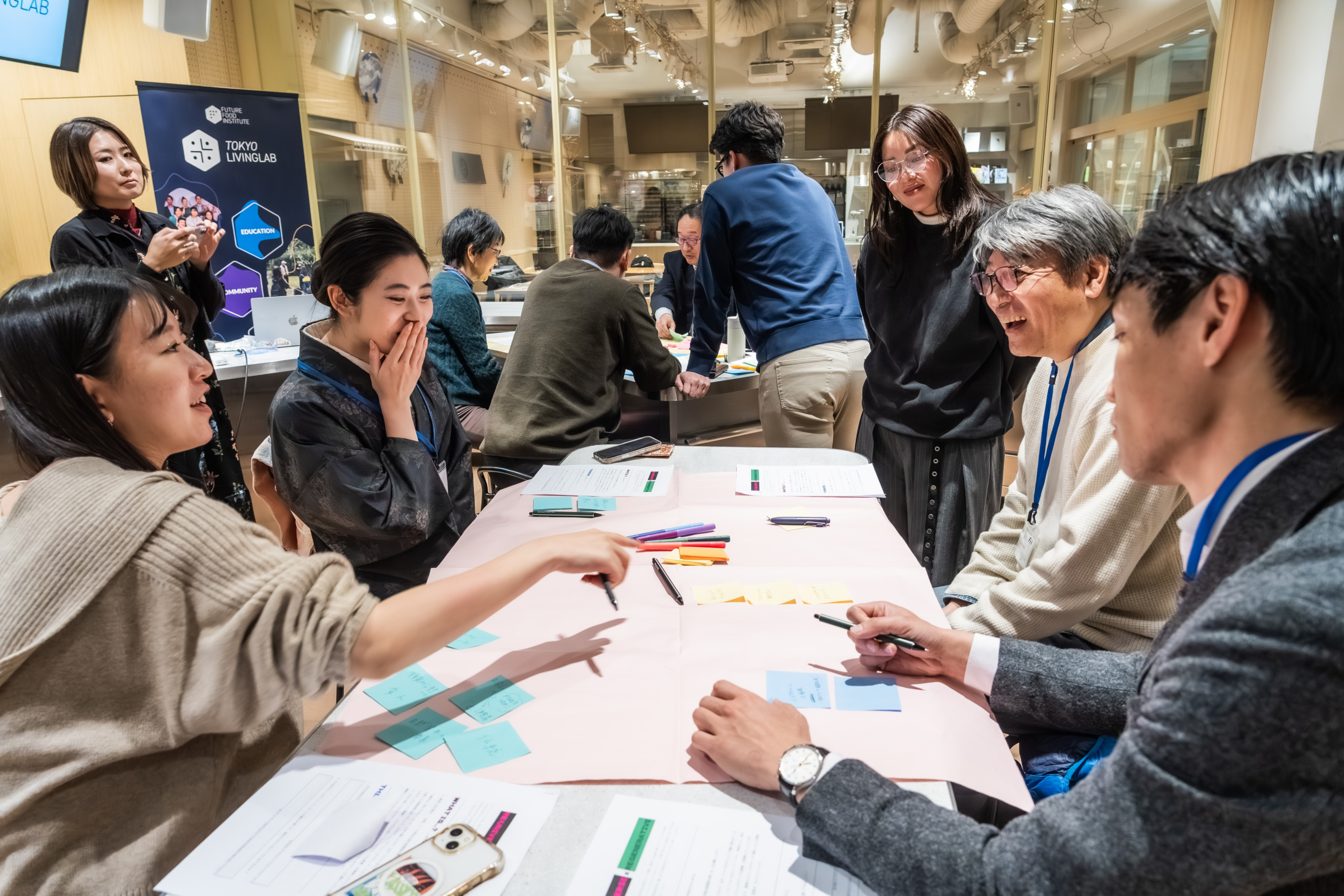
In STEP 1, “WHAT IS…?”, participants introduced themselves within their groups by sharing their names and what they used to enjoy doing after school as children.
From there, they began exploring what “regenerative” meant in their own words. Each participant wrote down ideas on sticky notes about what might count as a regenerative element, and through conversation, each team gradually built its own “regenerative list.”
In STEP 2, “THINKING,” participants started with the things they love or have recently become interested in, breaking down what makes those interests so compelling and exploring how they might connect with regenerative ideas. Although Leo was there as a judge, he decided to join in as well. “I’m here to judge, but I don’t want to just sit back and evaluate—I want to take part in the workshop too,” he said. As the discussion unfolded, each team began uncovering regenerative possibilities hidden in everyday interests.
For the Pink Team, the starting point was café hopping—a passion so strong that their Google Maps was covered with countless saved pins. They were drawn to the care café owners put into every detail, down to something as small as a single vase, finding a depth that could never be captured by how “Instagrammable” a place might be.
They suggested that uncovering and sharing the stories behind the coffee beans, as well as the work of artists whose pieces are displayed inside the cafés, could become a way of passing local culture on to the next generation.
The Blue Team found a common thread connecting horse racing, travel, and sake: the excitement of not knowing what will happen until you actually go and experience it for yourself. Building on ideas such as hands-on sake-making experiences and walking tours through local neighborhoods, the team proposed a form of “mutual-support travel”—visiting older residents and gathering around local food and sake to hear their stories and spend time together. They argued that this kind of experience, going beyond conventional tourism, captures the essence of regenerative travel.
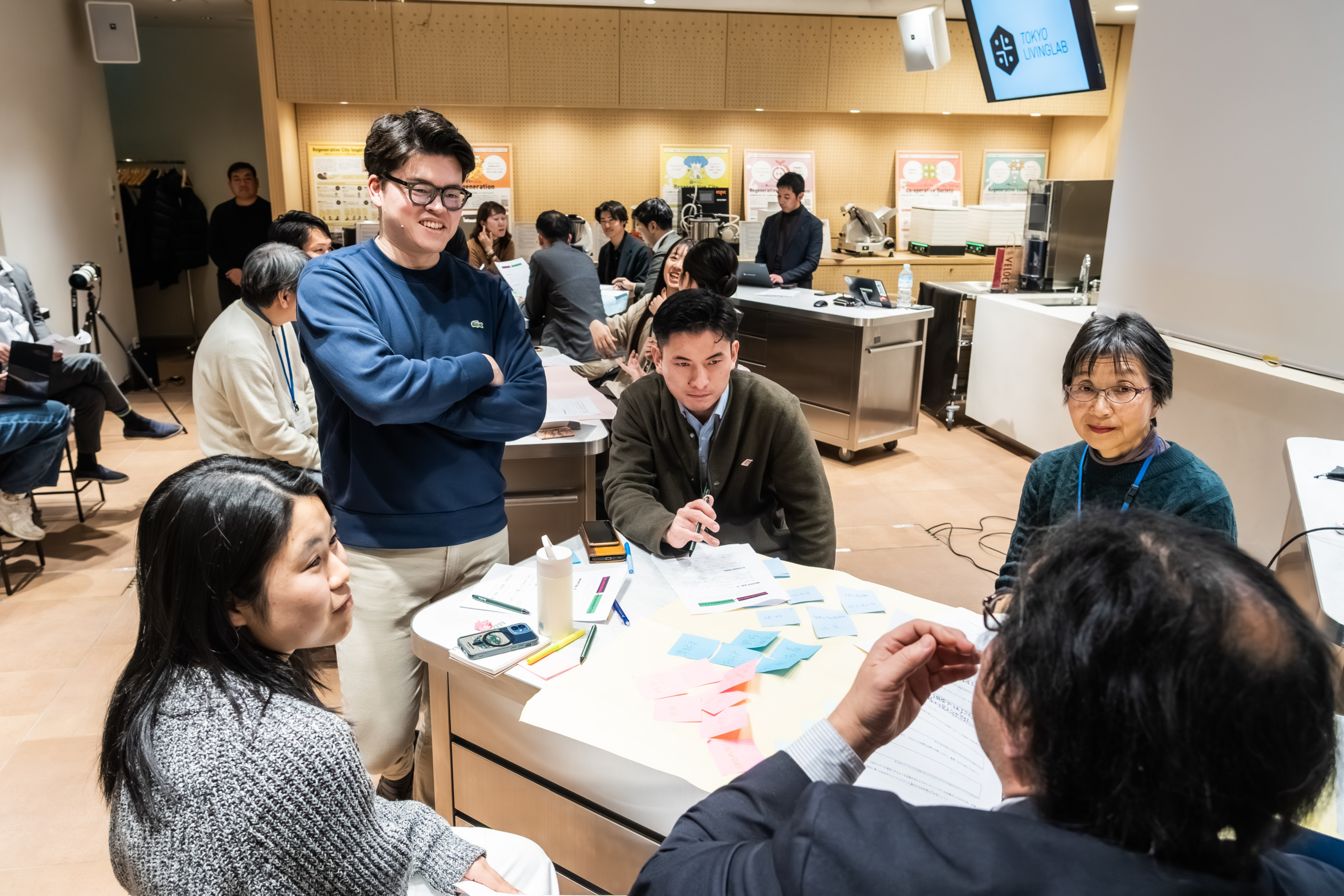
The Yellow Team found its inspiration in journaling, a habit that began after one participant looked back through photos from their middle school years. They realized that the words we direct toward others are very different from the words we write only for ourselves—and that insight transformed journaling into a kind of personal benchmark. The team proposed a regular “mind check,” looking back at who you were a year ago as a way to recognize your own growth without being swayed by other people’s judgments.
Leo, meanwhile, shared two of his own favorite things: sumo and a festive year-end hot pot. He suggested that pairing sumo stables—often overlooked despite being part of the neighborhood—with healthy chanko hot pot could offer the basis for a regenerative project.
In STEP 3, “BUILDING,” the workshop reached its key stage, as participants began turning the ideas rooted in their personal interests into concrete project concepts. Here, Leo once again emphasized a core principle of SEAMES’s approach to project design: the idea of shifting the original purpose by just “10 degrees.”
The reality is that simply putting a social issue front and center does not necessarily inspire people to give it their valuable time and attention. What matters is deliberately shifting the angle by just “10 degrees” from the original purpose, creating an entry point through genuine curiosity—a feeling of “That sounds interesting” or “I want to meet them.”
Participants then defined the ideal outcome they hoped to create once their projects were brought to life, and explored how they could add their own distinctive ideas to make that vision a reality.
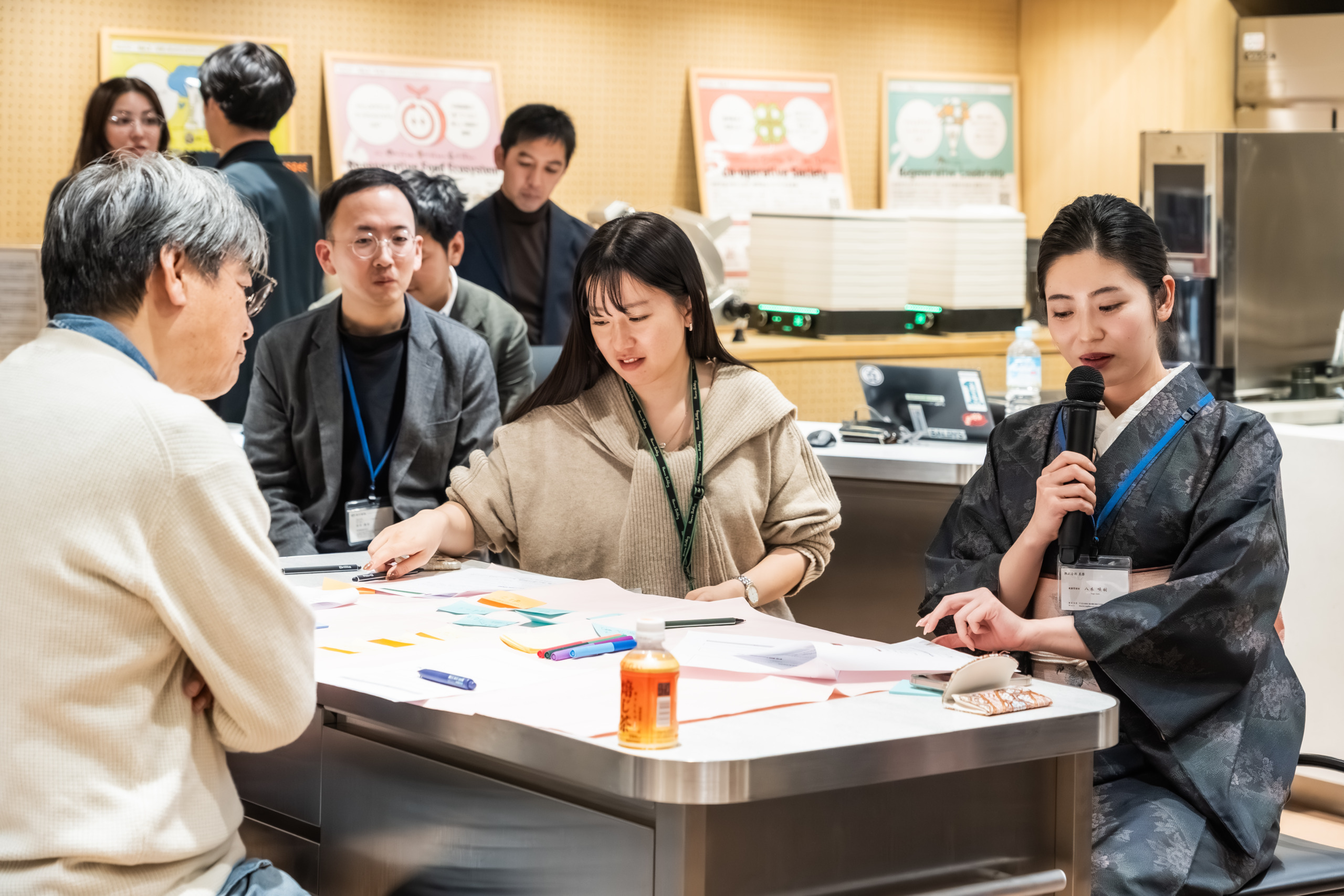
The Pink Team envisioned a more compassionate society and chose kimono as a way to explore that idea. Rather than addressing the problems of fast fashion in a serious or direct way, they proposed a “journey of rethinking”—traveling to the places where kimono are made and discovering the stories behind the materials and working conditions.
They designed the experience as a way to reconnect consumers with producers and renew people’s sense of attachment to the things they own.
Leo was particularly drawn to the depth of the idea. Reflecting on how clothing has shifted over time from distinctive local dress to the ubiquitous T-shirt, he noted the potential of a journey that asks a more fundamental question: “Why do we wear clothes?”
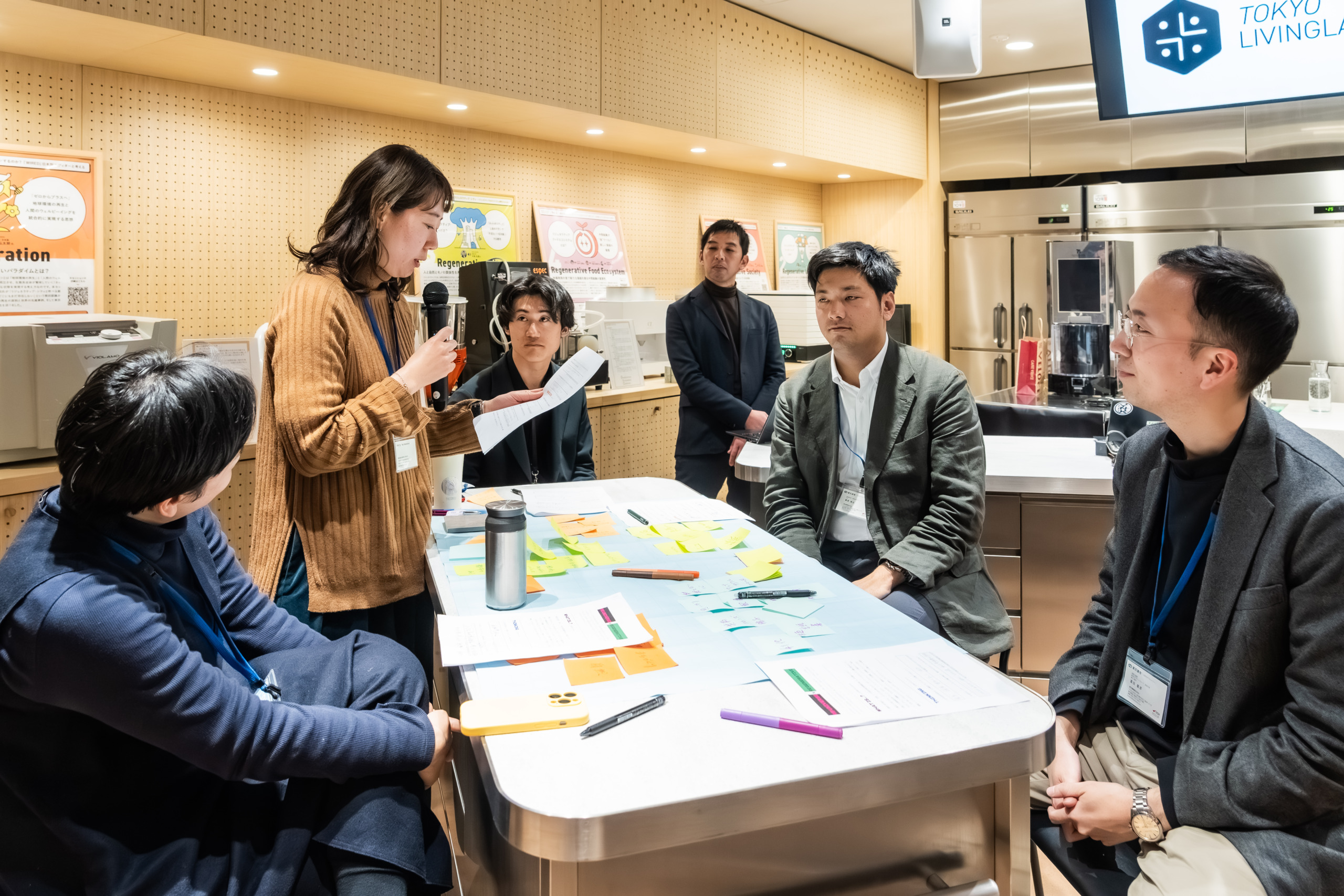
The Blue Team explored how cheesecake could help shape a city’s identity. Inspired by iconic regional styles such as Basque and New York cheesecake, they proposed creating a cheesecake named after their own city. They saw the process of developing its ingredients and recipe as an opportunity to rediscover the area’s history and culture.
Leo praised the concept as nearly perfect for its strong connection to local identity, while suggesting that a playful element—perhaps something inspired by board games—could make it even more engaging.
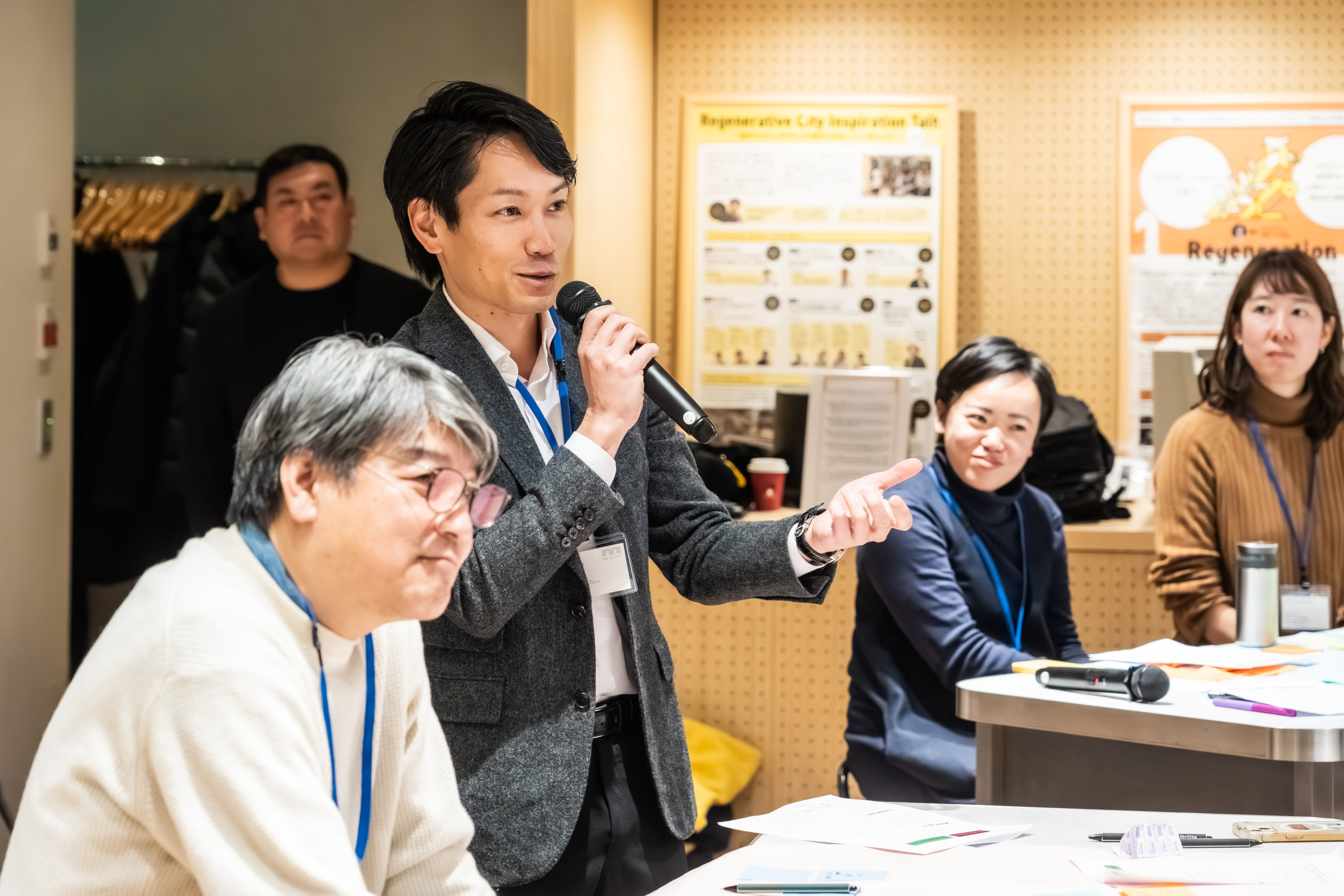
The Yellow Team, meanwhile, turned to idol culture for inspiration. Drawing on songs whose lyrics carry messages of world peace, they proposed a karaoke event where participants could sing a particular song only after experiencing something connected to its message themselves. The idea was that sharing an experience behind the lyrics would allow people to sing with a deeper understanding of what the artist was trying to express—and feel the ideals behind the song more personally.
Leo found the concept especially compelling, appreciating its creativity in moving beyond imagined empathy and making direct experience a prerequisite.
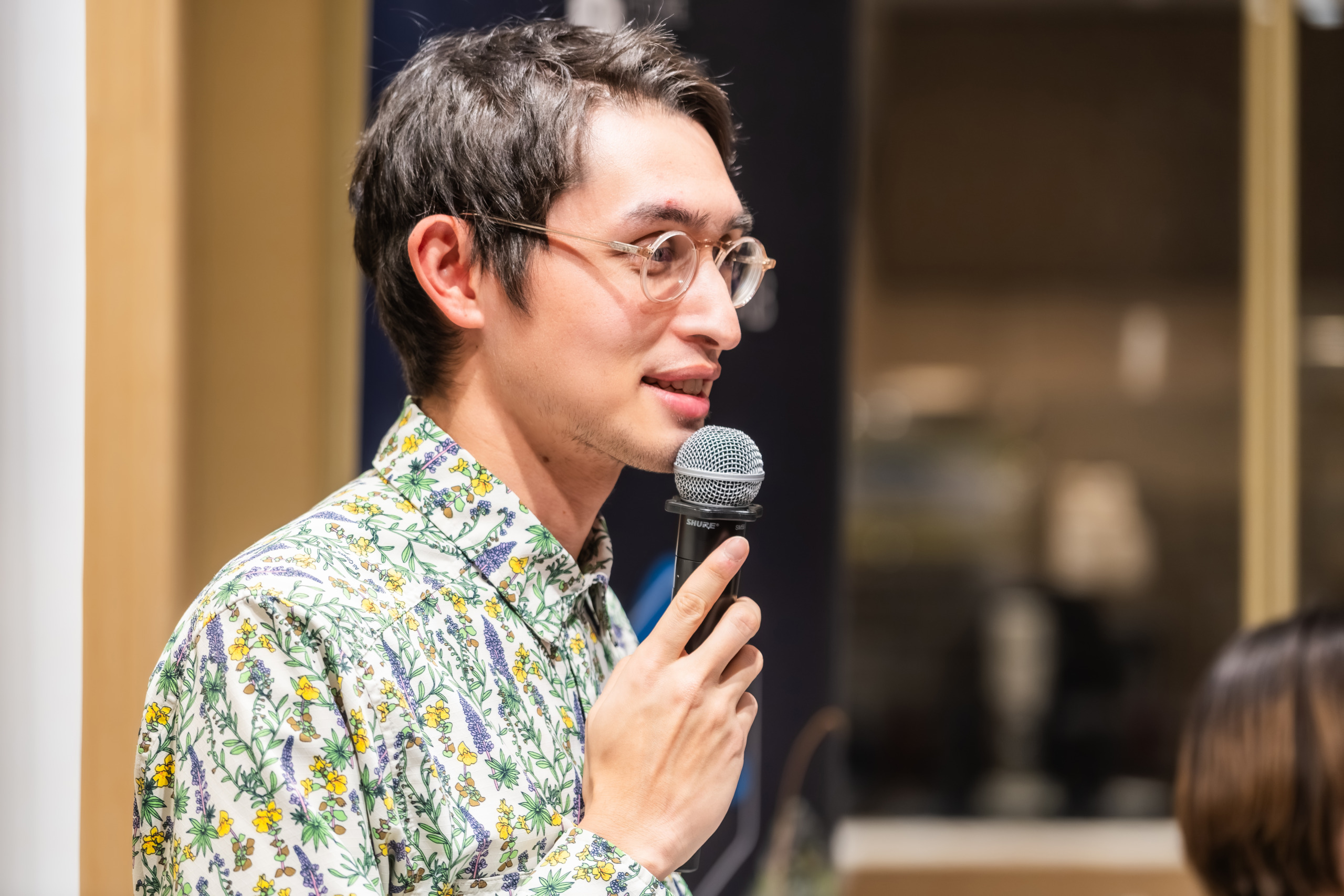
To close the workshop, Leo presented an idea of his own, set in YNK—the Yaesu, Nihonbashi, and Kyobashi area where the event was held. Drawing on the first characters of the three neighborhood names, he proposed creating the Yokake-beya, a local sumo-inspired gathering place. The idea would bring together people who work in the area and their families to do 100 shiko sumo stomps alongside wrestlers. Afterwards, everyone would bring surplus vegetables from home and use them to make a special chanko hot pot together in a large communal kitchen.
By drawing on the strength and vitality associated with sumo wrestlers, the concept would bring together several regenerative ideas at once: making use of underused local food, supporting personal well-being, and building community—all through the traditional culture of sumo. In doing so, Leo gave participants one final example of how a “10-degree shift” can turn serious themes into something engaging and unexpected. Even after the event had officially ended, the room remained filled with lively conversations about how regeneration could be made more interesting and engaging, carrying the same energy that had animated the workshop.
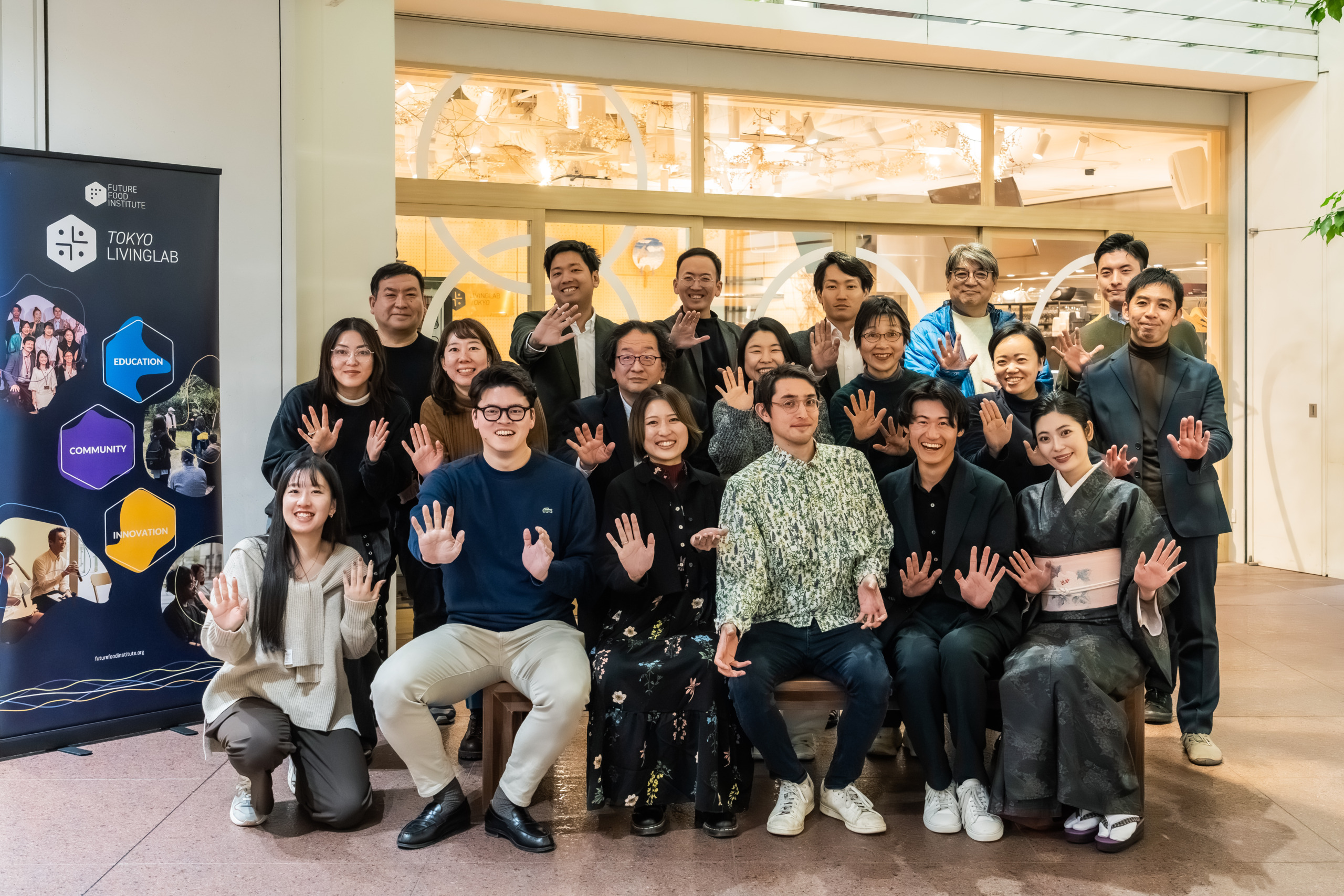
By the end of the day, Leo’s simple idea—shift the angle by just 10 degrees—seemed to have gradually taken root among the participants.
Text by Michi Sugahara / Photography by Shuji Goto
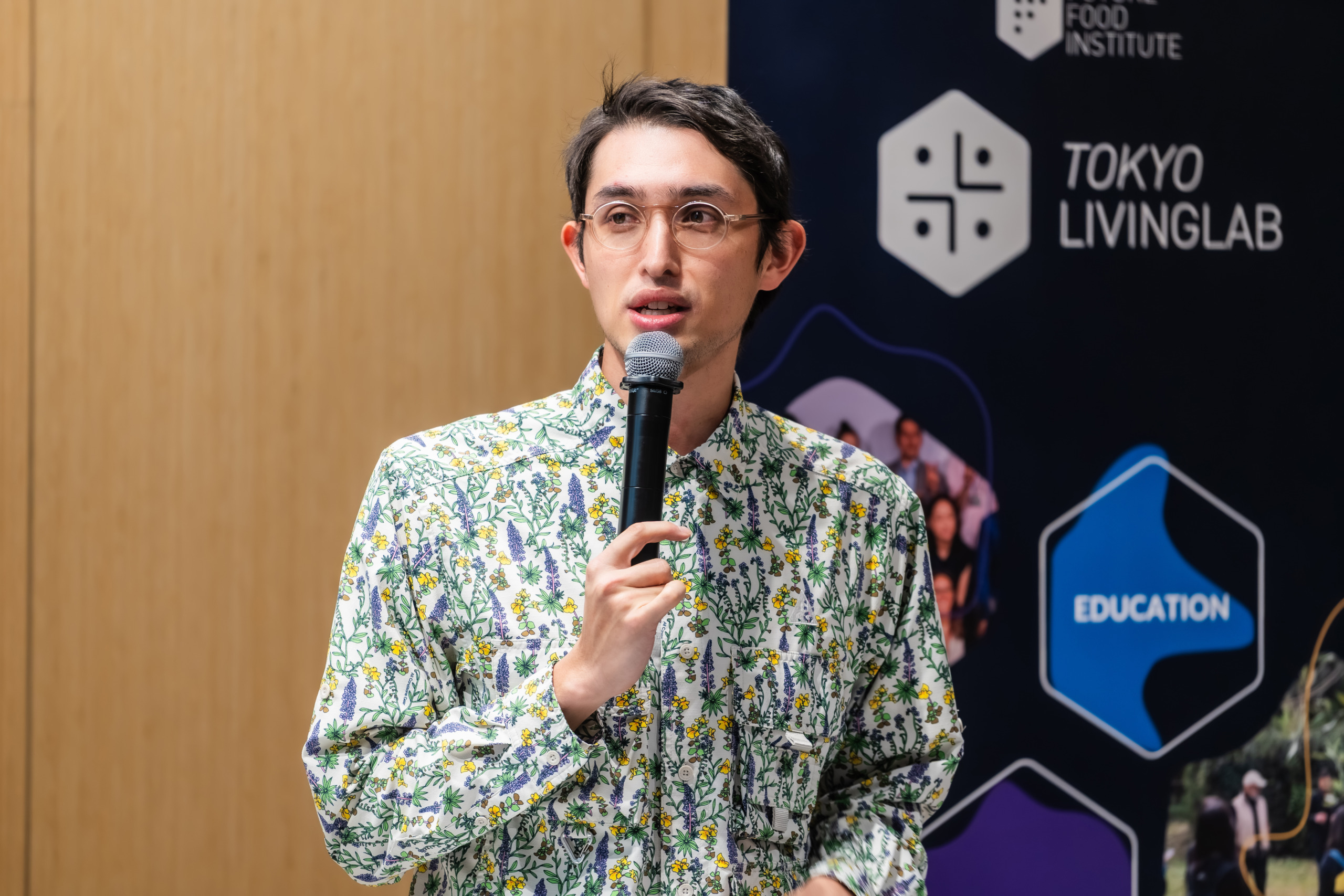
Born in Oregon, USA. While at university, Kominz founded and operated a music recording studio exclusively for college students. After working at a television station, he launched “World in Twelve,” a project in which he spent one month in each of 12 cities around the world, asking everyone he met the same 12 questions. In 2019, he founded SEAMES, a company that designs and implements projects aimed at inspiring behavioral change around social issues through the power of art, media, and entertainment. Curiosity is what drives him every day, and he is a self-professed obsessive enthusiast across an extraordinarily wide range of subjects.